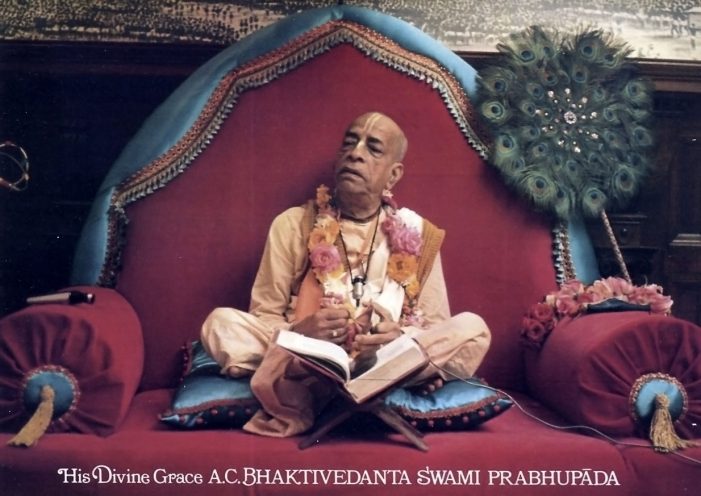
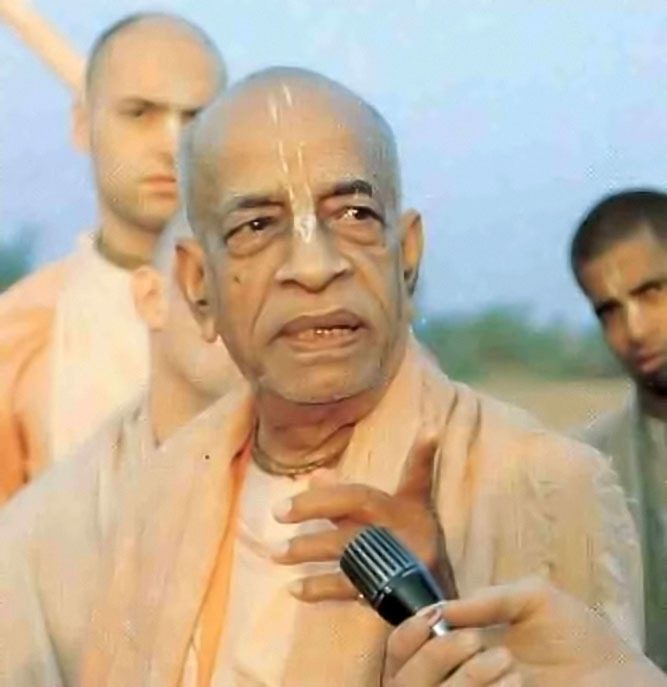
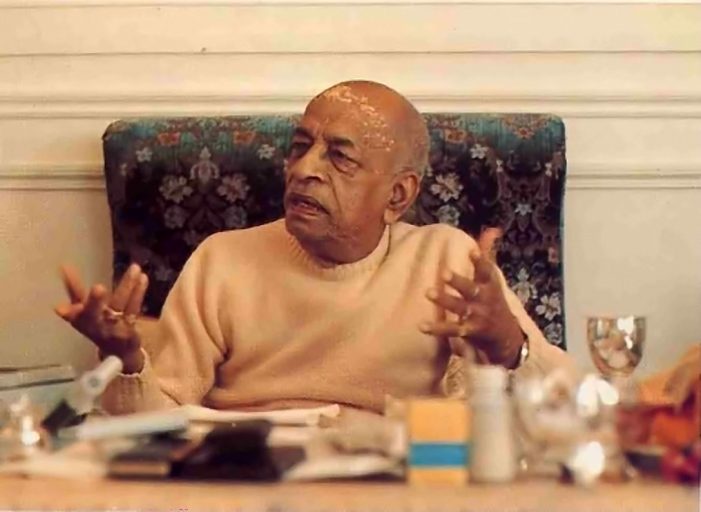
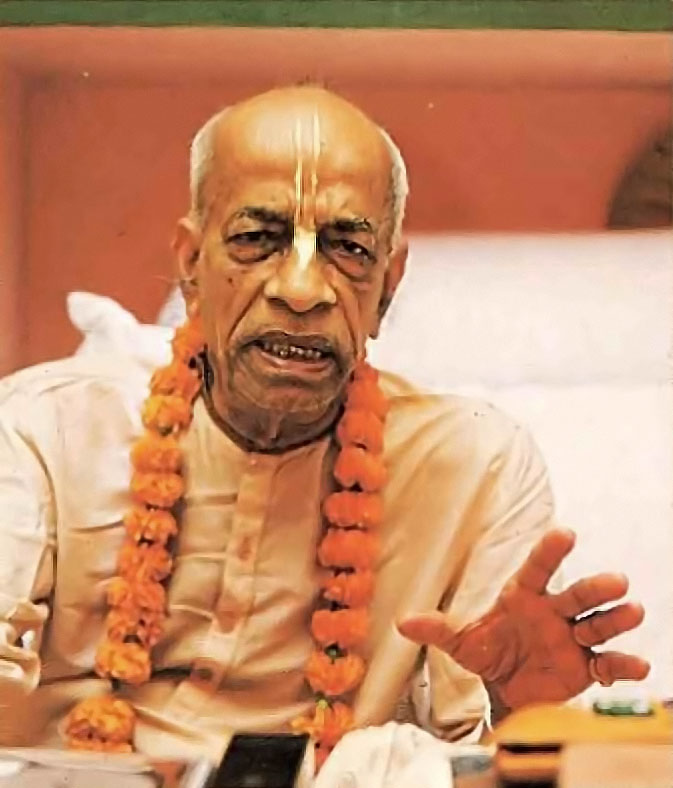
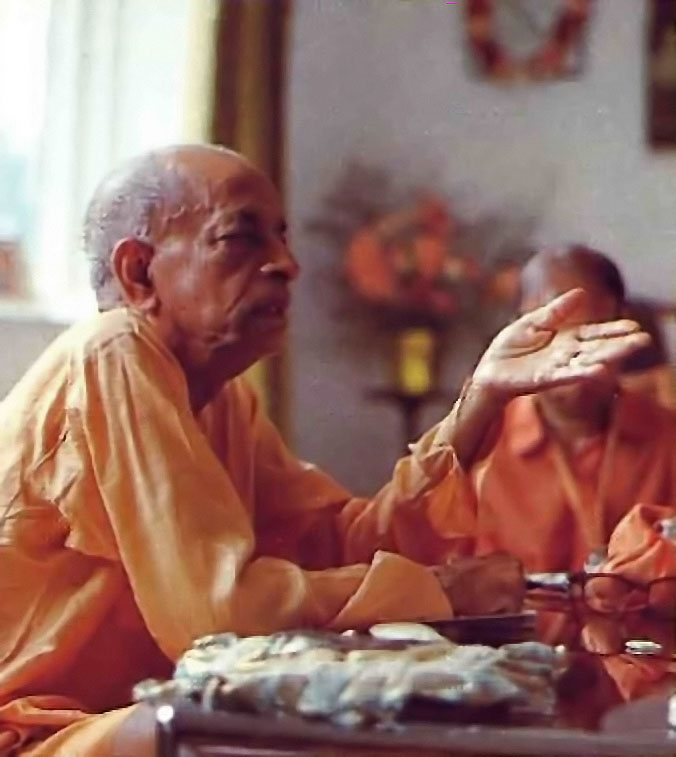
Conversations about spiritual life between Bob Cohen, a young Peace Corps worker in India, and His Divine Grace A.C. Bhaktivedanta Swami Prabhupada. Recorded at the ISKCON International Center at Lord Caitanya’s Birthplace, Mayapur, India
The bodily effulgence of Krishna generates millions of universes. In this solar system the sun produces many planets, and due to sunshine the planets are warm and the seasons change. Due to the sun there are trees, green foliage, fruits and flowers. Similarly, whatever we see in creation is all due to Krishna’s bodily effulgence.
Everyone is a servant of eternal time, and therefore no one can be king in this material world. A king is a person who can order. However, even a king cannot order time and tide. Therefore one is only a false king in this material world
Everywhere you look there are so many names. Names for packages, names for signposts, names for places, names for plants, names for people. Names are convenient, and maybe a little confusing.
Many observers feel that with corruption so common and scandal nearly standard, society is in a bad way and getting worse. What’s really happening, and what to do? India’s Bhavans Journal interviews His Divine Grace A.C. Bhaktivedanta Swami Prabhupada.
Those who relish Srimad-Bhagavatam are compared to swans that enjoy pleasant ponds of water, scenic and natural, whereas materialists are compared to the crows who prefer to enjoy the garbage of refuse heaps.
Everyone requires possessions such as food grains, clothing, money and other things necessary for maintenance of the body, but one should not collect more than his actual basic needs. If we follow this natural principle there will be no difficulty in maintaining body and soul together.
Absolute authority is bad when the authority is wrong. But if the authority is right, then it is good—because you can submit to one authority and receive all knowledge. It’s like going to a supermarket; we can get everything there in one place.
German pessimist philosopher Arthur Schopenhauer (1788-1860) thought that nirvana, (freedom from suffering) means becoming desireless—putting an end to our will. But His Divine Grace A.C. Bhaktivedanta Swami Prabhupada disagrees.
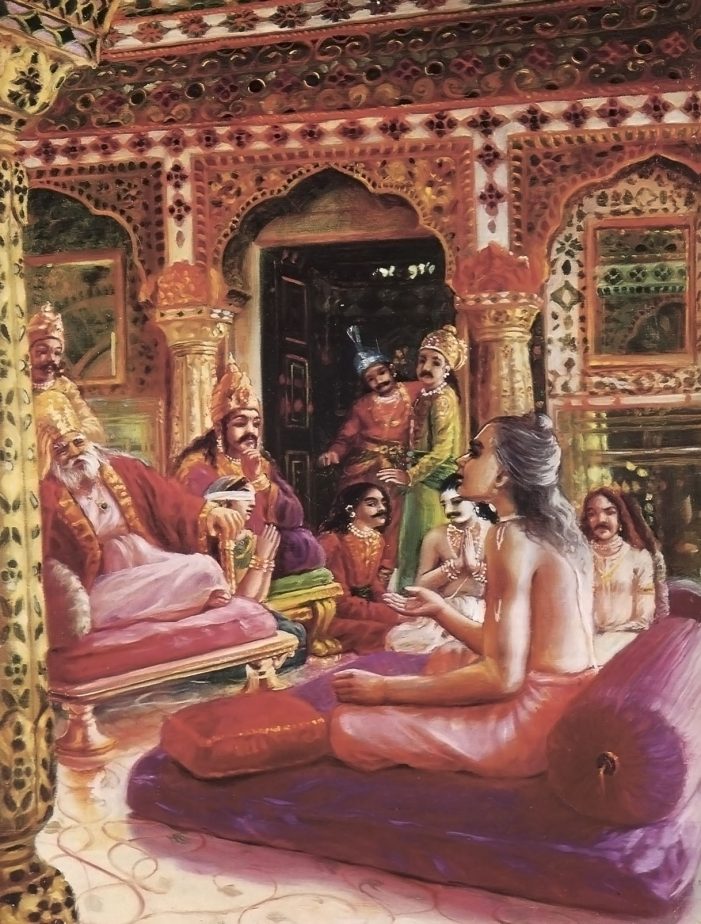
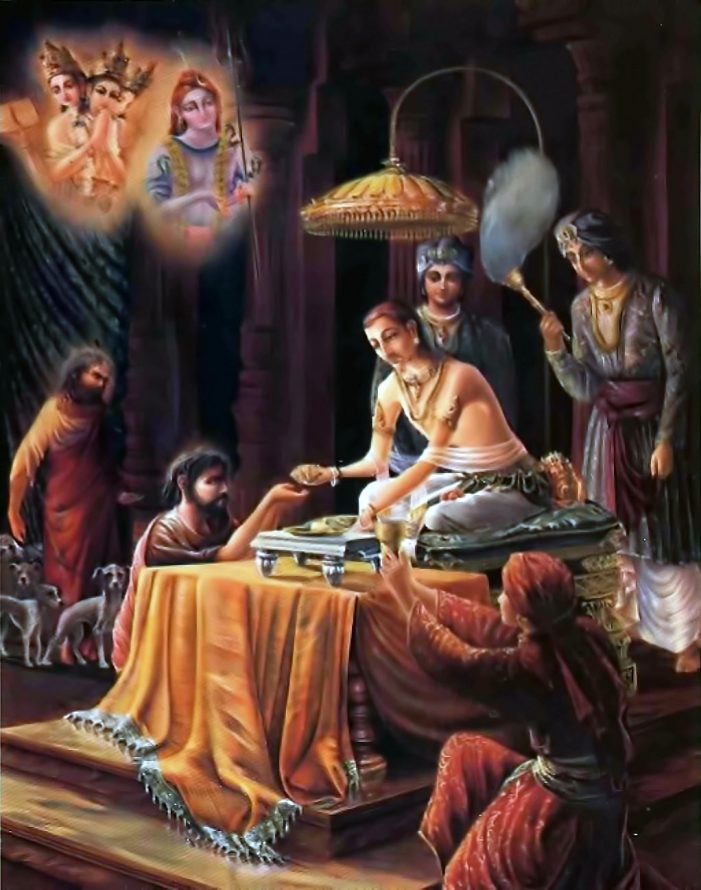
King Rantideva was always satisfied and depended completely on the Lord’s providence. At the same time, when guests came to his palace the generous king would personally look after their every comfort, as if it all depended not on providence but on him.
“Thou shall not kill” Christians like to misinterpret this instruction. They think the animals have no soul, and therefore they think they can freely kill billions of innocent animals in the slaughterhouses.
Atheist-existentialist Jean-Paul Sartre writes that because man wants to be God but cannot, he is a “useless passion” in a universe that has no purpose—and thus, he is always in anxiety.
The prosperity of humanity does not depend on a demoniac civilization that has no culture and no knowledge but has only gigantic skyscrapers, and huge automobiles always rushing down the highways. The products of nature are sufficient.
Soren Kierkegaard, the father of existentialism, said we have to make the leap of faith and he saw the goal as God. He wrote, “There is a God—His will is made known to me in holy scripture and in my conscience.”
The species already exist, and the living entity simply transfers himself from one womb to the next, just as a man transfers himself from one apartment to another.
Unfortunately many parents are not satisfied with this movement… However, we have no alternative other than to teach our disciples to free themselves from materialistic life. We must instruct them in the opposite of material life to save them from the repetition of birth and death.
An intelligent person is not supposed to work like an ass. If we are parasites, then a high-court judge is also a parasite. A rascal sees a judge sitting—talking a little and getting a high salary—so he calls the judge a parasite.
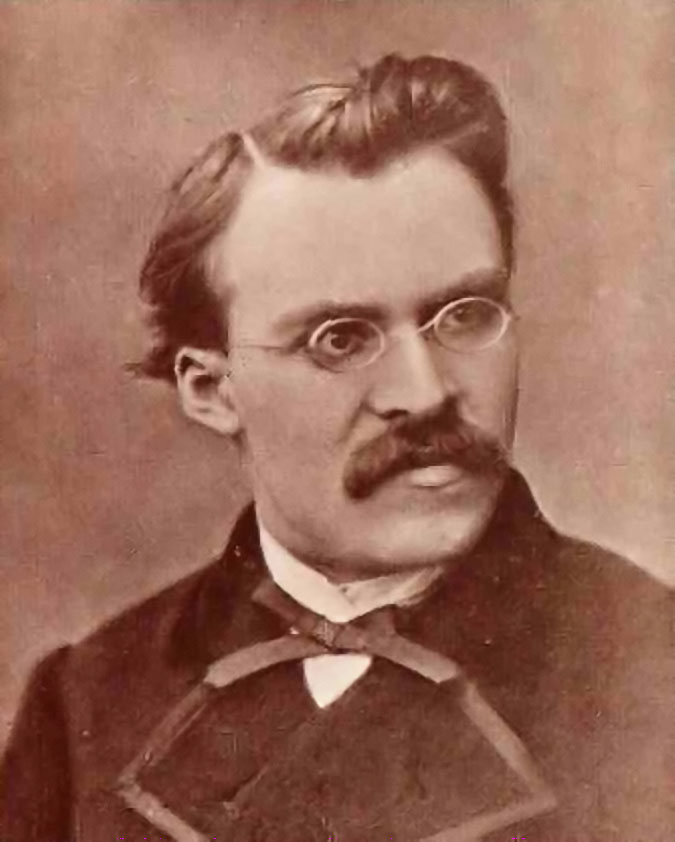
Friedrich Nietzsche thought of the “superman” as someone totally self-controlled, unafraid, simple, aware, self-reliant… and nonexistent. But here His Divine Grace A.C. Bhaktivedanta Swami Prabhupada tells us about real supermen—who they are and how they get that way.
Society is just like a child. If a child wants to go to hell, should the father allow it? Society may want so many nonsensical things, but it is the duty of the government to know how to uplift the citizens.
Your so-called science is also belief. If you call your way science, then our way is also science. Your belief is that life comes from chemicals, but you cannot prove it. Therefore you prove yourself to be a rascal.