“Dr. Newton,” the man stared, “who made this wonderful contraption? The planets move with utter precision, you know. Why, it’s ingenious. Who made it?” “No one,” Newton replied. “One day last week it simply appeared here.”
Sciences’ theory that matter is the source of life isn’t based on any observed data. They have faith in chance, and we have faith in God. That’s what it comes down to.
The claim of molecular biologists that life has come about by evolutionary development—beginning from a primordial environment of methane, ammonia, and water sparked by an electromagnetic or thermal stimulus—has never been substantiated by experimental evidence.
The whole world of science and technology is running on the false idea that life is born from matter. We cannot allow this nonsensical theory to go unchallenged. Life does not come from matter. Matter is generated from life.
This radical change in archaeological theory should serve as a lesson that the pronouncements of material science, based on knowledge gained through imperfect senses by imperfect minds, are subject to error; they should not be considered absolute.
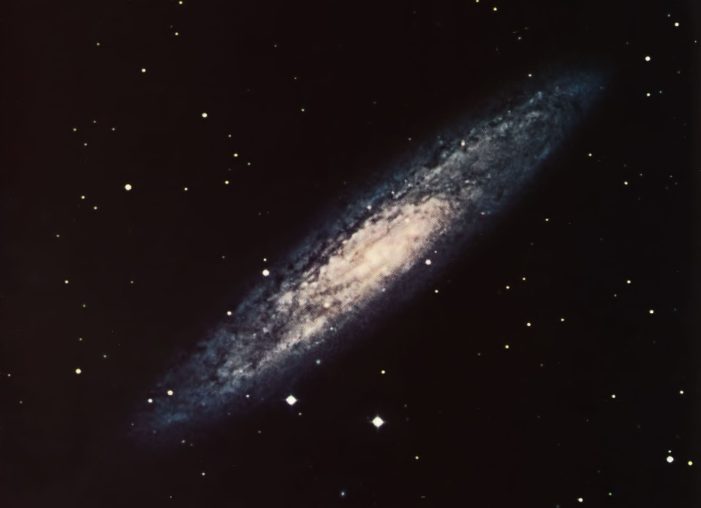
Vedic references tend toward the Big Bang theory, which suggests that at a certain time well in the future the process will reverse itself, and the universe will turn in on itself.
Everyone knows that because the roots of trees store the sun’s energy, it is possible to get fire from a tree. These scientists are tiny creatures, but they are very proud. We don’t give them credit, because they are simply stating what everyone knows.
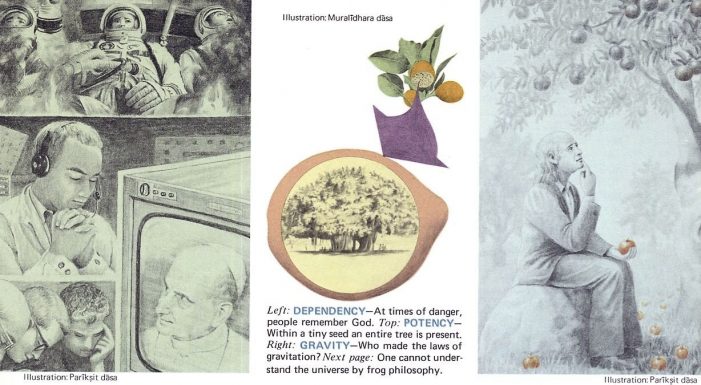
When we think calmly and carefully about this wonderful universe, we can see that everything is working under the control of a supreme brain. The arrangements in nature are perfectly ordered. Things would be at random without the careful planning of a scientific and engineering brain.
Not a single scientific advancement has lessened the existence or potency of God, and none ever will. Nor has science made man any more secure in his position or powerful in conquering the stringent laws of nature that attack him at every moment.
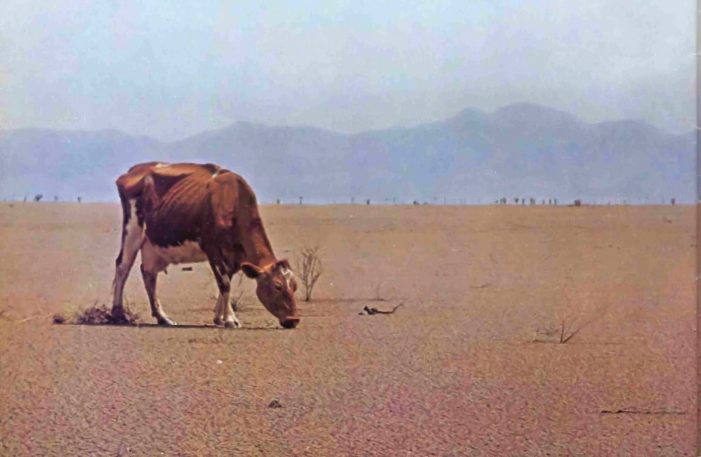
In the middle of one of the worst droughts ever, our scientists are resorting to “cloud seeding”-—but they can’t find any clouds to seed… Could it be that amid all their attempts to control nature, the scientists are forgetting God?
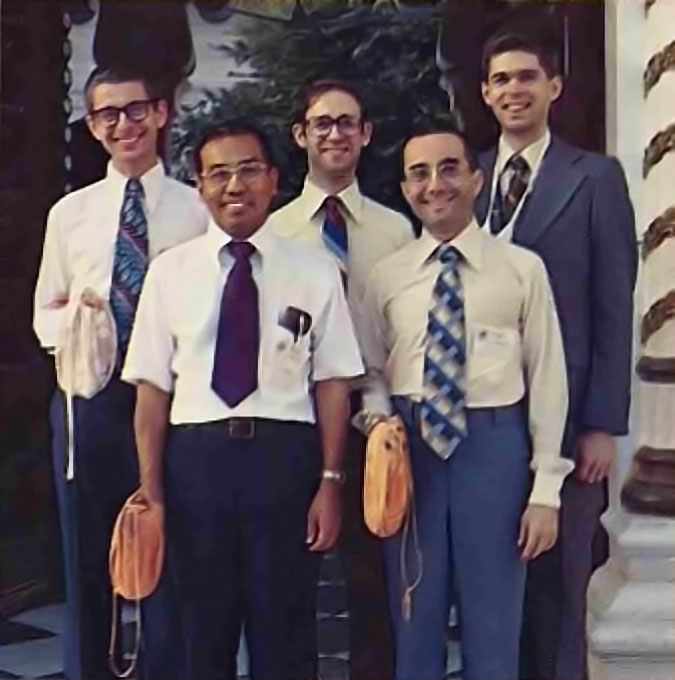
the Bhaktivedanta Institute members at the “Life Comes From Life” Conference in Vrindavan conclusively proved that life can’t possibly come from chemicals and that—as we see daily—life comes from life.
A true scientist would never prematurely declare, “I do not believe that I have a soul or spirit that survives my death.” Rather, if he really wished to perceive the soul, or self, he would embrace the process of self-realization Lord Krishna outlines in the Bhagavad-gita.
Your so-called science is also belief. If you call your way science, then our way is also science. Your belief is that life comes from chemicals, but you cannot prove it. Therefore you prove yourself to be a rascal.
How in the world can you say that the Vedas don’t really disagree with modern science? First of all, modern science says the moon is closer to the earth than the sun is, whereas the Vedas clearly say that the sun is closer.
The sickness scientists and political leaders are suffering, “demon disease”—the compulsion to deny and decry the existence and superintendence of the Supreme Lord.
There are two kinds of living beings in the creation—the divine and demonic. A demon need not be a huge monster with ten heads, nor a red fiend with a pitchfork. In fact, the demons who live among us generally appear quite ordinary.
Automation, in the form of computers is an attempt to exercise control, not only of the mechanical process itself, but of the human being who directed it, turning him from an active to a passive agent, and finally eliminating him altogether.
Twenty-eight percent of all Americans, according to a Gallup poll cited in the Los Angeles Times on October 13, 1976, have seen through the sham and now believe the moon landing to be a fake.