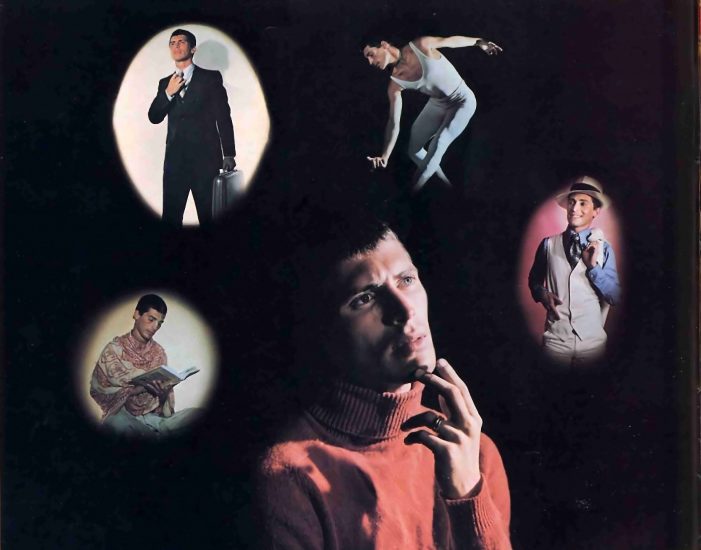
Plato believed society can enjoy prosperity and harmony only if it places people in working categories or classes according to their natural abilities. He thought people should find out their natural abilities and use those abilities to their fullest capacity—as administrators, as military men, or as craftsmen.
Even in the so-called normal condition, the pleasure derived from sexual intercourse is simply frustrating and insignificant. For ordinary men attached to the materialistic way of life, their only pleasure is sexual intercourse.
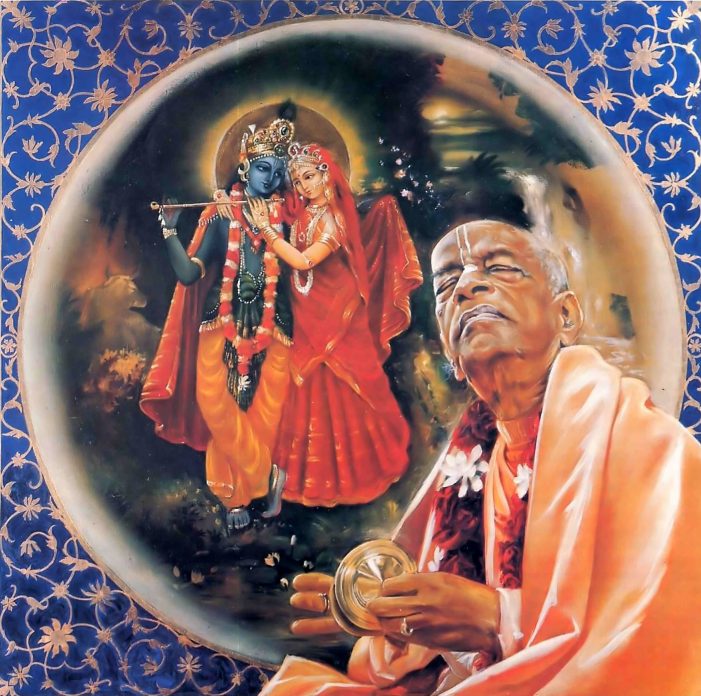
German pessimist philosopher Arthur Schopenhauer (1788-1860) thought that nirvana, (freedom from suffering) means becoming desireless—putting an end to our will. But His Divine Grace A.C. Bhaktivedanta Swami Prabhupada disagrees.
Atheist-existentialist Jean-Paul Sartre writes that because man wants to be God but cannot, he is a “useless passion” in a universe that has no purpose—and thus, he is always in anxiety.
Soren Kierkegaard, the father of existentialism, said we have to make the leap of faith and he saw the goal as God. He wrote, “There is a God—His will is made known to me in holy scripture and in my conscience.”
Soren Kierkegaard was a mid-nineteenth-century Danish philosopher who is generally regarded as the father of existentialism. A devout Christian, he believed that religious truth is not innate within man, and that man must therefore receive this truth from God.
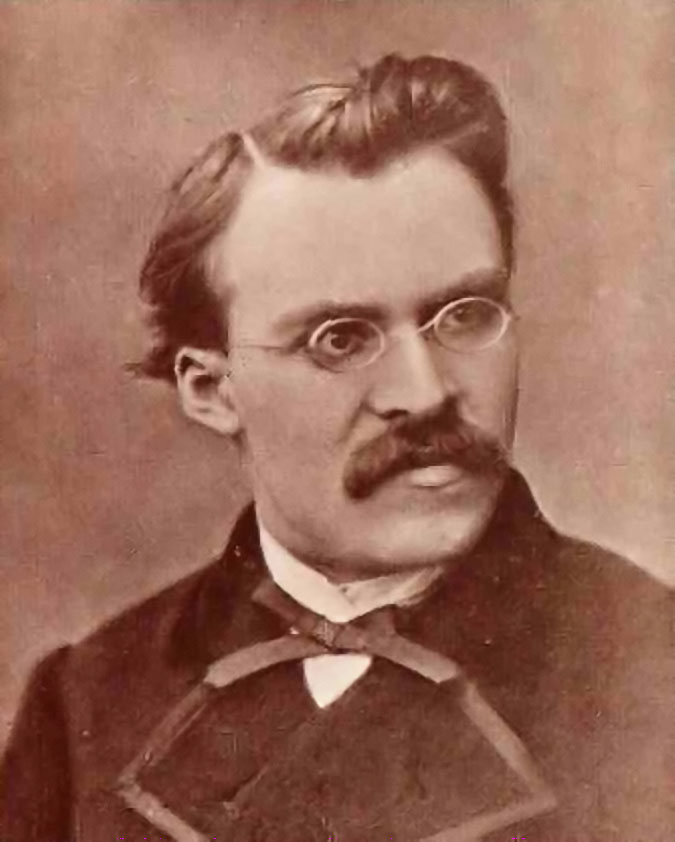
Friedrich Nietzsche thought of the “superman” as someone totally self-controlled, unafraid, simple, aware, self-reliant… and nonexistent. But here His Divine Grace A.C. Bhaktivedanta Swami Prabhupada tells us about real supermen—who they are and how they get that way.
Thomas Aquinas compiled the entire Church doctrine in Summa Theologica, which constitutes the official philosophy of the Roman Catholic Church. He also systematized a good deal of Platonic and Aristotelian philosophy.
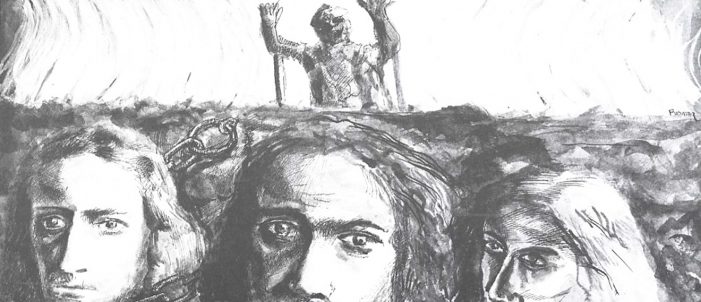
In Plato’s Republic, Socrates uses the allegory of the cave to illustrate the nature of man’s attachment to the illusory things of this material universe. He tells of men living in the depths of an underground cave, the entrance of which is open to the light.
Logic and reason are useful in the search for the Absolute Truth. But they’re not enough to obtain perfect knowledge, we must overcome four basic human defects.
The soul can never be cut into pieces by any weapon, nor can he be moistened by the water, nor withered by the wind. This individual soul is unbreakable and insoluble, and can neither be burned nor dried.
Surrendering all unto the Supreme Lord is a difficult if not impossible task for must people. This is because they are not aware of the peace such surrender brings.
The philosophical question of fate versus free will is an old one. Are our thoughts and actions completely determined by forces over which we have no control? Or, are we free to decide for ourselves, to be the captains of our fate?
Realization is not something we learn in a book or hear in a lecture. Realization is living the life for which man is intended. Realization does not imply withdrawal; realization is leading life and meeting destiny with opened eyes.
In recent years there have been many philosophies based around the premise of the nonexistence of God. One such philosophy, existentialism, which emerged in a shattered France during World War II, maintains that the universe is purposeless and that there is no supreme controller.
I have strong evidence to support the fact that there is no happiness in the material world and I have equally strong evidence to prove that any human being can achieve total, lasting happiness in this lifetime.
A frequent criticism of the Krsna consciousness philosophical tradition is that it places too much emphasis on authority. This is not surprising, seeing as how philosophy in the modern world is based on a revolt against authority.
No. Providence is not responsible for the sufferings of humanity. The suffering of humanity is the result of its misuse of discriminative power or the little independence which is given to the individual soul.
In the relative truth everything can be known within the purview of time, space and thought but in the realm of the Absolute no such method of scientific thought can work. The Absolute Truth can therefore be known by the transcendental method of thinking.
Truth cannot be realized by unremitting study of the Scriptures, by passing examinations, testing scholarly knowledge, by dint of intellectual power, or by outwitting unsophisticated folk in verbal jugglery by enmeshing them in the cobweb of sophistry.