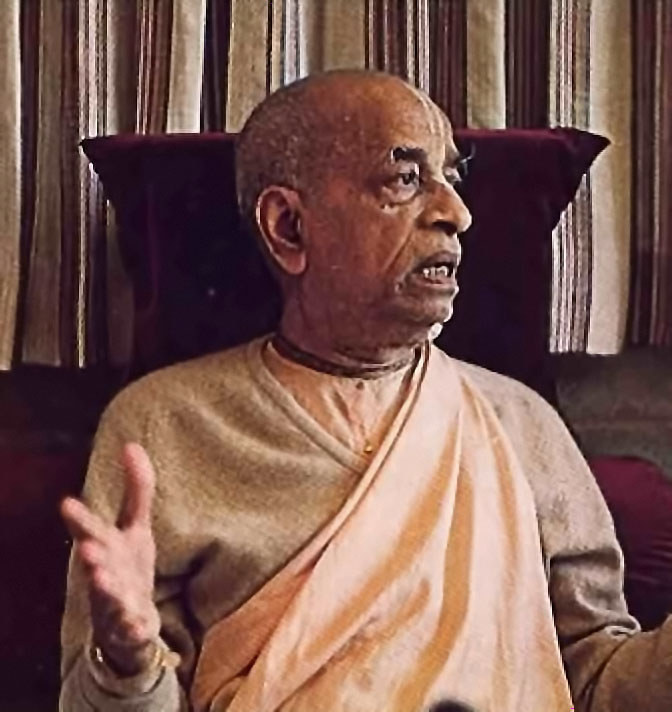
Today, it seems, there are more spiritual groups than ever before competing for public attention and allegiance. Freelance reporter Sandy Nixon finds out what makes Krishna consciousness unique in an interview with His Divine Grace A. C Bhaktivedanta Swami Prabhupada.
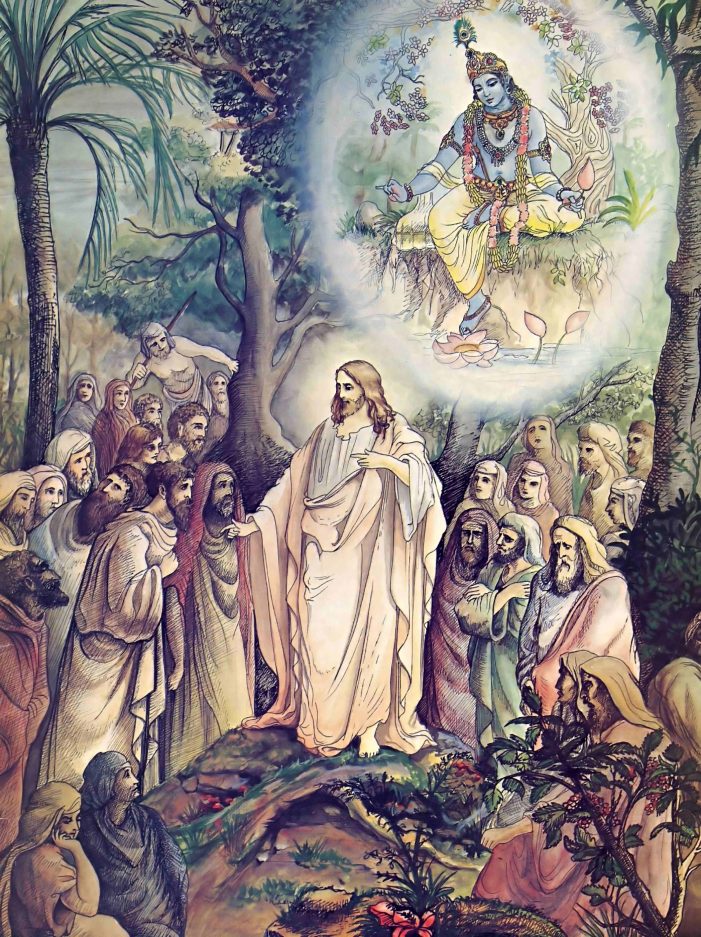
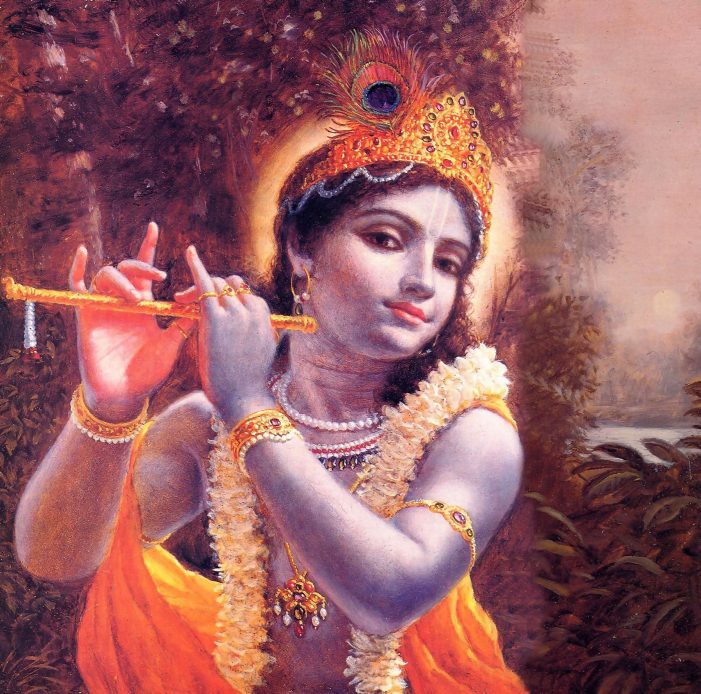
What is the meaning of the word Christ? Christ comes from the Greek word Christos, meaning the anointed one. Christos is the Greek version of the word Krishna.
BHAKTI cannot, strictly speaking, be defined, because it is transcendental. Sandilya, however, defines it as: exclusive and intense loving attachment to the Lord. Bhakti is recognized in Srimad-Bhagavatam as the highest and most satisfying function of the soul.
In the Bible it is said, “In the beginning was the Word, and the Word was with God, and the Word was God.” There is no difference between God and God’s form, His qualities and His word.
Religion refers to our constitutional position. It is different from faith. Faith can be changed but according to the Vedic system, religion cannot be changed.
To avoid confusion, one must use careful intelligence to discriminate between the saints and the swindlers, the incarnations and the imposters, the holy men and the hypocrites.
“Thou shall not kill” Christians like to misinterpret this instruction. They think the animals have no soul, and therefore they think they can freely kill billions of innocent animals in the slaughterhouses.
Jesus Christ said, “Thou shall not kill.” So why is it that the Christian people are engaged in animal killing? The Bible does not simply say, “Do not kill the human being.” It says broadly, “Thou shall not kill.”
Who will say which religion is false and which genuine, which harmful and which beneficial? What we need is not someone’s self-interested opinion but a reliable, nonsectarian standard for separating the bogus religions from the bona fide.
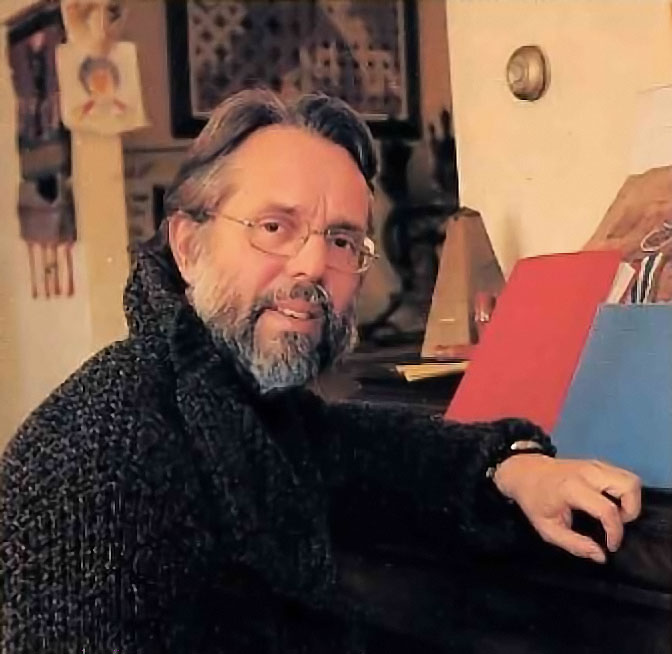
The following is a statement by Dr. Harvey Cox, theologian at Harvard Divinity School, at a symposium titled “Krishna Consciousness and Religious Freedom,” conducted at the Center for the Study of World Religions, Harvard University, November 22, 1976.
Early Church father Augustine thought God eternally abandons some souls to soul-death. This is not so, our consciousness can always be revived, and that is the conviction of the Krishna consciousness movement.
Krsna points to this essential religion at the end of the Bhagavad-gita. “Abandon all varieties of religion,” He urges Arjuna, “and just surrender to Me”
When an Indian person calls on Krsna, he often says, “Krsta.” Krsta is a Sanskrit word meaning “attraction.” So when we address God as “Christ,” “Krsta,” or “Krsna,” we indicate the same Supreme Personality of Godhead.
The Bible has nearly a hundred verses that praise the power, glory, and excellence of God’s hallowed name. The Bible’s authors obviously considered the holy name of the Lord very important.
Generally people pray, perform rituals, and so on, in hopes of attaining temporary goals: better health, a good marriage, success in business. But in Bhagavad-gita Sri Krsna advises that those who practice religious life by seeking material boons are missing the real point.
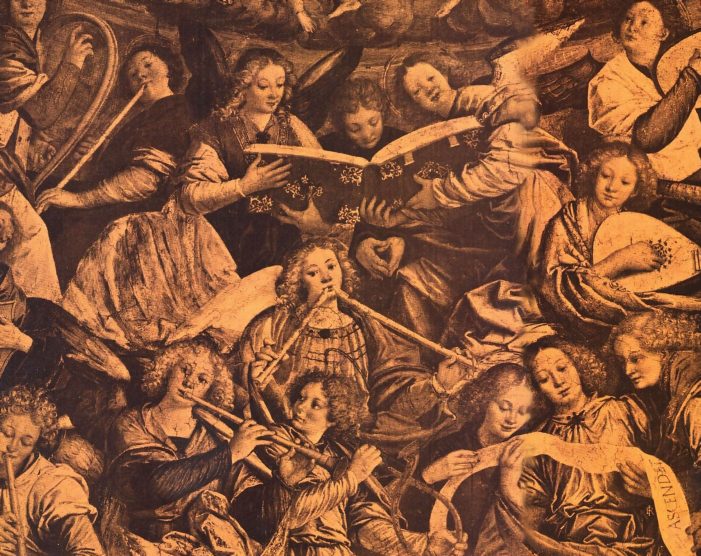
Even a quick reading of the Bible will show that sankirtana was very much present indeed amongst the ancient Jews and early Christians and that it was certainly stressed by one of the Bible’s major figures—David.
Many conflicts around the world are being billed as “religious wars.” Fighting between the Sikhs and Hindus in India, Christians and Moslems in Beirut, Moslem sects of Iran and Iraq, and Protestants and Catholics of Northern Ireland—all seem to have roots in religious conflict.