A Question Of Authority
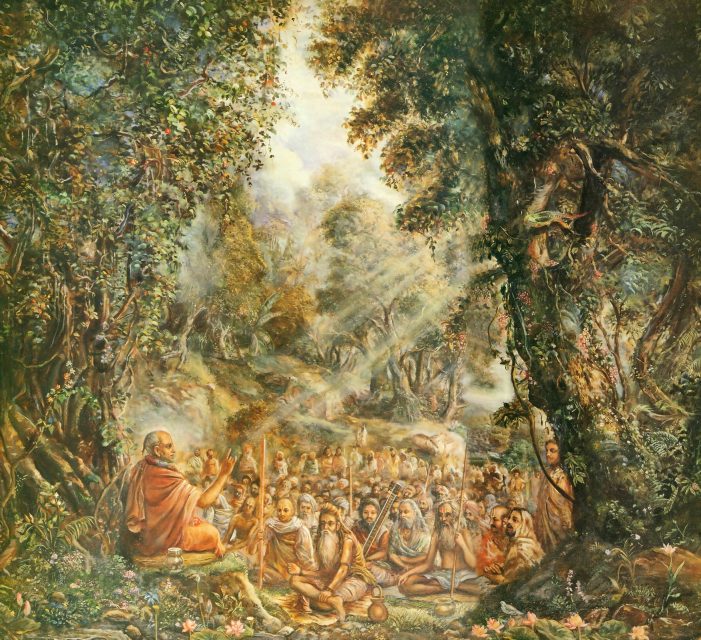
The Supreme Truth is beyond the power of the material senses to see or to know. So what spiritual understanding can we expect to arrive at by ourselves?
The Supreme Truth is beyond the power of the material senses to see or to know. So what spiritual understanding can we expect to arrive at by ourselves?
I was born and brought up in a Vaisnava family. From my early childhood, I had the privilege to learn about Krsna and worship Him. So when I came to this country, I was very much disturbed and disgusted with the Western concept of God as a bush of fire.
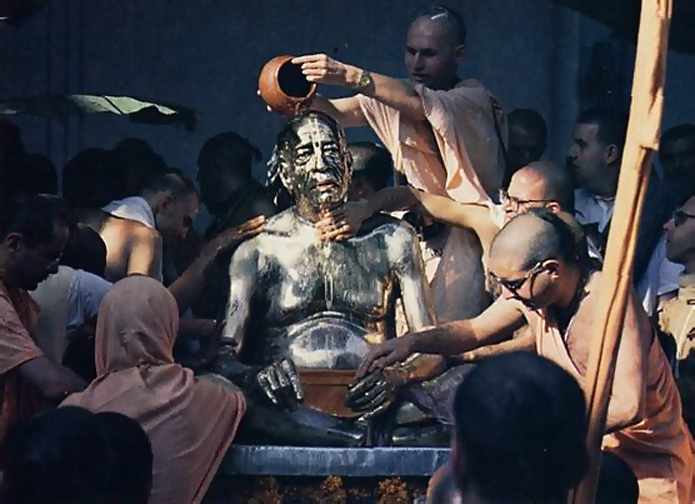
The two-story marble memorial, complete with ornate balconies and winding staircases and featuring photo and sculpture exhibits, stands adjacent to the Krishna-Balaram temple.
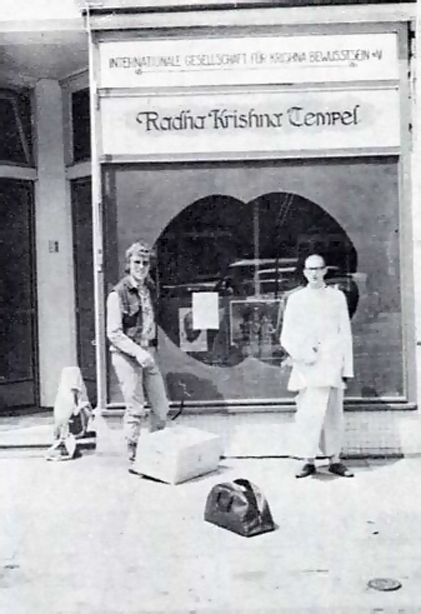
Krishna Consciousness came to Hamburg in October, 1968. Two Americans and one native German formed the team for the first center in Central Europe.
The International Society for Krishna Consciousness (ISKCON) was formed in 1966 by Prabhupada A.C. Bhaktivedanta Swami, who came from India on the order of his Spiritual Master to preach love of God to the people of the West.

This process is especially recommended for self-realization in this age. By performance of Samkirtan, one can achieve the perfection of human life, and the process is so simple that anyone can take it up without qualification.
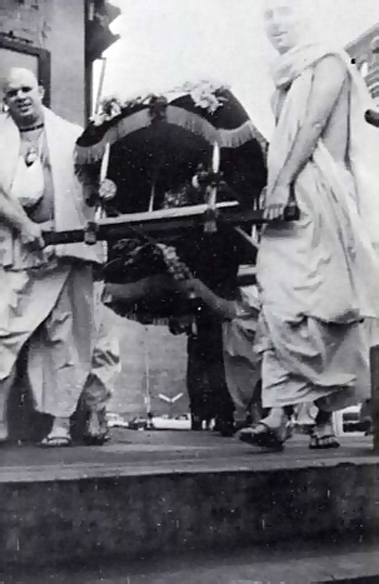
In this Age of Kali spiritual life is difficult. Handicapped by short life span, poor memory, and political turmoil, few if any can take up the path of self-realization by means of meditative yoga, temple worship or study of the Vedas.
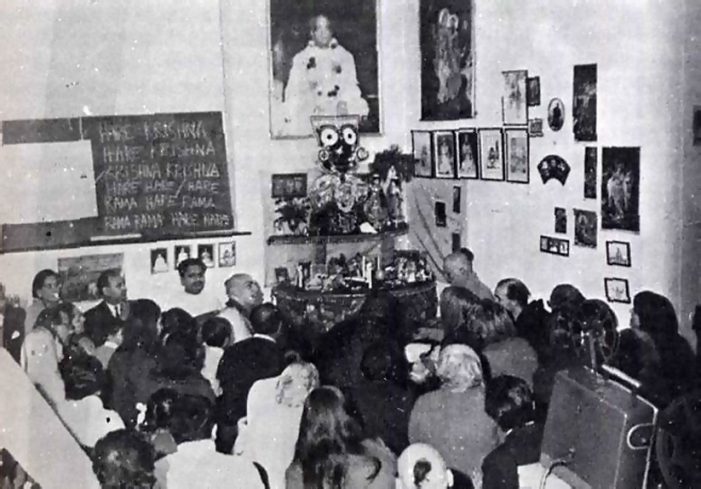
ISKCON London 1969 in Photos. Kirtans at Albert Hall, St. Pancras Hall, Oxford, the “Middle Earth Round House” and the “Art Lab”, Interview with the BBC.
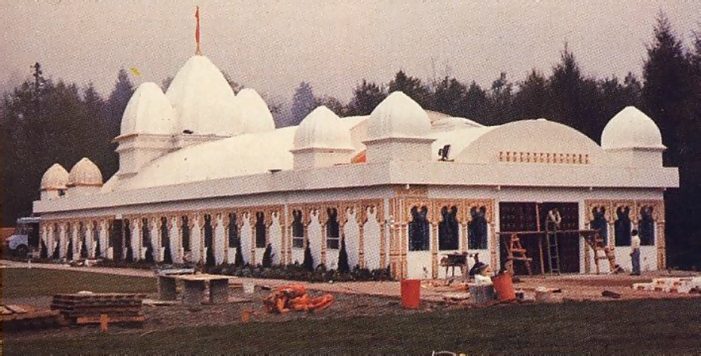
After five years of patient effort and a heroic last-minute marathon, the devotees of the ISKCON center in Vancouver have completed building an ornate Vedic-style temple for their worshipable Deities, Sri Sri Radha-Madana-mohana.
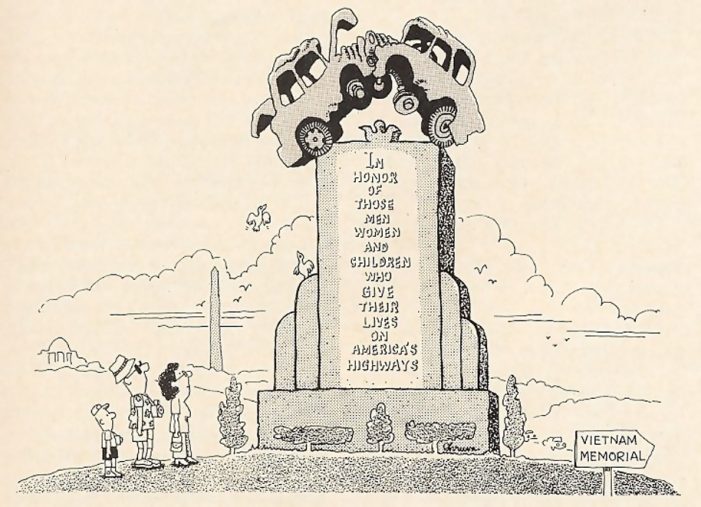
The 170 million motor vehicles registered in the United States pump 80 million tons of carbon monoxide, nitrogen oxide, and hydrocarbons into the air annually.
In “The Vedic Observer” section of your October issue you say that since everything belongs to the Supreme Person, we’re thieves if we claim anything belongs to us. Does that mean that the house I’ve lived in for the past twenty-five years isn’t mine?
To effect successful result in the attempt of agricultural enthusiasm there are five causes namely the situation of the land, the man who works in the field, the instruments or implements applied in the enterprise and above all the hidden hand natural forces, known as Daiva.
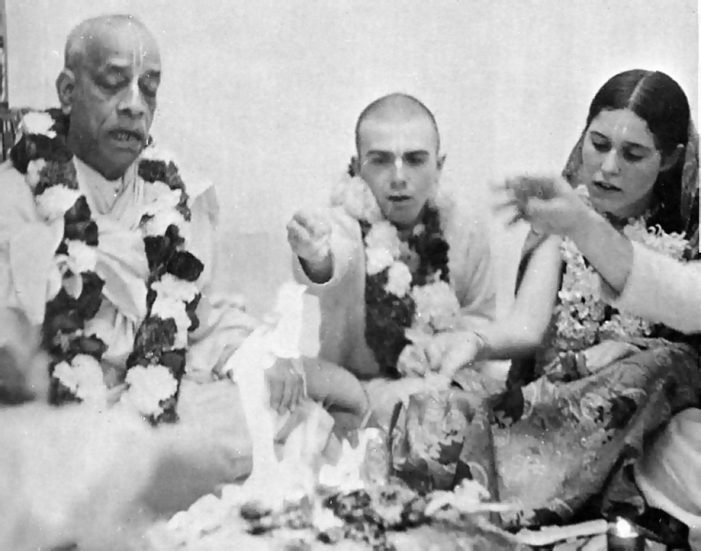
Accepting a wife is also considered renunciation, because the student is voluntarily sacrificing his tendency toward unrestricted sex life for a program of regulated restraint to develop his spiritual consciousness.
TEACHINGS OF LORD CHAITANYA begins with the Lord’s instructions to Rupa Goswami. “The science of devotional service is just like a great ocean and it is not possible to show you all the length and breadth. I shall explain about the nature of the ocean by taking a drop of it.”
Krishna Consciousness in Hawaii is currently established at 51-576 Kam Highway in Kaaawa (just before the Crouching Lion Inn). Classes are at 7 a. m. daily and at 7 p.m. Monday, Wednesday and Friday. A Love Feast is held every Sunday at noon,
“I found out what being famous was like. It’s a drag responsibility. I spent a long time looking; meditation in India and all that. It was all okay, you know, but it wasn’t the answer. And then I met Yoko, and we worked our sort of thing out between us, fell in love and that.” John Lennon.
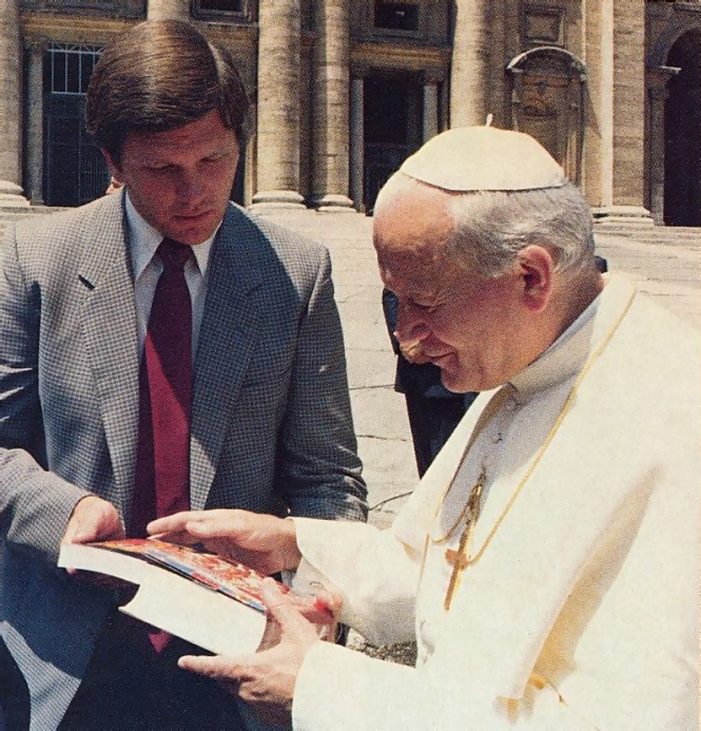
At the Vatican recently, Pope John Paul II received from Kirtiraja dasa Polish editions of Srila Prabhupada’s Bhagavad-gita As It Is and Krsna, the Supreme Personality of Godhead. Said the pontiff: “Thank you very much. They’re very beautiful.”
Do I have to be initiated and live at a temple in order to become a pure devotee, in order to see Krsna face to face and become His eternal servant? Or do I just keep chanting?
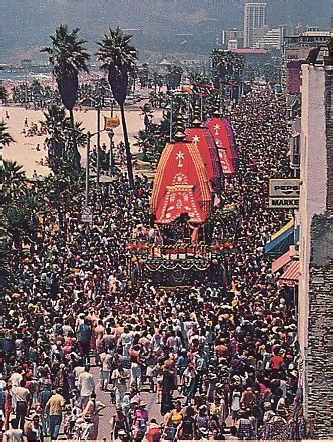
Following a religious tradition observed for thousands of years in Jagannatha Puri, India, the devotees of the Hare Krsna temple here celebrated their seventh annual Ratha-yatra Chariot Festival recently.
During a bad drought in California a few years ago, one scientifically-minded politician proposed towing in icebergs from the Arctic. In the meantime rain mercifully came.