The Need of Prayers
Peace is possible only when we actually pray to God knowing our relation with Him. Everything that be is an emanation from the Supreme Lord is the version of the Vedas, the most authentic sources of transcendental knowledge.
Peace is possible only when we actually pray to God knowing our relation with Him. Everything that be is an emanation from the Supreme Lord is the version of the Vedas, the most authentic sources of transcendental knowledge.
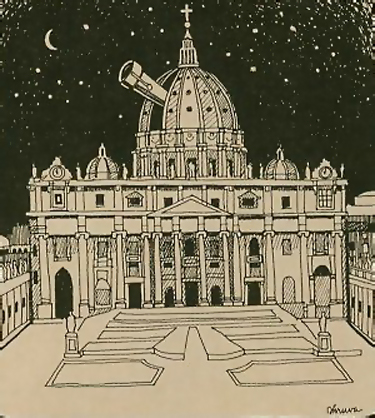
Now the Vatican, through its Pontifical Academy of Science, is actively soliciting advice from hundreds of the world’s leading scientific brains
There are a number of pretentious religious faiths which pass on by that name but actually there is nothing in essence which can be accepted as real religion.
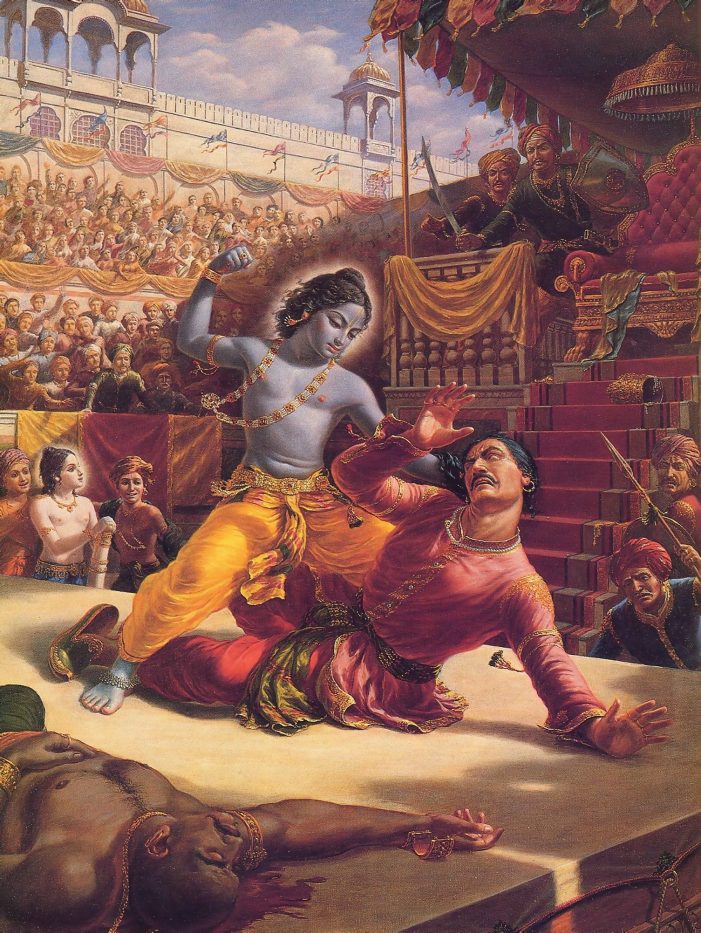
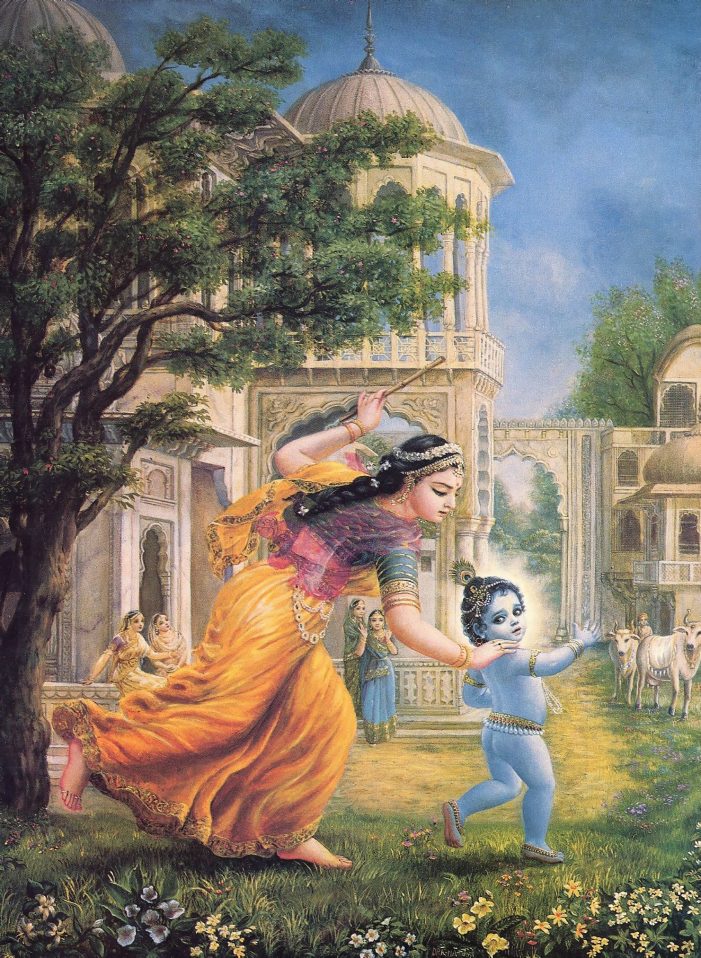
The powerful tyrant, Kamsa, was as vile as they come. After usurping the throne from his father and killing and imprisoning many of his own relatives, he turned on his chief rival, Lord Krsna.
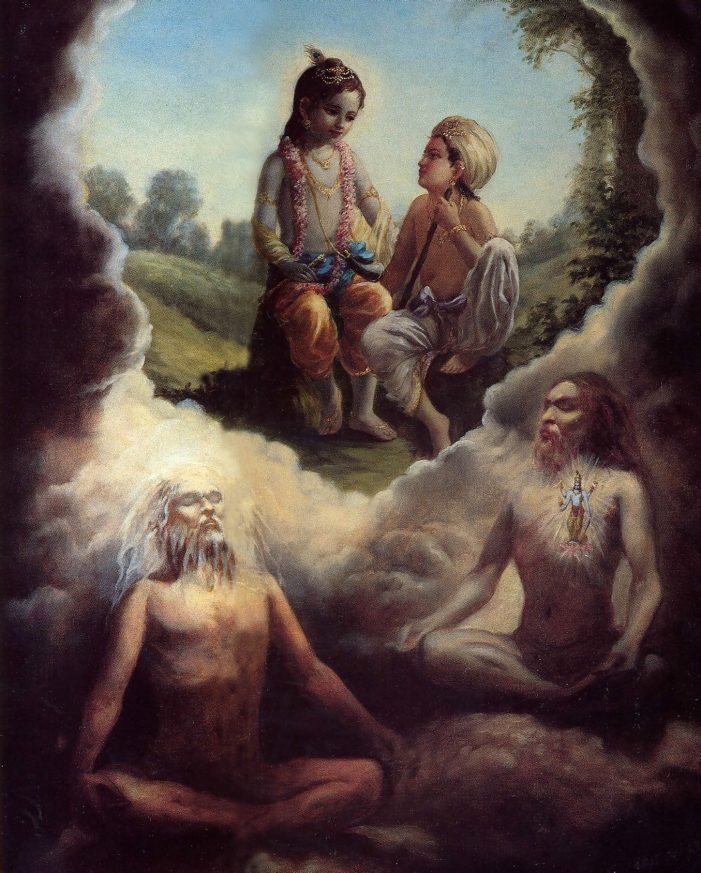
What does our father who art in heaven look like? On the ceiling of the Sistine Chapel there’s Michelangelo’s painting of God as an old man creating Adam, who, by the way, looks healthier and more handsome than God.
The Highest Truth: When you reach it, will you see a burning bush, a pillar of fire, or a person with unlimited, all-attractive qualities?
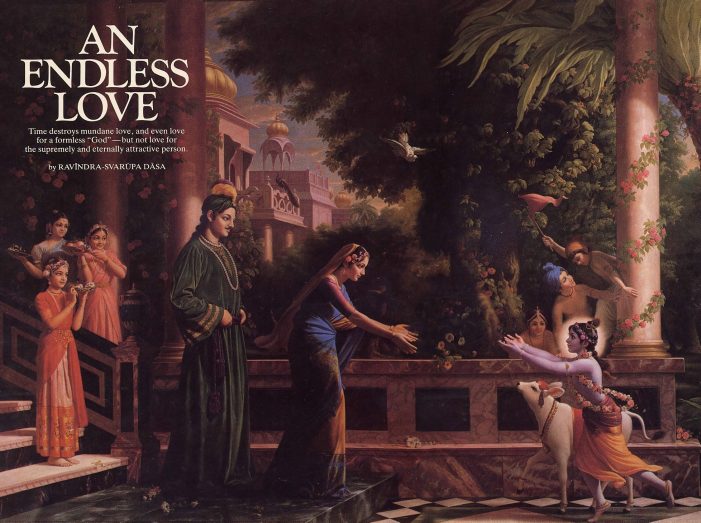
What do we do in paradise? What makes it such a desirable place to be? The dominant image of the kingdom of God I retained from childhood is of a sort of perpetual suburban Saturday spent on the back patio in an interminable family reunion with pious resurrected relatives.
People often cultivate a materialistic approach to God. They pray for material possessions and worldly happiness, regarding God more as their order supplier than as their object of love.
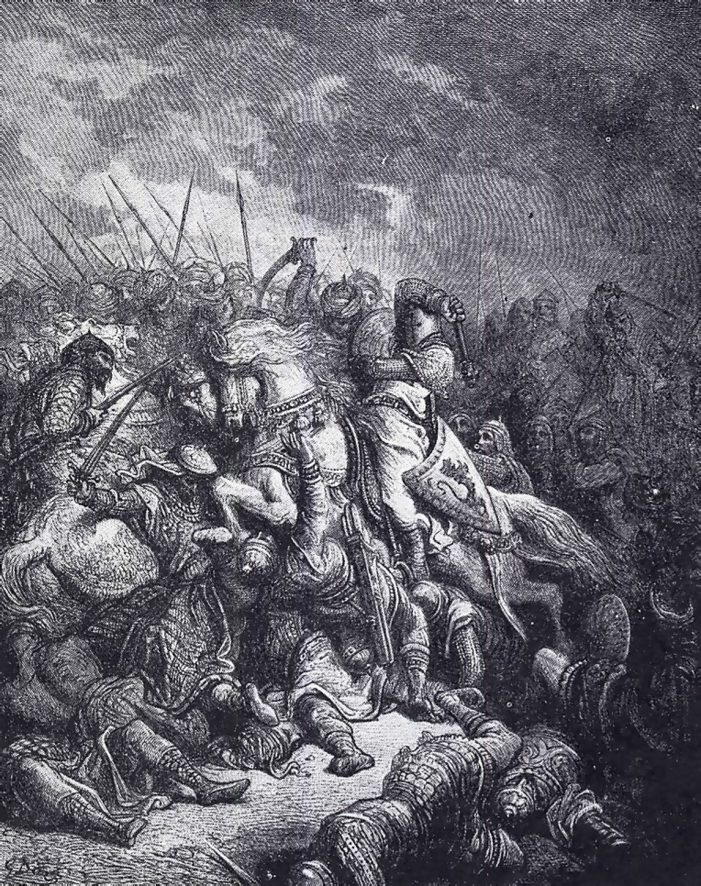
The sight of the Cross sent a shiver of hope through the heartsick Christians, and they rallied round Guy’s red tent, supplicating the sacred object, begging for a miracle to save them.
The eternal religion, called in Sanskrit “Sanatan Dharma,” has no history of beginning or end. By the analytical processes of modern science, we can see that Sanatan Dharma is the business of all the living beings of the Universe.
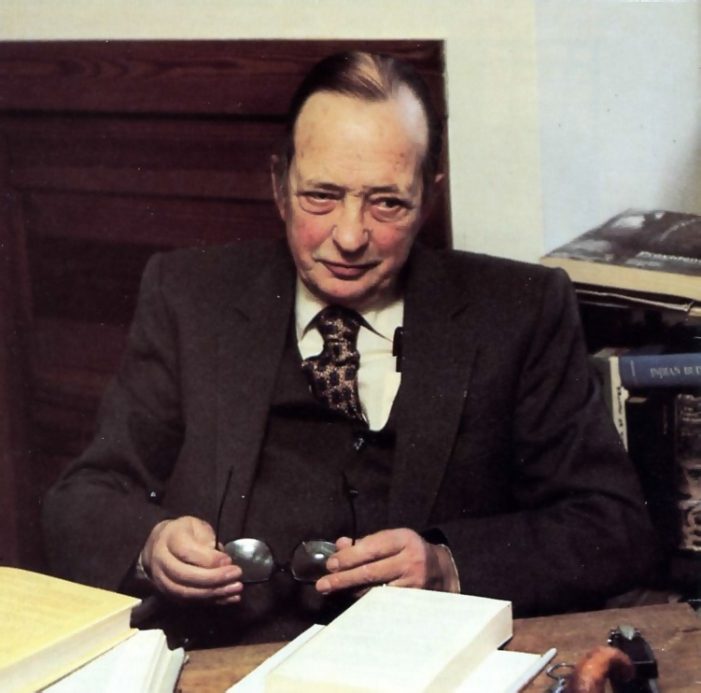
Professor A. L. Basham, one of the world’s most highly respected authorities on ancient Indian civilization, has written extensively on the Hindu and Buddhist religious traditions.
The Bible says, “Thou shalt not kill.” Yet this simple moral maxim seems impossible for most Americans to accept, or even understand—even those clamoring for a return to morality.
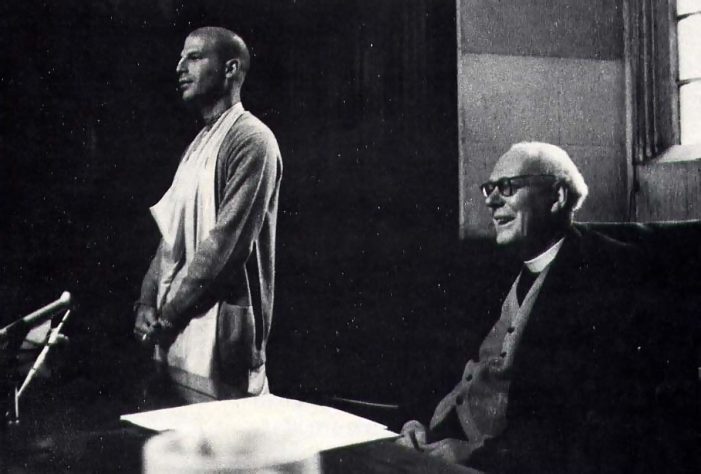
One of the highlights of last summer’s Festival of India in Britain was an ecumenical dialogue at Westminster Abbey, where British clergymen gathered to learn more about the Hare Krsna movement and its role in English society.
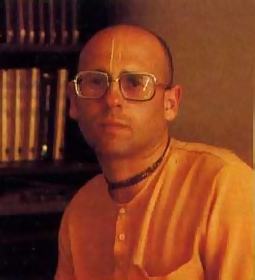
West Virginia Sheriff Robert Lightner doesn’t like people to shave their heads and wear long robes. “When the founding fathers wrote about freedom of religion,” he says, “they didn’t have people like these in mind.”
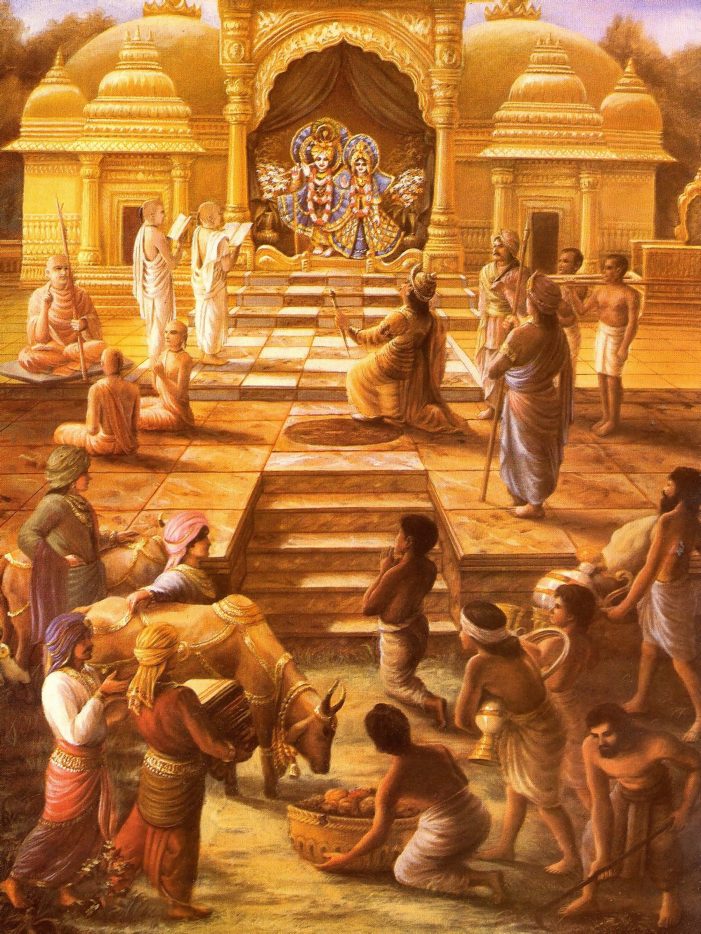
The perfect socio-religious system is explained by Lord Krsna in Bhagavad-gita. (This system differs from the prejudicial system of caste by birth.)
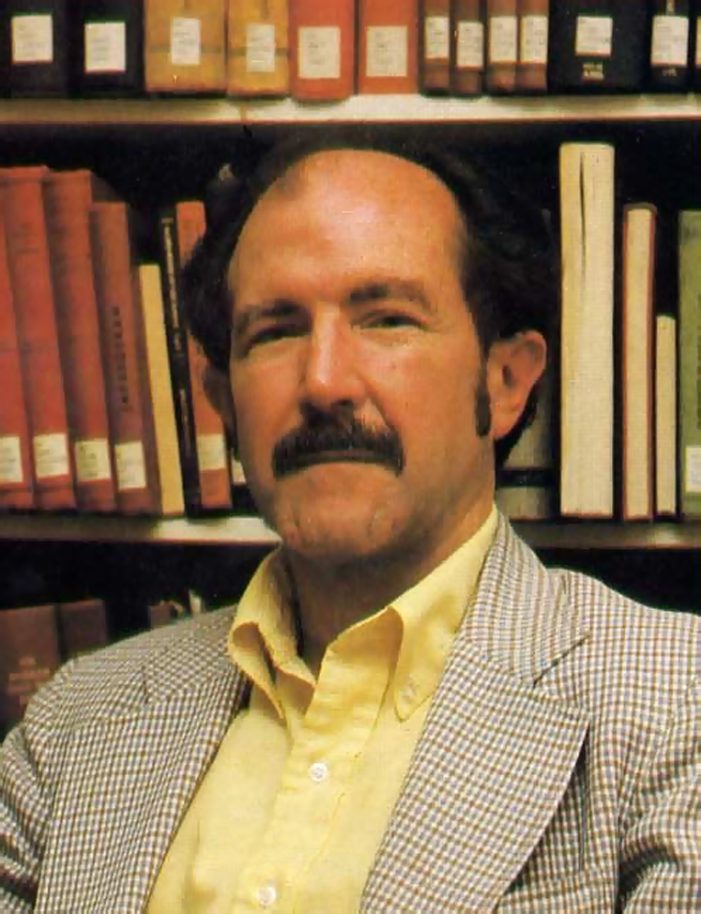
the largest number of new groups have come from India—so much so that the phenomenon can almost be considered a missionary movement from India to America.
A regular occurrence around here is that each year the local newspaper carries an article commending us for our hard work and decency but condemning us for not being Christians. We always answer the criticism, and the paper prints our reply.
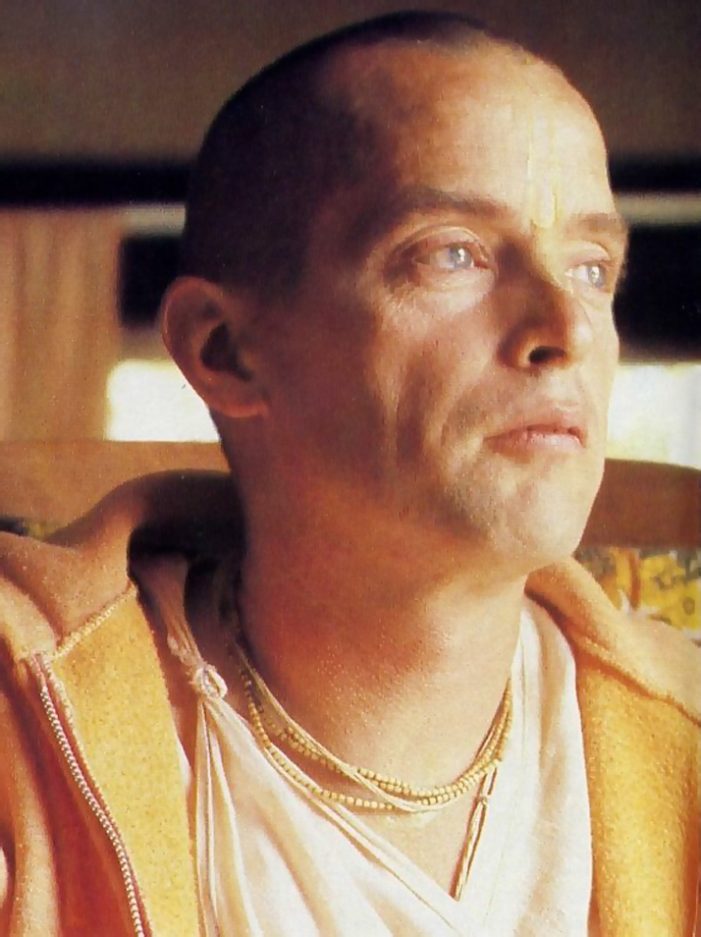
Religion is something you participate in; it’s not a spectator sport. Because it is based on faith, there’s no question of understanding it from the outside. Of course, it is not blind faith. It is reasonable faith.
What Is the Best Spiritual Process? After giving a lecture in Bombay in April 1979 Srila Hrdayananda dasa Goswami Acaryadeva answered a probing question from the audience: ‘All over the world, Christians are living and dying for their Christian faith. How is it that you young people-their progeny—have embraced another faith?” Srila Acaryadeva: Actually, you’ve […]
Strange that these Baptists should discover, looking back at them under a shaven head marked with the twin clay lines of tilaka—the signs of a servant of Visnu—such a disconcertingly familiar American Protestant face.