We are pleased to find that leaders of world politics such as Mr. Churchill has now a days began to think of a human world and trying to get rid of the terrible national frenzy of hate. The frenzy of hatred is another side of the frenzy of love.
In light of so much terrorism these days and the constant threat of war, many people would probably agree with the Vedic literature’s statement that this world is frought with “danger at every step.”
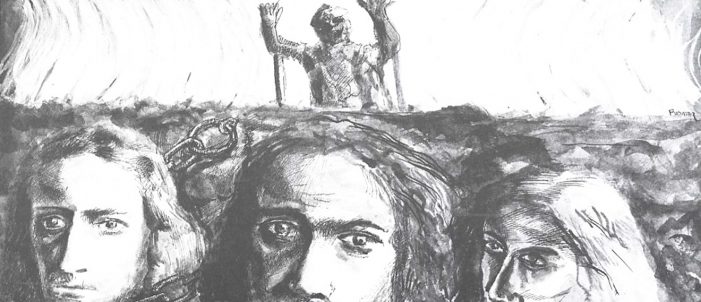
In Plato’s Republic, Socrates uses the allegory of the cave to illustrate the nature of man’s attachment to the illusory things of this material universe. He tells of men living in the depths of an underground cave, the entrance of which is open to the light.
The idea that the earth is unable to provide sufficient resources to keep up with an increasing world population fails to give proper credit to the laws of nature. By nature's laws there is already sufficient food and shelter provided for all creatures.
There can be small calves that will run loose, and milk can be churned into butter. The children will be taught to collect flowers and string them into garlands to decorate the home temple, etc.
Logic and reason are useful in the search for the Absolute Truth. But they’re not enough to obtain perfect knowledge, we must overcome four basic human defects.
The dog-food aisle runs the full length of the store, where, set against the back wall, one finds an equally long display: the meat cooler. Chickens, turkeys, pigs, cows, and sheep.
Krsna points to this essential religion at the end of the Bhagavad-gita. “Abandon all varieties of religion,” He urges Arjuna, “and just surrender to Me”
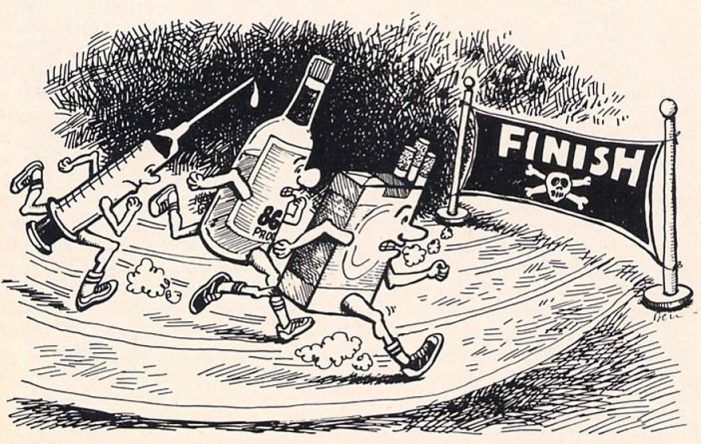
Six to nine times more addictive than alcohol, it is also eight times deadlier. Addiction to it is harder to treat and cure than addiction to heroin, and it leads to a higher incidence of fatality.
We feign indifference toward heroism while within we long for and quietly work at it. The main function of a cultural system, says Becker, is to provide us with an orderly vehicle for realizing our urge to heroism.
In the 1960s terms like yoga, karma, and mantra entered the American language. The rock ‘n’ roll culture of the hippies also popularized terms of Vedic spirituality, simultaneously creating new misconceptions.
Anyone who identifies with the temporary material body, and thus works only for the satisfaction of the body and its extensions, disregarding the needs of the soul, is to be considered mentally ill.
When an Indian person calls on Krsna, he often says, “Krsta.” Krsta is a Sanskrit word meaning “attraction.” So when we address God as “Christ,” “Krsta,” or “Krsna,” we indicate the same Supreme Personality of Godhead.
The Bible has nearly a hundred verses that praise the power, glory, and excellence of God’s hallowed name. The Bible’s authors obviously considered the holy name of the Lord very important.
The four orders of social life called varna are scientifically arranged for the material progress of society, and the four spiritual orders called asrama are designed for natural progress in self-realization.
For the yogi his practice is most severely tested at the time of death. The Supreme Personality of Godhead says, “Anyone who quits his body, at the end of life, remembering Me, attains immediately to My nature; and there is no doubt of this.”
The soul can never be cut into pieces by any weapon, nor can he be moistened by the water, nor withered by the wind. This individual soul is unbreakable and insoluble, and can neither be burned nor dried.