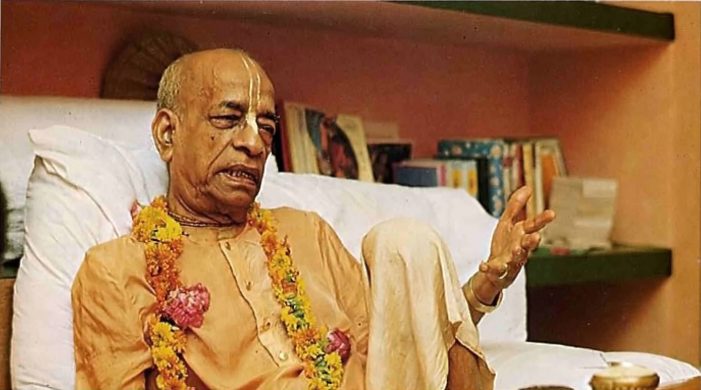
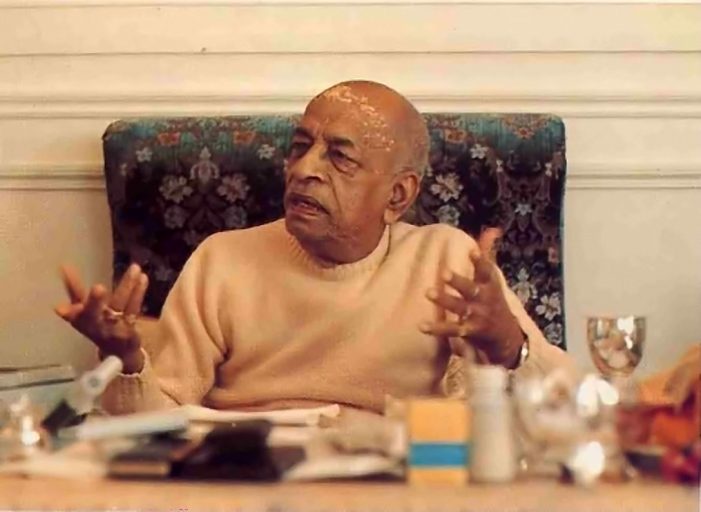
Criminals struck every three seconds in the United States as crime rose a dramatic eighteen percent in 1974. His Divine Grace A.C. Bhaktivedanta Swami Prabhupada discusses the problem with Chicago Police Department media relations expert Lt. David Mozee.
Even in the so-called normal condition, the pleasure derived from sexual intercourse is simply frustrating and insignificant. For ordinary men attached to the materialistic way of life, their only pleasure is sexual intercourse.
According to the 1973 United States Supreme Court decision legalizing abortion, only in the last twelve weeks of pregnancy does the growing fetus have a right to live despite the mother’s wish to abort him.
Communism can’t work the way Karl Max outlined in his famous Manifesto. His Divine Grace A.C. Bhaktivedanta Swami Prabhupada explains why Krishna, not the state, must be the center of a truly perfect and classless society.
If Krishna is at the center of society, then people will be perfectly secure and prosperous. The communist idea is welcome, provided they replace the so-called state with God.
Those who do not like this Hare Krishna movement say we are “crazy.” Similarly, we see a person in material consciousness as a crazy person. Who, then, is actually crazy? Who decides?
Scientists investigating the causes of aging and death will also have to die. At the time of their death, if they have neglected the purpose of life–spiritual realization–what will they have gained?
BHAKTI cannot, strictly speaking, be defined, because it is transcendental. Sandilya, however, defines it as: exclusive and intense loving attachment to the Lord. Bhakti is recognized in Srimad-Bhagavatam as the highest and most satisfying function of the soul.
In the Bible it is said, “In the beginning was the Word, and the Word was with God, and the Word was God.” There is no difference between God and God’s form, His qualities and His word.
Religion refers to our constitutional position. It is different from faith. Faith can be changed but according to the Vedic system, religion cannot be changed.
To avoid confusion, one must use careful intelligence to discriminate between the saints and the swindlers, the incarnations and the imposters, the holy men and the hypocrites.
The lifetime of the materialistic man is passed at night either in sleeping or in sex indulgence and in the daytime in making money, by any means, for gratification of the senses.
If the democratic form of government is to be at all meaningful, the voters must be qualified voters who know how to discriminate between a Madison Avenue illusion and a genuinely substantial political leader.
Human education must not merely instruct us how to prepare for a job or how to speculate upon the imperfect views of great thinkers. Rather, it must enable us to solve the problems of life.
The characteristic of this Kali-yuga age is men become inclined toward four basic sinful activities that break the four pillars of religiosity, leading men into the darkness of passion and ignorance. These four degrading activities, are gambling, intoxicating habits, illicit sex, animal slaughter and eating of animal foodstuffs.
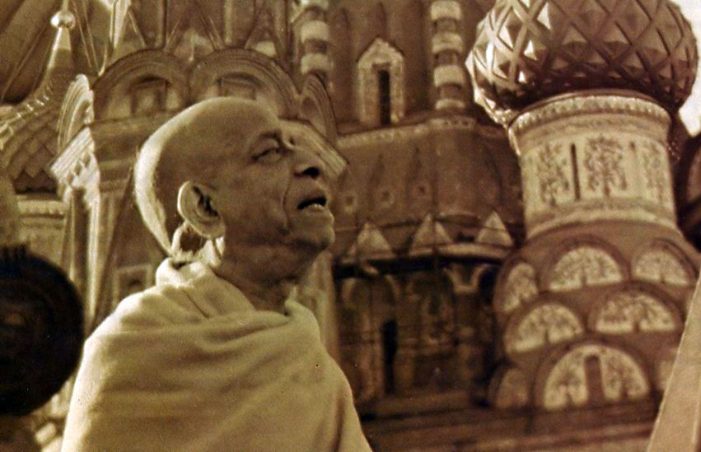
The other day I was reading the paper, Moscow News. There was a Communist congress, and the President declared, “We are ready to take others’ experience to improve.” So I think the Vedic concept of socialism or communism will much improve the idea of communism.
There is enough energy–but we do not know where to get it or what nature’s laws for its distribution are. And by wastefully exploiting whatever sources of energy we have found, we have technologically outfoxed ourselves, like the man who cuts off the branch of a tree, not realizing, until he hits the ground, that he was sitting on the branch.
German pessimist philosopher Arthur Schopenhauer (1788-1860) thought that nirvana, (freedom from suffering) means becoming desireless—putting an end to our will. But His Divine Grace A.C. Bhaktivedanta Swami Prabhupada disagrees.
Abortion is a grave transgression of the laws of nature and of God. So those who are anxious to enjoy sexual pleasure, yet wish to avoid the responsibility of rearing children, should soberly consider abortion’s severe consequences.
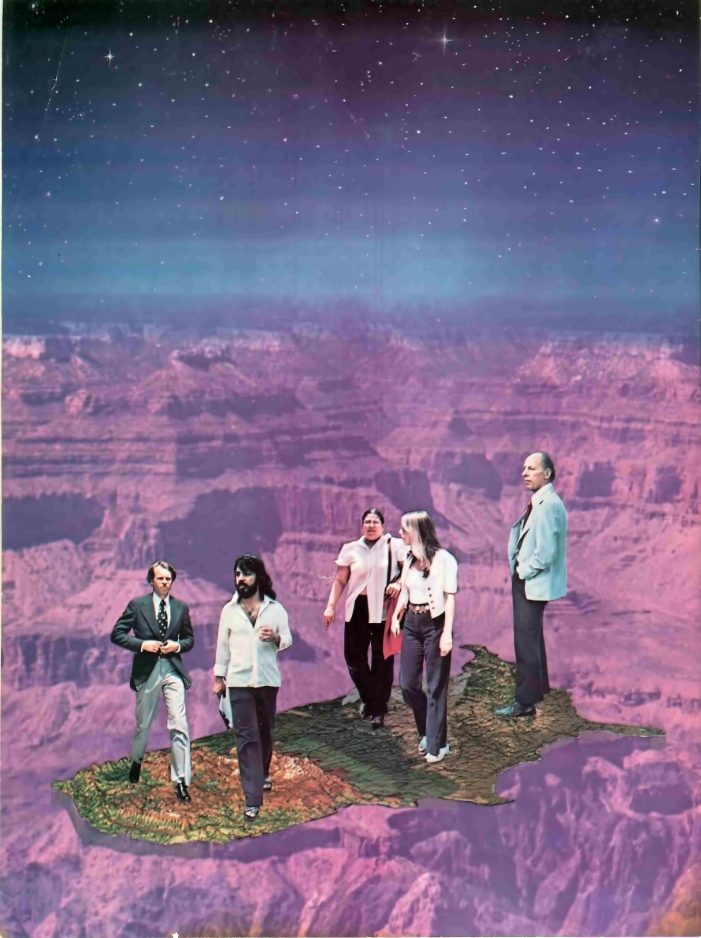
For America to fly the banner of “human rights for the world” presupposes that human rights flourish in our own land. True, we have a representative government and the Bill of Rights, and we enjoy many civil liberties not found in other countries.