Love in the Absolute World
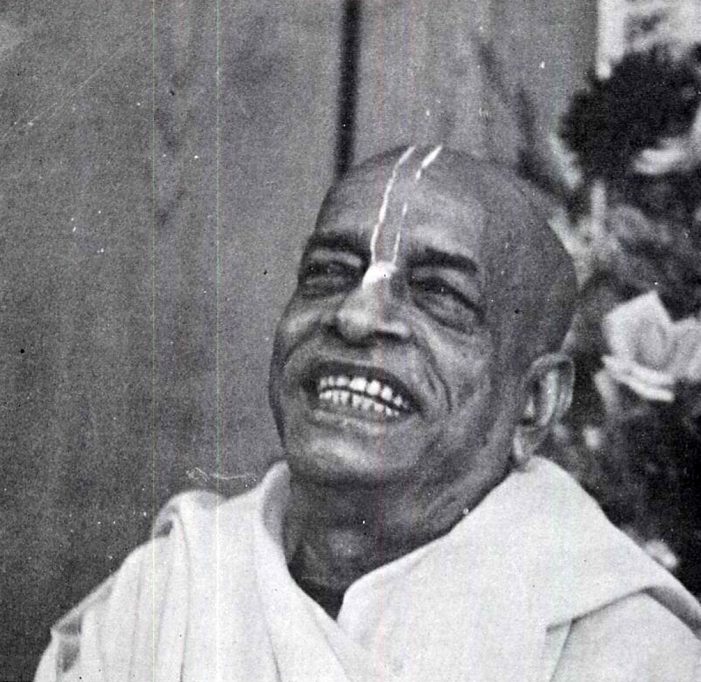
As long as we have the desire for material sense gratification or the desire for material liberation there is no possibility of developing transcendental bliss in Krsna consciousness.
As long as we have the desire for material sense gratification or the desire for material liberation there is no possibility of developing transcendental bliss in Krsna consciousness.
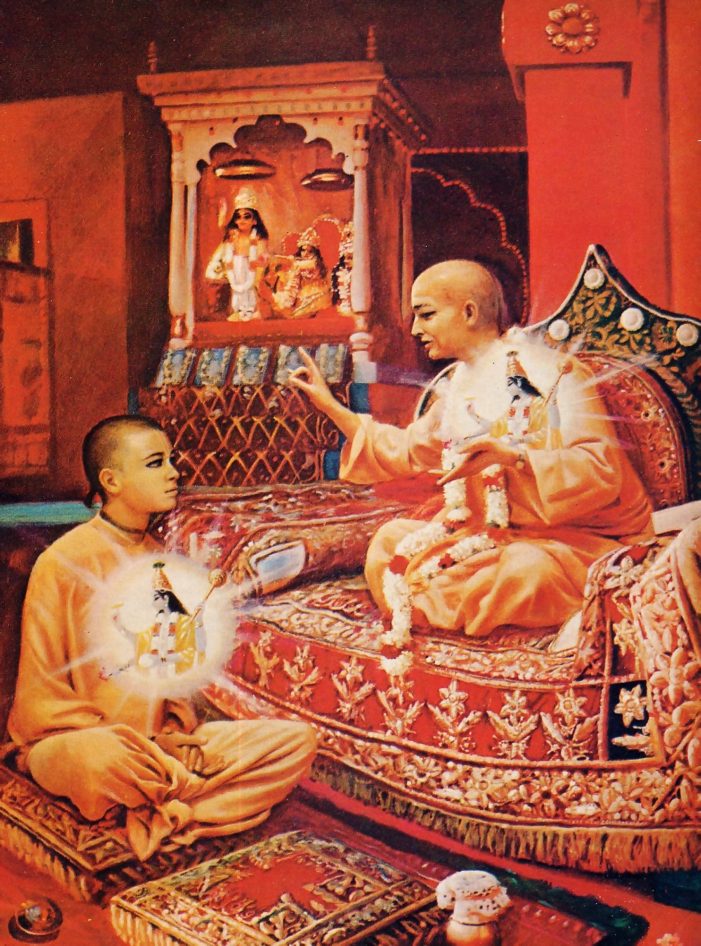
Lord Krsna says nobody knows Him. Even the demigods on higher planets, who are more intelligent and more advanced than human beings, do not know Krsna. Nor do the seven great sages whose planet is near the polestar. They also do not know Him.
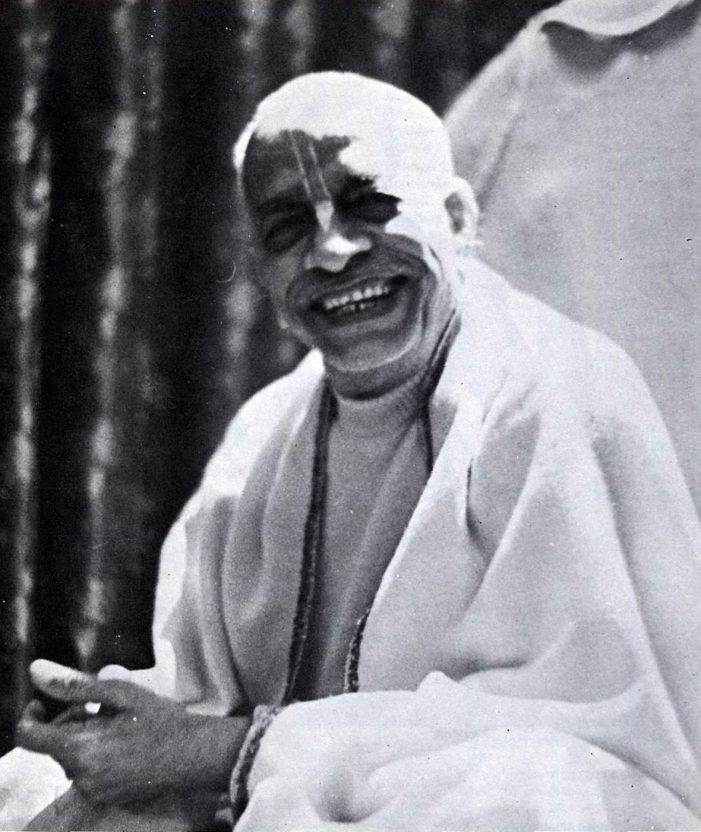
Everything belongs to Krsna. We are artificially enjoying so frustration will come but if we return everything to Krsna, then it will be all right. So the best thing is to return everything to Krsna. This is Krsna consciousness. Then you will not be loser; you’ll be gainer.
Lord Krsna has innumerable expansions. As far as Krsna Himself is concerned, there are six opulences which are always present—knowledge, wealth, fame, strength, beauty and renunciation. He has these opulences in totality, whereas created beings have them in part only.
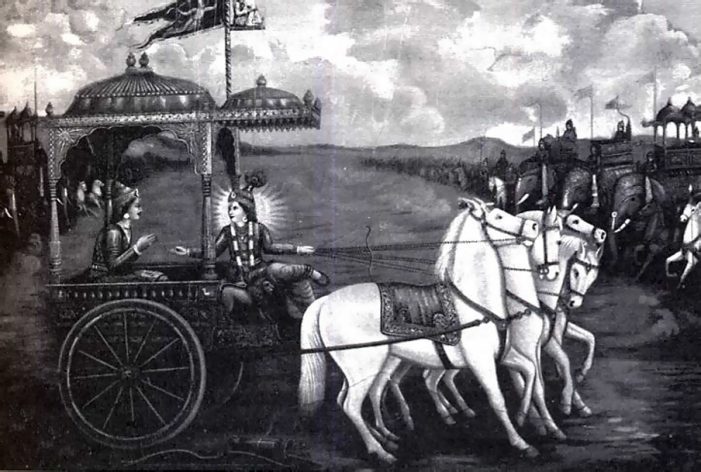
Bhagavad-gita has sometimes been called the perfect theistic science. Actually Bhagavad-gita means “Song of God,” but because it is a song sung by the Supreme Himself, it is also a science.
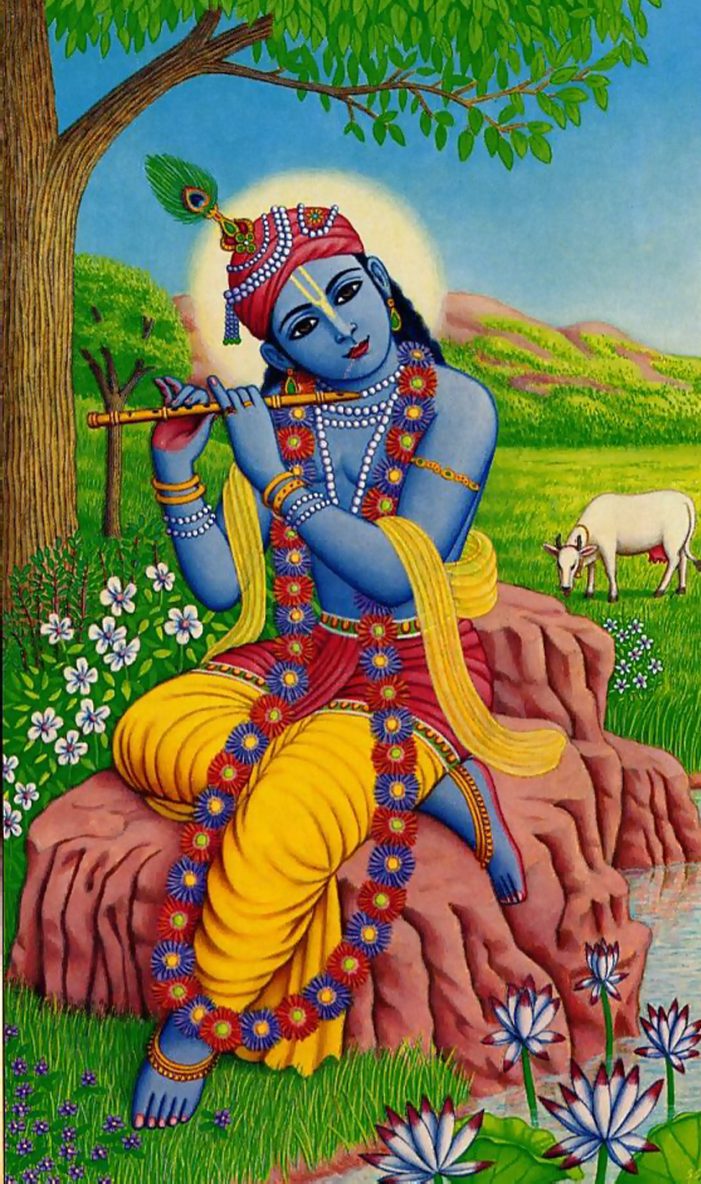
When Krsna comes He shows us His Vrndavana pastimes and invites us: “You can dance with Me also. You can play with Me just like the cowherd boys. And I shall give you protection.”
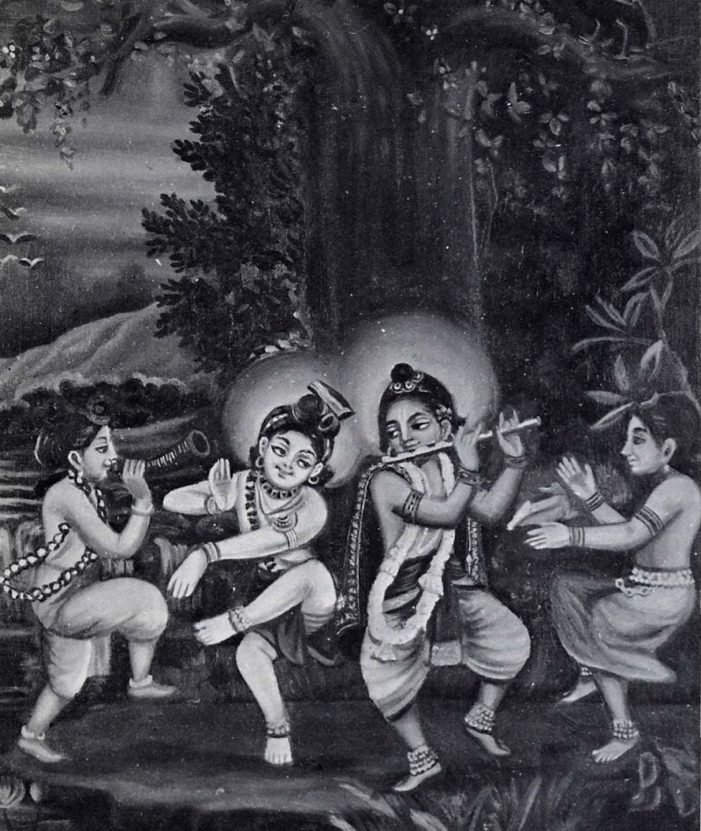
The boys who are playing with Krsna and herding cows in Vrndavana are not ordinary living entities. They are highly developed sages who have acquired perfection by the accumulation of pious activities in past lives.
An Avatara, by definition, is one who descends from the Spiritual Sky in order to perform a specific function which cannot be accomplished by any ordinary living being.
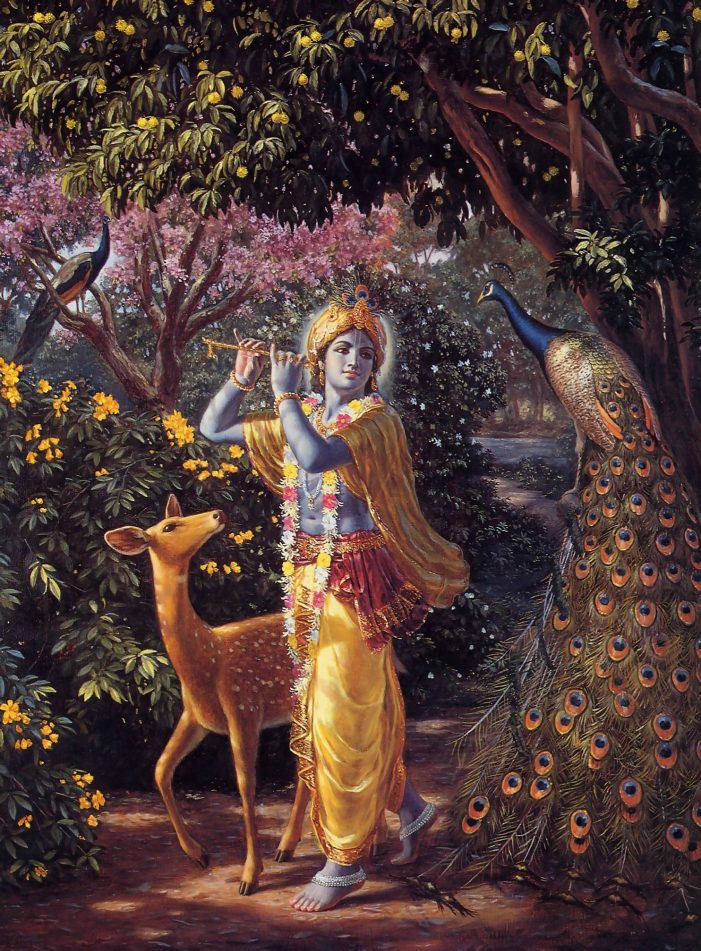
I meditate upon Krsna because He is the Absolute Truth and the primeval cause of all causes. He is directly and indirectly conscious of all manifestations, and He is independent because there is no other cause beyond Him.
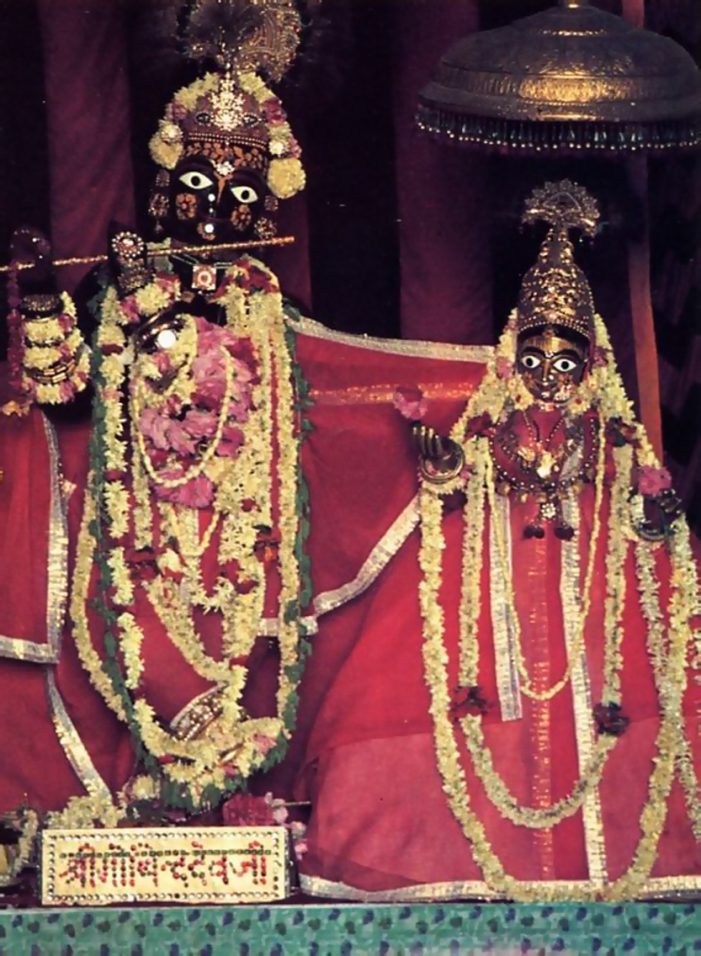
Nowadays most people are unaware that the greatest of ancient India’s rulers were devotees of Lord Krsna who used their wealth and influence in His service.
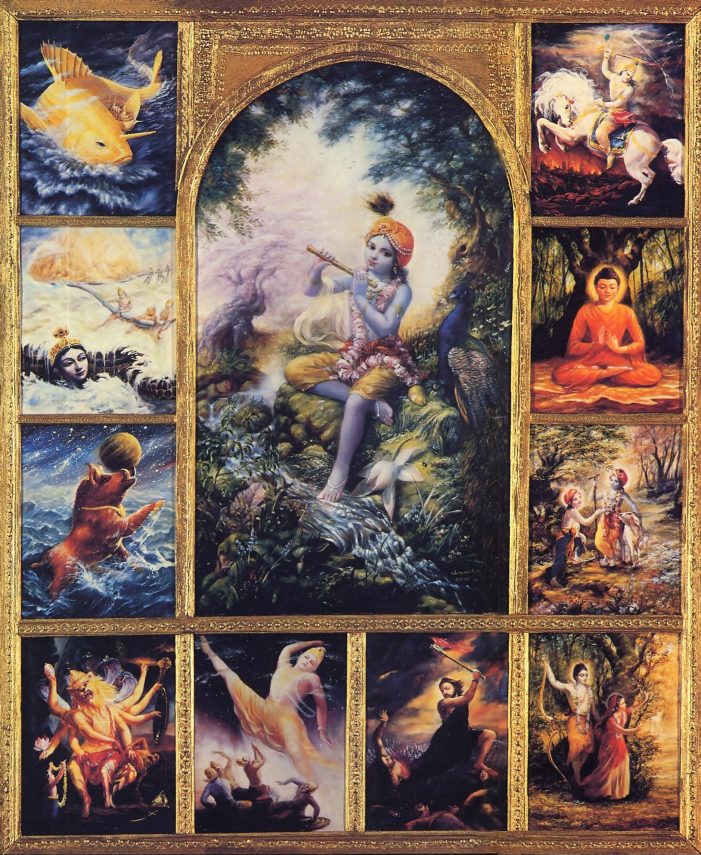
“Whenever and wherever there is a decline in religious practice, O descendant of Bharata, and a predominant rise of irreligion—at that time I manifest Myself.”
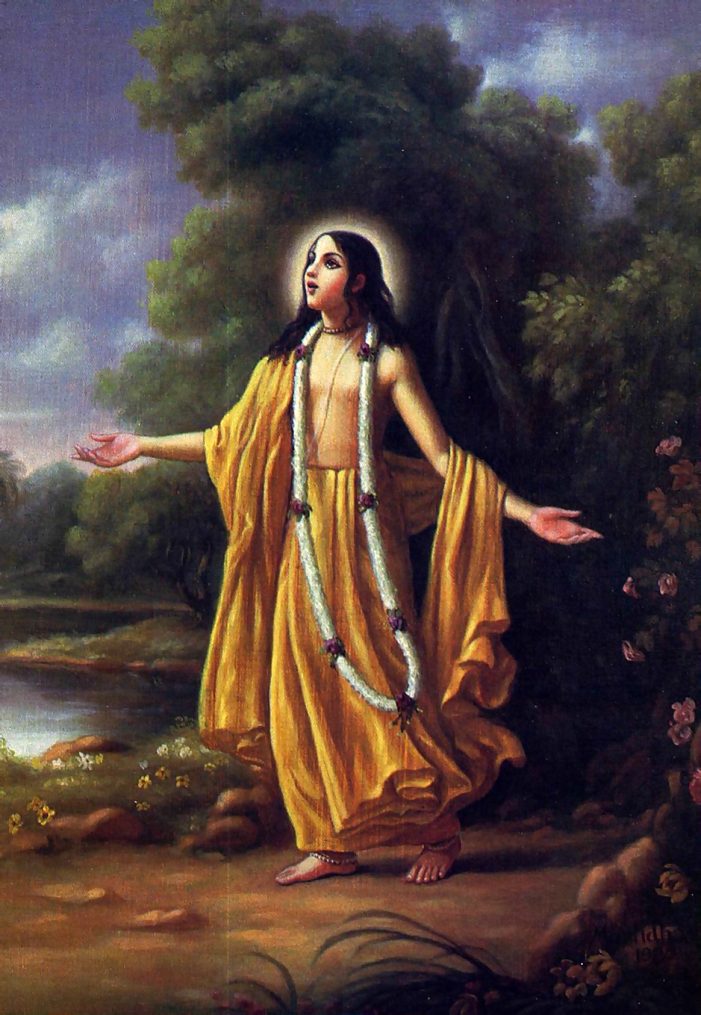
While Europe, as if weary of its medieval concepts of God, turned with new interest toward man and the mundane, a spiritual revolution in India—destined to spread worldwide—was revealing the dynamic nature of the Absolute Truth.
While Brahma was thinking, a small form of a Boar came out of his nostril. The Boar-like form became situated in the sky in a wonderful manifestation, grown suddenly into a gigantic form like a great elephant.
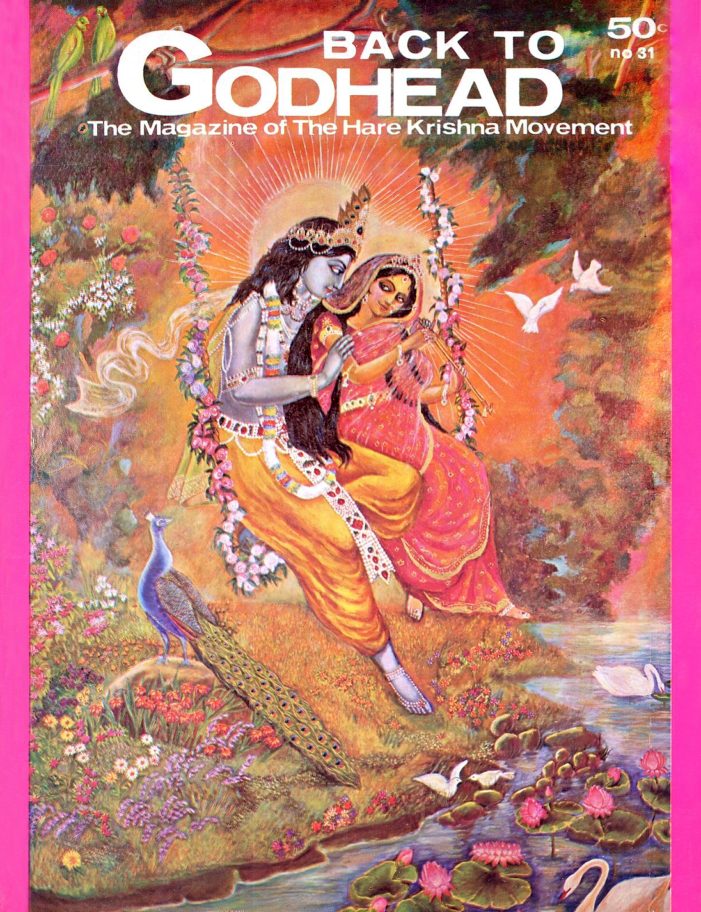
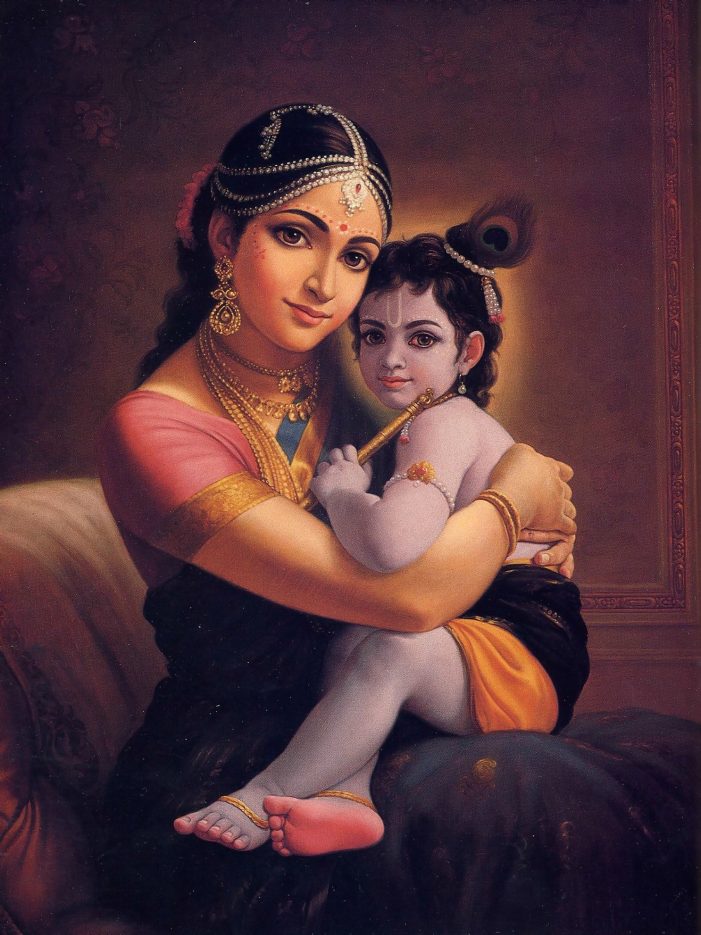
Within a very short time, both Balaram and Krishna began to crawl by Their hands and knees and were moving hither and thither. When Rama and Krishna were crawling like that it was very pleasing to the mothers.
Love for Krishna is dormant within each of us, but because we have no conscious love for Him we are frustrated in various objects of love, and, therefore, in the material world, love is 99.9% frustration simply because the love isn’t in the right place.
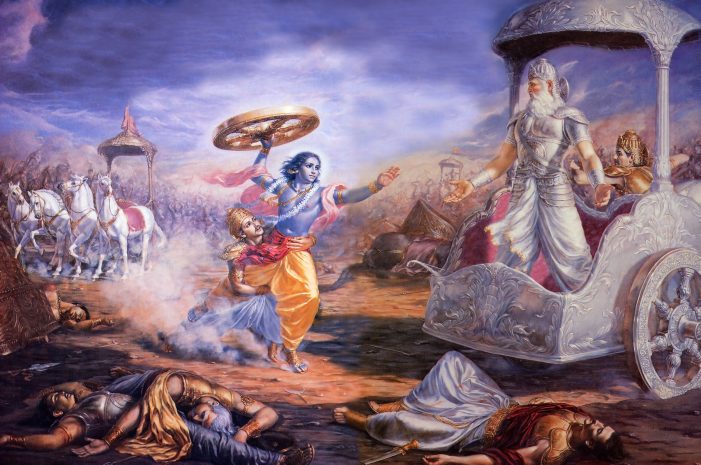
In the midst of the great battle, surrounded by the clash of arms, where the dust churned up by the horses dimmed the sun and blood turned the earth to mud, Krsna suddenly stopped the chariot and sprang to the ground.
And as soon as one is able to cleanse the accumulated material dust covering one’s pure consciousness from time immemorial one is able to extinguish the blazing forest fire burning ever increasingly in the perpetual circle of birth and death.
There is a supreme controller. That is the beginning of knowledge. Why should we deny it? In every field of activity we find some controller, so why should we deny that there is a controller of this creation?
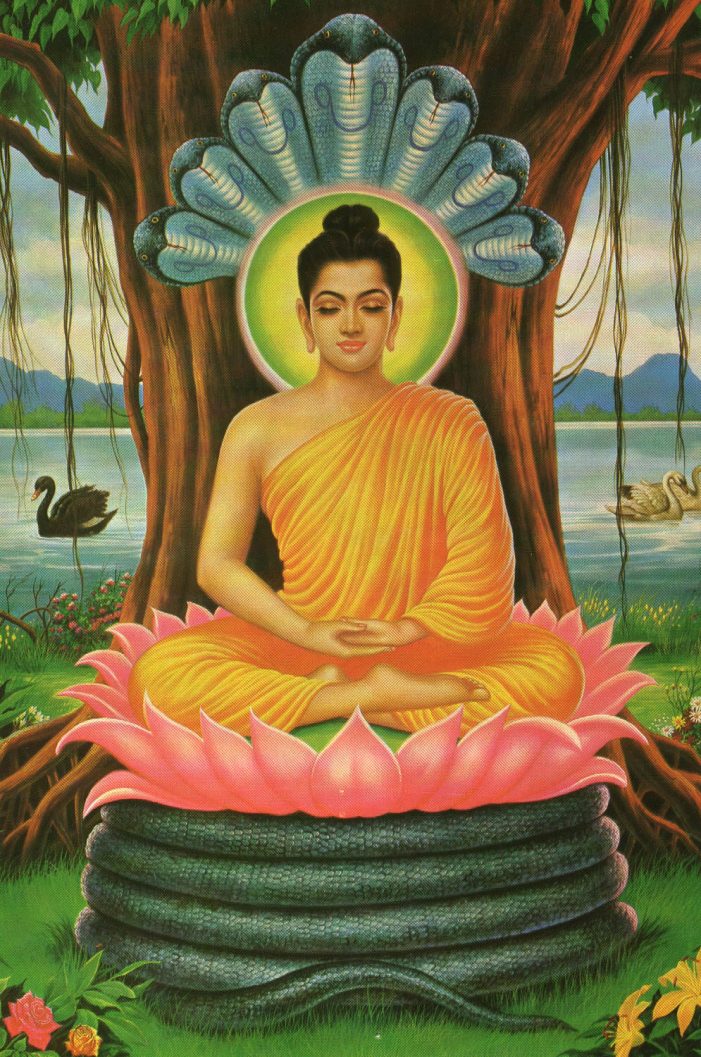
Prior to the advent of Lord Buddha the animal sacrificial portions of the Vedas were misused. The Personality of Godhead appears Himself as an incarnation to put things in the right order and Lord Buddha as incarnation of Krishna appeared as the emblem of Theism.
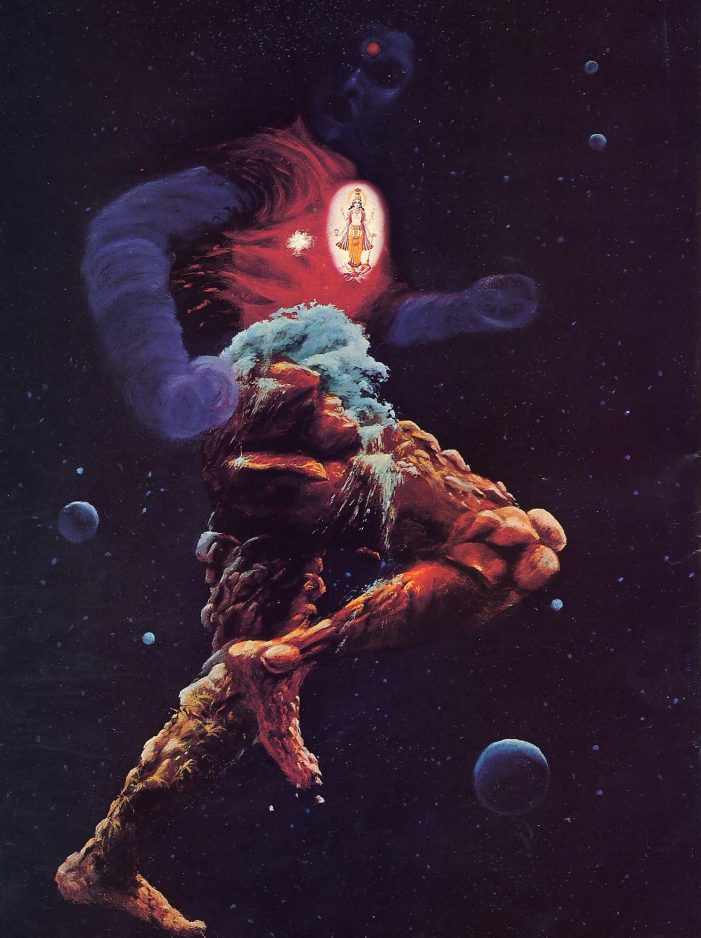
Everyone is related to the Supreme Personality of Godhead, just as a son is always related to his father. That relationship cannot be broken at any stage. But sometimes it happens that the son, out of independence, goes out of his home and forgets his father.