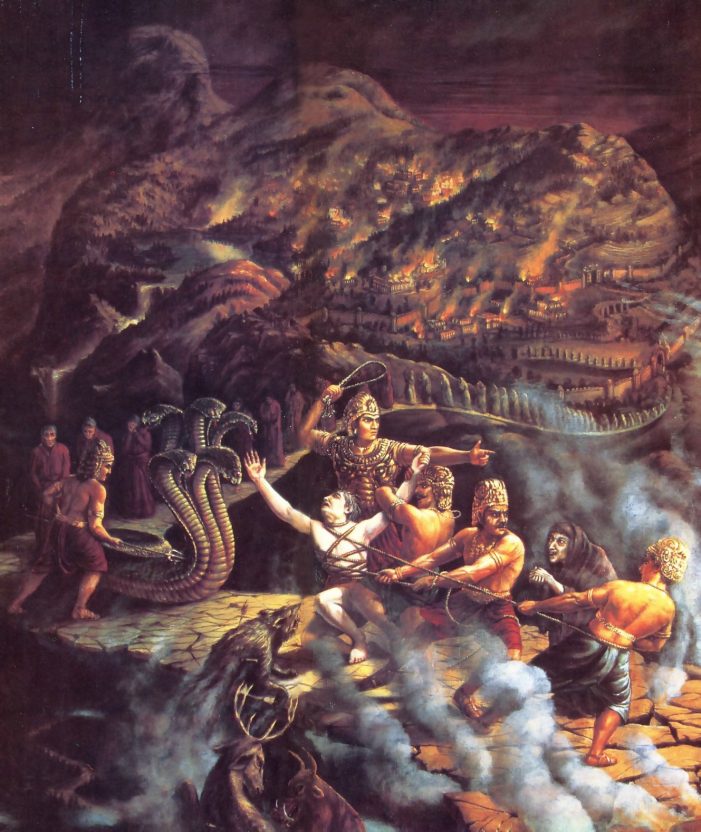
Attacked incessantly for one hundred years the five-hooded serpent began to lose his strength and Puranjana became extremely anxious. One may struggle against time for one hundred years, but eventually one’s vitality weakens, and one’s bodily limbs become feeble.
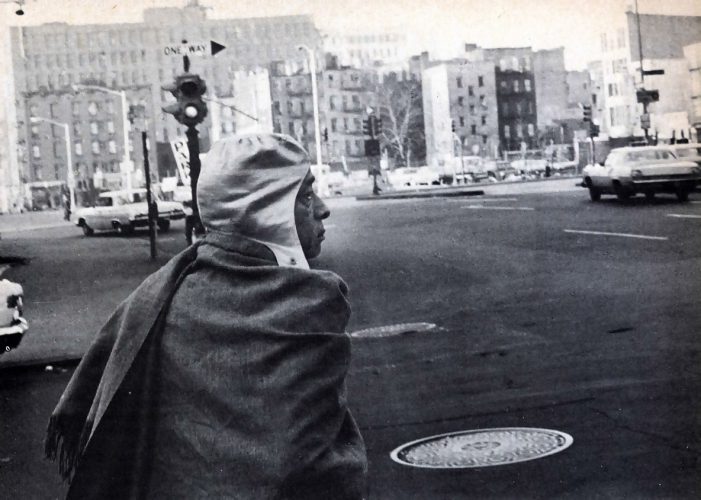
“His American church”—yes, Srila Prabhupada had hope and determination. There was life in his lectures and kirtanas (chantings), his morning and evening gatherings in the loft. At least he was acquiring a small, regular following. But from India there was no hope.
We see in the street that the cars are moving at high speed but they’re within their ‘orbits,’ their white or yellow lines of demarcation—because there is some brain, some management. So, similarly, with all these planets.
Tap into the reservoir of pleasure. By chanting the names of God, you’ll immediately be in touch with the source of all pleasure. The name Krsna means the all-attractive person, and Rama means the supreme pleasure. Hare is the form of addressing Hara, God’s devotional energy, to whom we pray to be engaged in the Lord’s service.
Milk has been famous as a storehouse of nutrients since long before the health-oriented 1980’s began. Didn’t your mother tell you that the minerals in milk help build strong bones and teeth?
The fact is this material world is a miserable, negative place, full of danger at every step; it is a temporary abode of death, birth, disease, and old age, a home of suffering and pain only.
Acyuta, drive my chariot!” This was the command given by Arjuna, the great devotee of the Supreme Personality of Godhead Lord Sri Krsna, unto Lord Krsna Himself on the Battlefield of Kuruksetra.
I meditate upon that eternally effulgent Lord who is directly and indirectly conscious of all manifestations and yet is beyond them. It is He only who first imparted Vedic knowledge unto the heart of Brahma, the first created being.
If you want a cheap guru there will be many cheater gurus. But if you are sincere, you will have a sincere guru. Because people want everything very cheaply, they are cheated.
INTRODUCTION TO BHAGAVAD-GITA An introduction to Geetopanishad, the Bhagavad Gita as It Is. Swamiji is presently working on a complete translation of the text of the Gita. Now this introduction is available. 35 cents KRISHNA THE RESERVOIR OF PLEASURE by A.C. Bhaktivedanta Swami Every man is seeking pleasure in life. But he does not know […]
In the country the pangs of the material world are less. You can arrange your life for real profit. Spiritual profit. Realize God; become Krishna conscious.
The first written reference to Boston brahmanas was made by Oliver Wendell Holmes. In an essay published in 1860 Holmes wrote of the “brahmin cast of New England … the harmless and innocent, untitled aristocracy.
The name Krishna means “the all-attractive one” the name Rama means “the all-pleasing one,” and the name Hare is an address to the Lord’s devotional energy.
As I began to spend more time with the brahmacaris, I noticed they seemed to be always joyful, beyond the ups and downs that had plagued my spiritual quest.
Spirit souls in the cycle of birth and death from species to species. Human life affords the soul a chance to regain his eternal life beyond birth and death.
Sixty-five million people are on a diet at any given time in America. Millions are going on and off diets, losing weight, gaining it back, giving up, feeling desperate….
Hare Krsna Hare Krsna Krsna Krsna Hare Hare Hare Rama Hare Rama Rama Rama Hare Hare In Sanskrit, man means “mind” and tra means “freeing.” So a mantrais a combination of transcendental, spiritual sounds that frees our minds from the anxieties of life in the material world. Ancient India’s Vedic literatures single out one mantra […]
Love Feast One of the more important public services of the Krsna consciousness movement is to hold festivals. Our Sunday festivals usually consist of a discourse, a drama, or the celebration of a special event, such as the anniversary of the appearance of Lord Krsna or the victory of Lord Rama over Ravana. But at […]
Betrayed by the Basic Four Four? Three? Whatever the count, a balanced diet should nourish not only the body but the spirit as well. by Visakha-devi dasi I remember how we learn about it in elementary school. Mrs. Pile had a colorful, authoritative chart divided into four sections—the Basic Four. Twenty-two young, innocent faces gazed […]
“We’re practicing yoga.” “Yoga? You call this yoga? Chanting and dancing, playing on drums and hand cymbals, passing out magazines and sweets—all in one big group?” “Absolutely! Yoga means ‘to link with God,’ and this congregational chanting of God’s names.