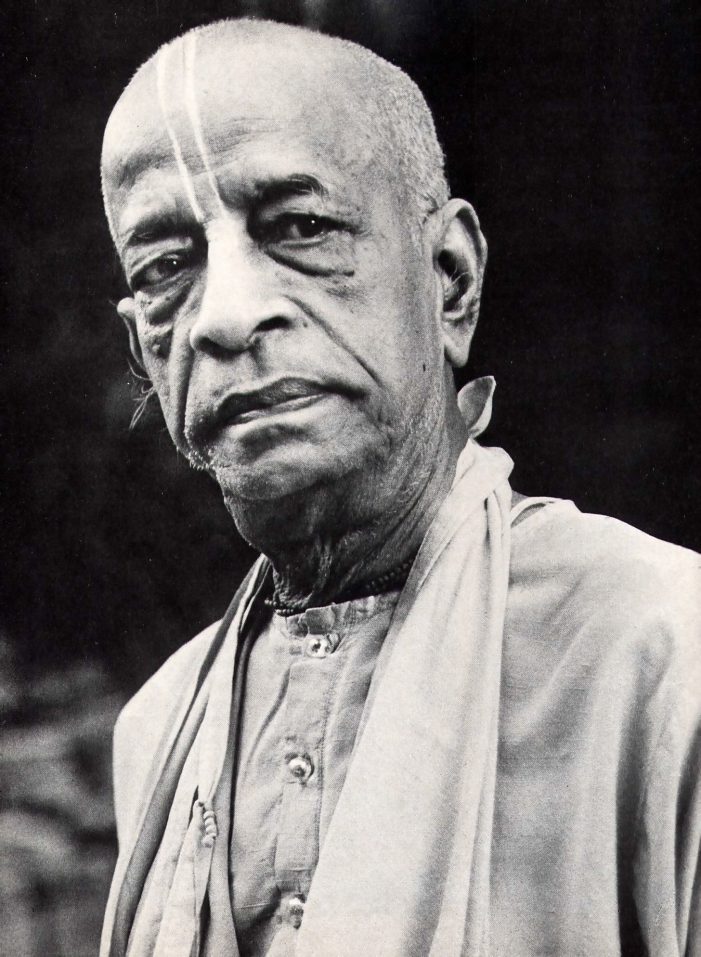
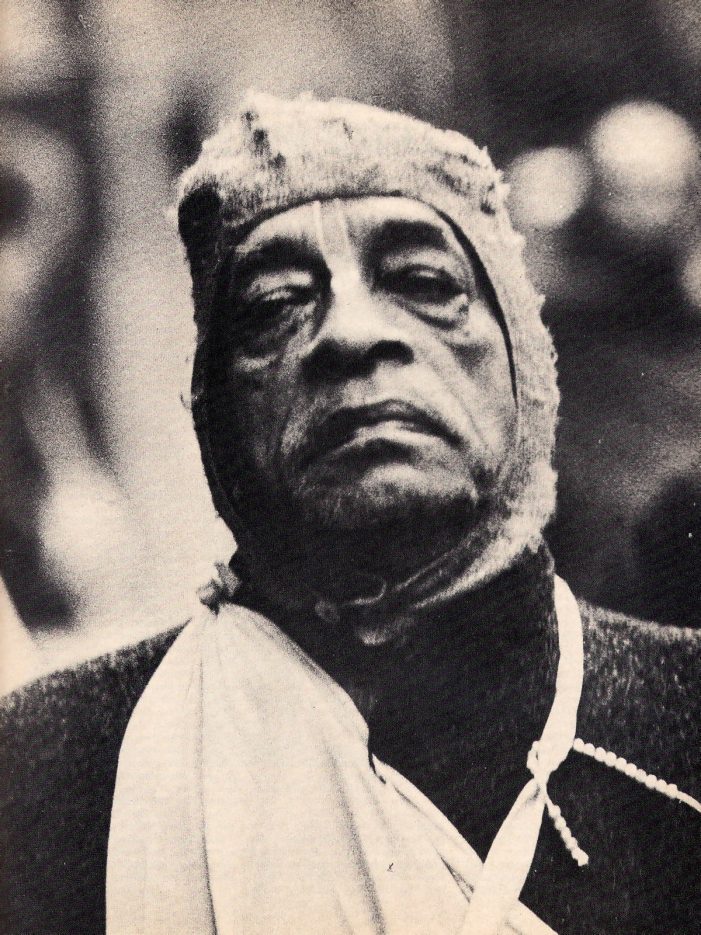
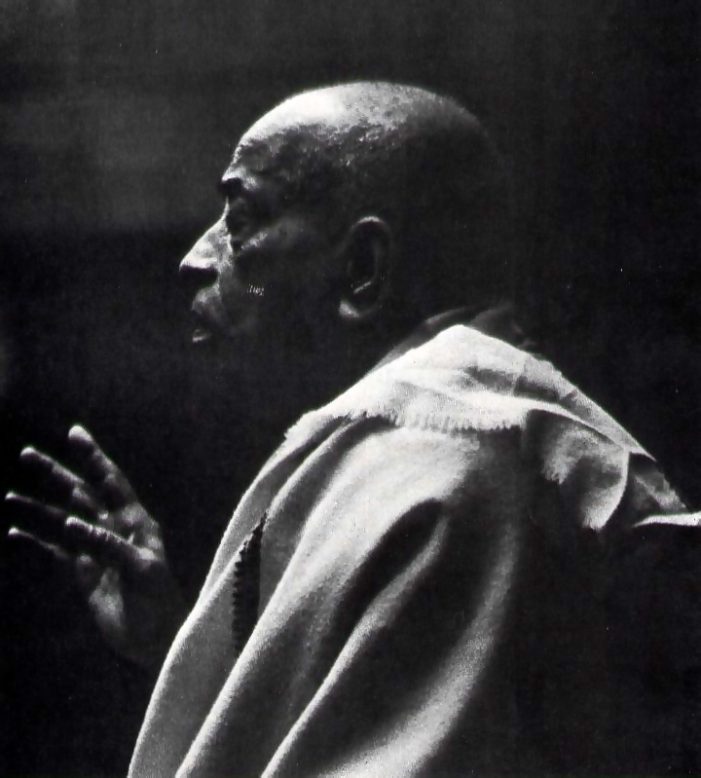
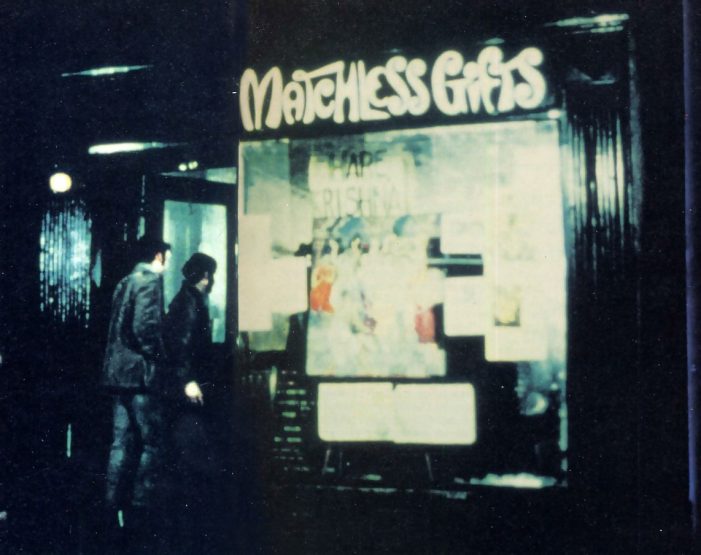
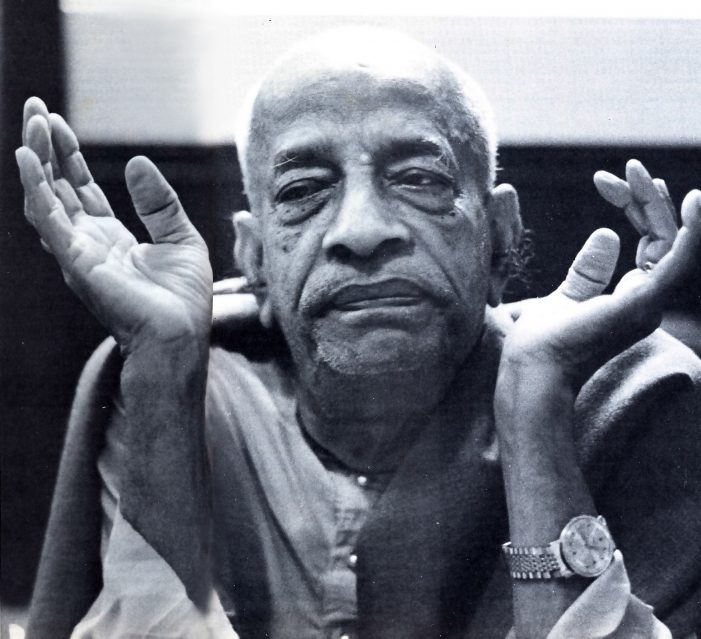
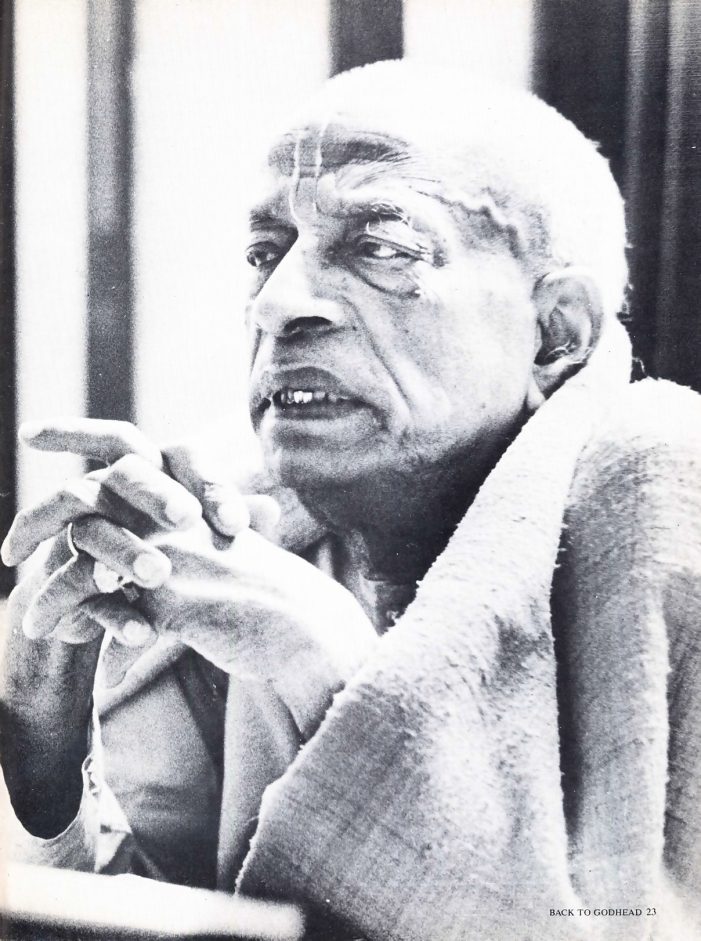
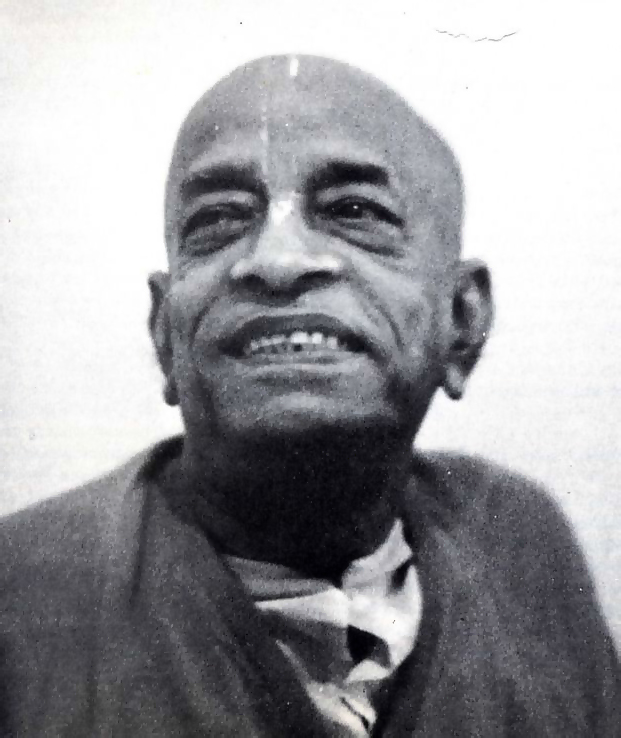
The ’60s proved a fertile field for Prabhupada’s planting the seeds of Krsna consciousness in the West. Now the intensifying war in Vietnam, bringing forth a widespread clamor for peace, provided him an opportunity to present Krsna consciousness as the real peace formula.
The small storefront temple at 26 Second Avenue had begun to thrive. Srila Prabhupada, by his chanting, his strong preaching, his delicious meals of prasadam, but most of all by his transcendental loving personality, had attracted a few sincere followers.
There were predictions that after his disappearance the movement and teachings he had established would soon fall apart. Now it is three years later, and Srila Prabhupada’s unique contributions are still flourishing.
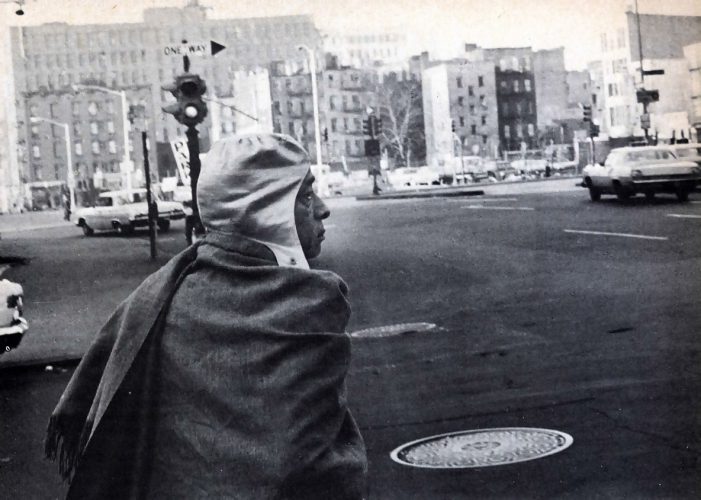
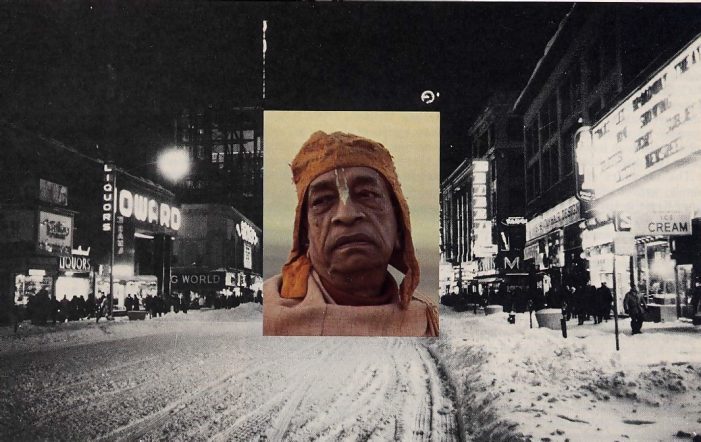
Behind Srila Prabhupada’s appearance on the alien Manhattan streets stand five millennia of planning and effort. The story of it opens one sunrise fifty centuries ago in the Himalayas, where the sage Krsna-Dvaipayana Vyasa sits in trance on the bank of the Sarasvati.
“The Swamiji doesn’t want anyone smoking pot here.” Don denied it: “I have not been smoking. You are not speaking the truth.” The boy then reached into Don’s shirt pocket and pulled out a joint, and Don hit him in the face.
Prabhupada retired through the rear door, back up to his apartment, his guests would disappear through the front door, back into the city. Don and Raphael would turn out the lights, lock the front door, and go to sleep on the floor in their blankets.
In the early summer of 1966, Srila Prabhupada was sharing a Bowery loft with a young American friend. But when the boy went crazy on drugs and drove him out, suddenly Prabhupada found himself in the street, homeless and alone.
His lecture is very basic and yet (for restless youth) heavily philosophical. Some can’t take it, and they rise to leave. Some, upon hearing his first words, have already risen rudely, put on their shoes at the front door, and returned to the street.
Thousands of young people were walking the streets, not simply intoxicated or crazy (though they often were), but searching for life’s ultimate answers.
So the first thing is that one should be searching after a spiritual master, just as when you search after some school, you must have at least some preliminary knowledge of what a school is.
The dingy loft, its rafters unpainted, was more like an old warehouse than a temple. The members of his audience, most of them musicians, had come to meditate on the mystical sounds of the Swami’s kirtana, his chanting.
“His American church”—yes, Srila Prabhupada had hope and determination. There was life in his lectures and kirtanas (chantings), his morning and evening gatherings in the loft. At least he was acquiring a small, regular following. But from India there was no hope.
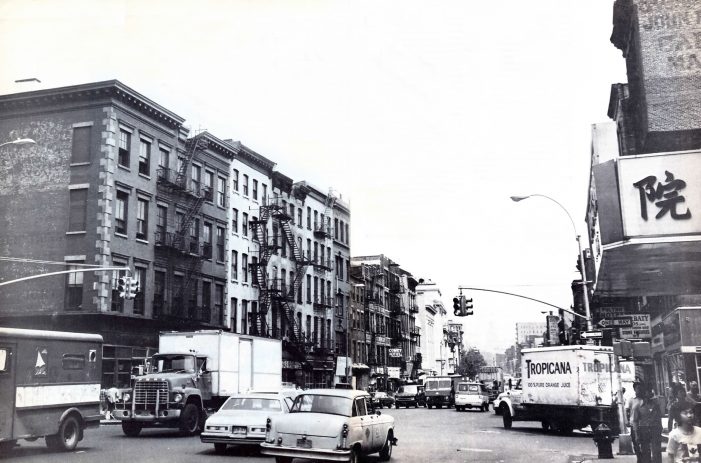
Most of the Bowery’s 7,600 homeless men slept in lodging houses that required them to vacate the rooms during the day. Having nowhere else to go and nothing else to do, they would loiter on the street—standing silently on the sidewalks, leaning against walls, or shuffling slowly along.
I am trying to open a temple here because Srila Bhaktisiddhanta Sarasvati Thakura wanted it. I think that after the temple has started, some men, even from America, may be available.
When Srila Prabhupadas bus arrived at the terminal, it was past midnight. Mr. Gopal Agarwal, his sponsor, was waiting with the familys Volkswagen bus to drive him to Butler, about an hour north.
I’d been attending kirtanas regularly for quite some time, and when Prabhupada came there for a visit I was, of course, quite anxious to meet him. There were various theological and philosophical questions that I was concerned about.
For the disciple the advent of the spiritual master is the most blessed event in the world. It is even more important than Krsna’s advent, because the spiritual master gives us Krsna. Without the spiritual master there would not be any Krsna consciousness.