CHANT Hare Krishna!
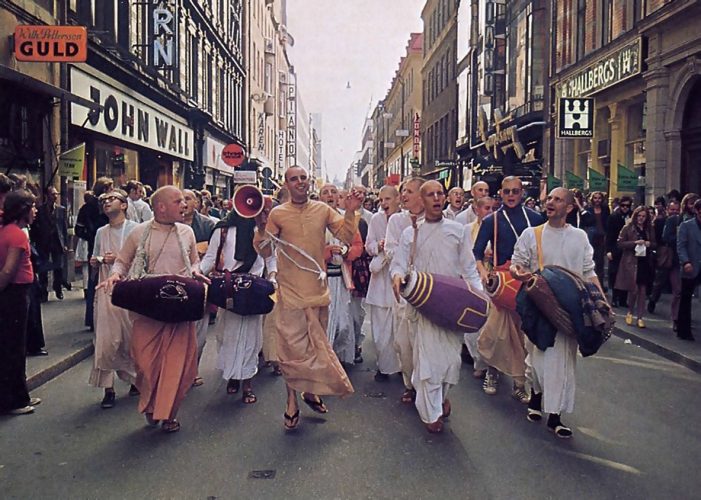
The maha-mantra means, “O all-attractive, all-pleasing Lord, O energy of the Lord, please engage me in Your devotional service.” Chant the Hare Krsna maha-mantra, and your life will be sublime.
The maha-mantra means, “O all-attractive, all-pleasing Lord, O energy of the Lord, please engage me in Your devotional service.” Chant the Hare Krsna maha-mantra, and your life will be sublime.
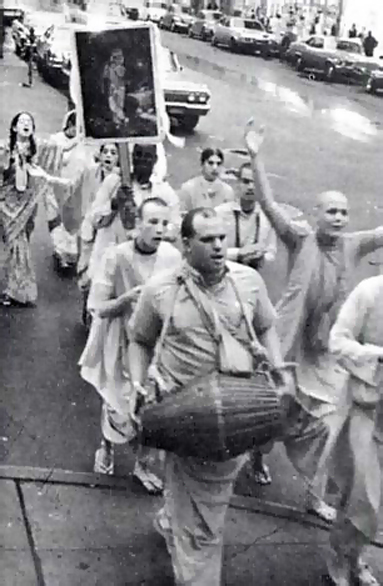
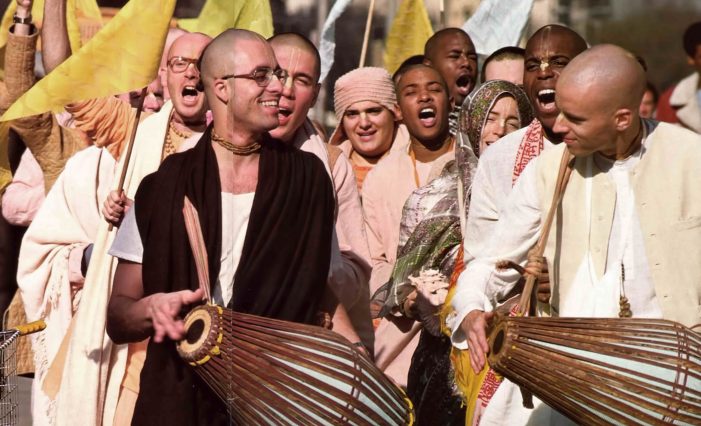
The Samkirtan Party chanted with relaxed bliss, vibrating Krishna’s Holy Names as the TV crew wound around them with cables and microphone cords, straining to record the bliss of Lord Chaitanya’s movement.
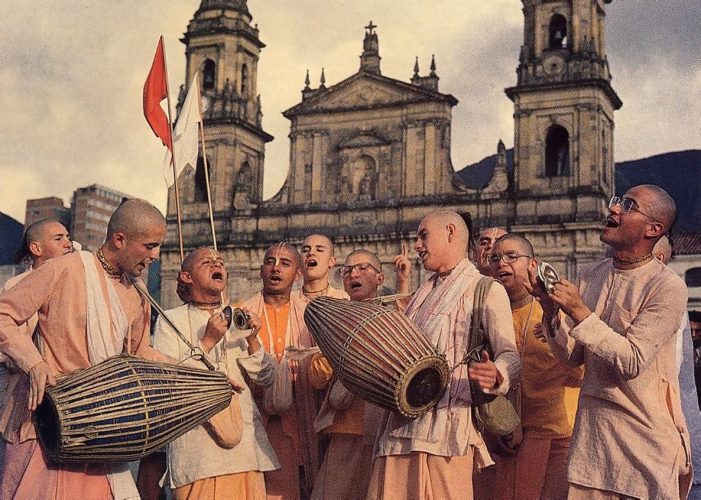
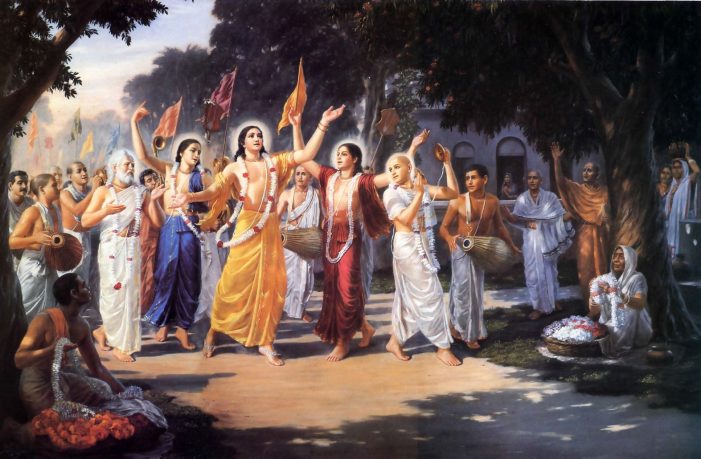
Five centuries ago, while spreading the maha-mantra throughout the Indian subcontinent, Sri Caitanya Mahaprabhu prayed, “O Supreme Personality of Godhead, in Your holy name You have invested all Your transcendental energies.
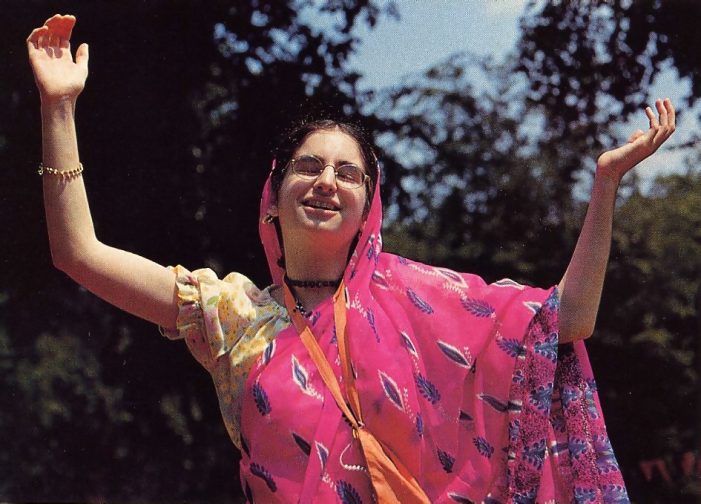
Krsna means “the all-attractive one,” and Rama means “the all-pleasing one,” and Hare is an address to the Lord’s devotional energy. So the maha-mantra means, “O all-attractive, all-pleasing Lord, O energy of the Lord, please engage me in Your devotional service.”
One Saturday night a woman stopped before our chanting party and shook her head in disbelief. Finally she exclaimed, “Only in Georgetown!” and walked off in shocked dismay.
One can extricate himself from the bonds of material life by hearing and chanting transcendental sounds. The common, unenlightened person is in a sleeplike state, oblivious of his real nature as a spiritual being and of his relationship to the Supreme Being.
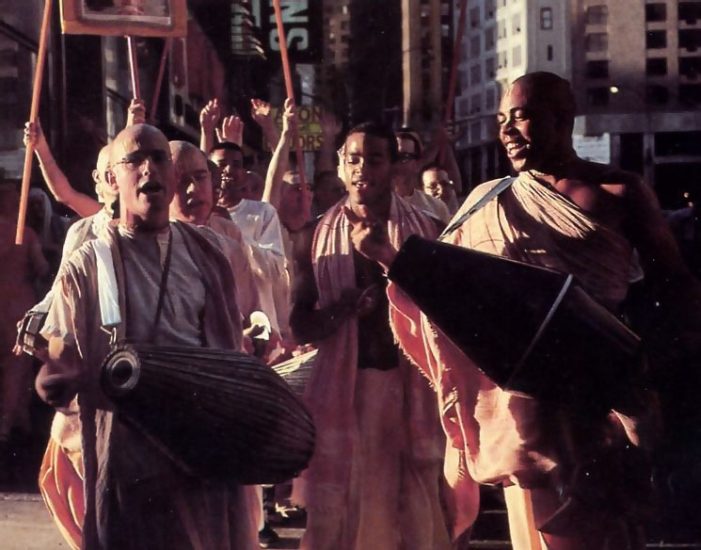
The name Krsna means “the all-attractive one,” the name Rama means “the all-pleasing one,” and the name Hare is an address to the Lord’s devotional energy. So the maha-mantra means, “O all-attractive, all-pleasing Lord, O energy of the Lord, please engage me in Your service.”
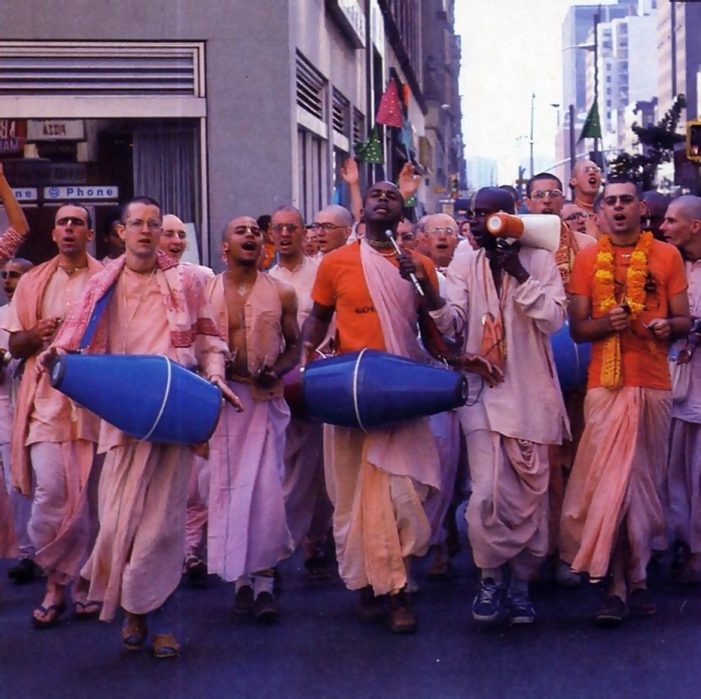
In Sanskrit, man means “mind” and tra means “freeing.” So a mantra is a combination of transcendental, spiritual sounds that frees our minds from the anxieties of life in the material world.
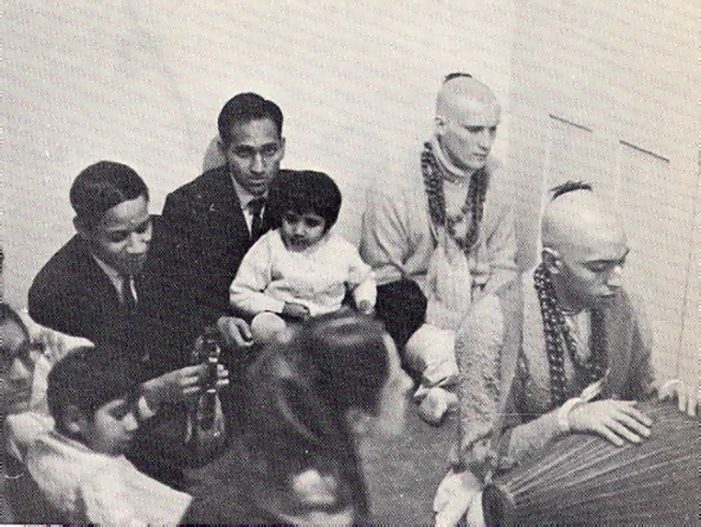
Transformed hippes clad in saffron robes…chanting the Hare Krishna Mantra”—so ran a recent story in the London Evening Standard.
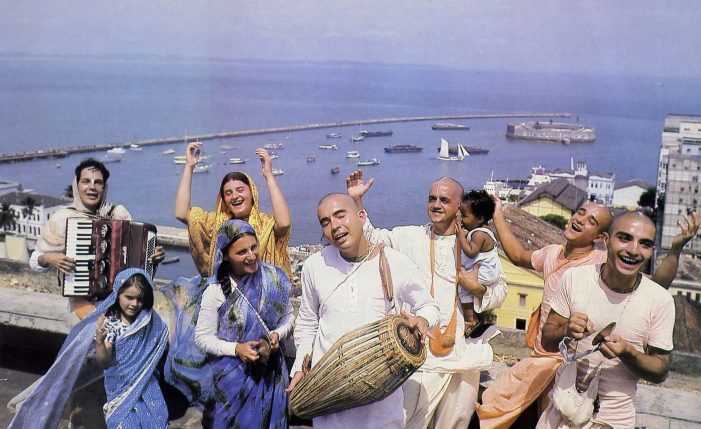
The chanting of God’s holy names quickly polishes the mirror of the mind and reveals both Him and ourselves. “The face is the index of the mind,” Prabhupada was fond of pointing out, he would often mention the bright faces of his disciples.
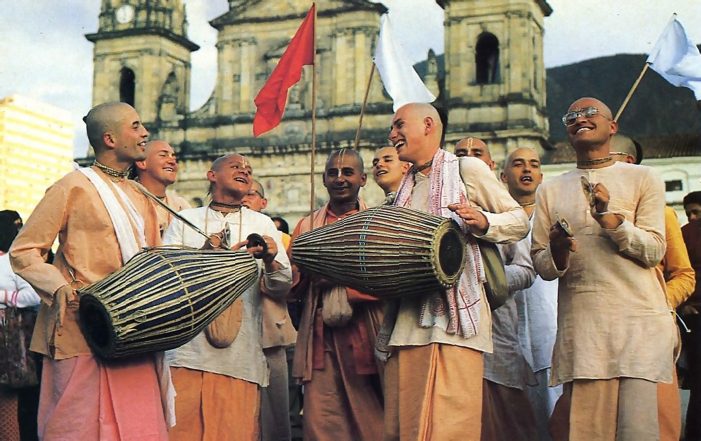
I do not know how much nectar the two syllables ‘Krs-na’ have produced. When the holy name of Krsna, is chanted, it appears to dance within the mouth. We then desire many, many mouths. When that name enters the holes of the ears, we desire many millions of ears.
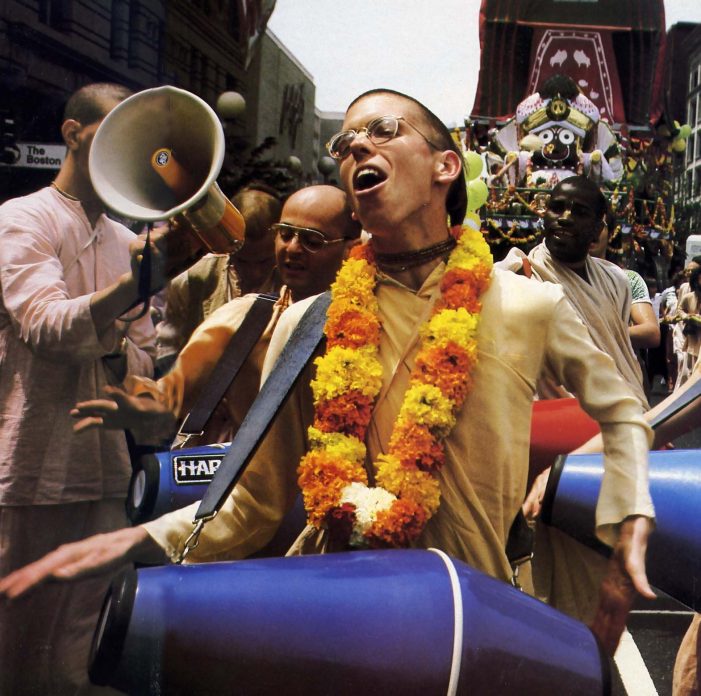
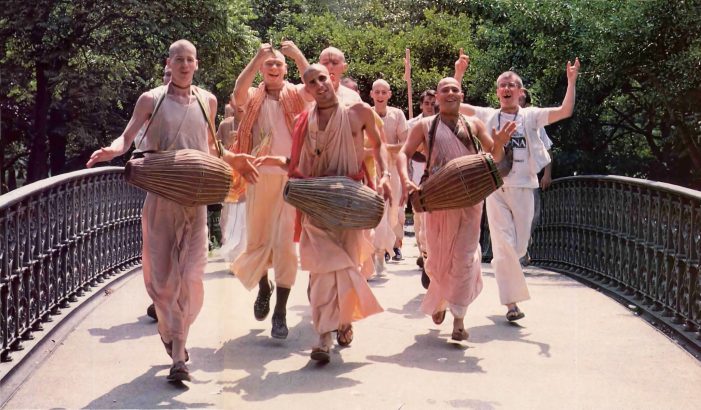
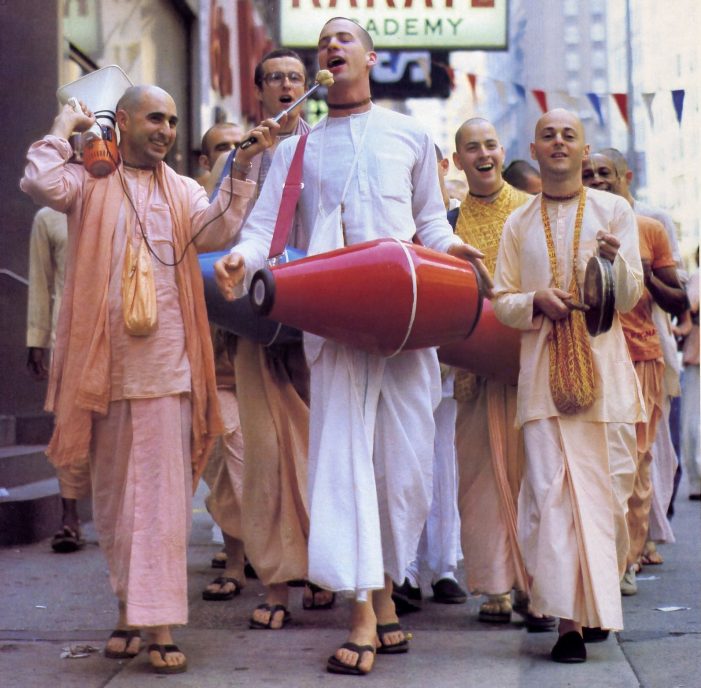
Among all the practices of the Hare Krsna movement, the most prominent is the public chanting of God’s names, ecstatic dancing, and playing of musical instruments—a spontaneous street liturgy common in most major cities throughout the world.
The Vedic literature explains the power of chanting God’s name in the story of Ajamila, a great sinner who at the time of his death called out the name of God and was immediately purified of all sinful contamination.
In this age of quarrel and hypocrisy, the only means of deliverance is chanting the holy name of the Lord. There is no other way. There is no other way. There is no other way.
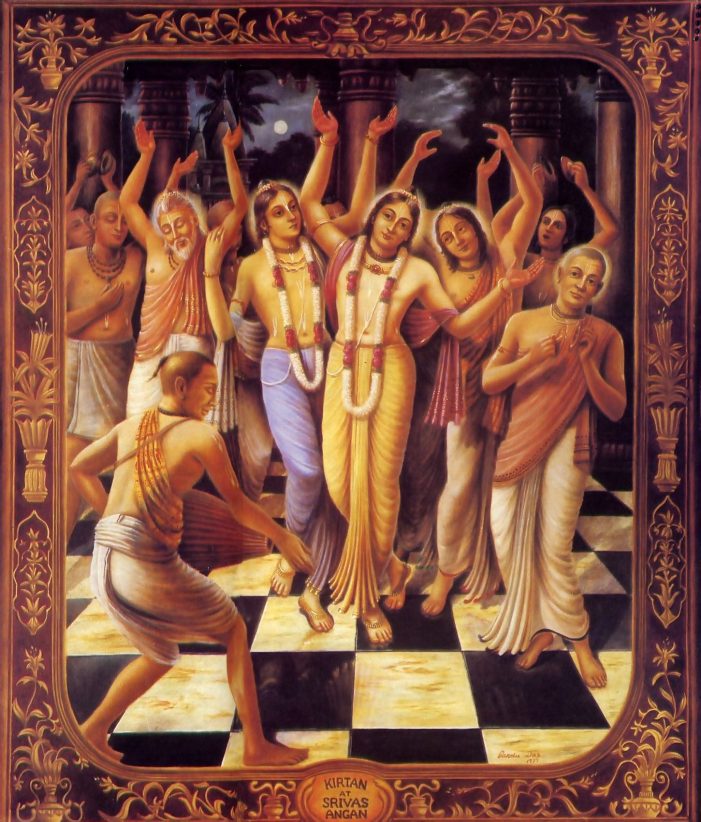
When Lord Krsna appears in the present age His complexion is golden, He is surrounded by various associates, and His mission is to teach people how to make their lives spiritually sublime through the sankirtana-yajna, or chanting of the holy names Hare Krsna.
In West Germany, devotees have evolved a preaching strategy adapted from the nama-hatta program established by Srila Bhaktivinoda Thakura in India during the last century.
Tap into the reservoir of pleasure. By chanting the names of God, you’ll immediately be in touch with the source of all pleasure. The name Krsna means the all-attractive person, and Rama means the supreme pleasure. Hare is the form of addressing Hara, God’s devotional energy, to whom we pray to be engaged in the Lord’s service.
The name Krishna means “the all-attractive one” the name Rama means “the all-pleasing one,” and the name Hare is an address to the Lord’s devotional energy.
Hare Krsna Hare Krsna Krsna Krsna Hare Hare Hare Rama Hare Rama Rama Rama Hare Hare In Sanskrit, man means “mind” and tra means “freeing.” So a mantrais a combination of transcendental, spiritual sounds that frees our minds from the anxieties of life in the material world. Ancient India’s Vedic literatures single out one mantra […]
“We’re practicing yoga.” “Yoga? You call this yoga? Chanting and dancing, playing on drums and hand cymbals, passing out magazines and sweets—all in one big group?” “Absolutely! Yoga means ‘to link with God,’ and this congregational chanting of God’s names.