Yoga Mush and the Jerk Divine
Krishna meditated, He became God. Buddha meditated, he became god. Jesus meditated, he became god. Now god wants you to meditate so you can become god…

Krishna meditated, He became God. Buddha meditated, he became god. Jesus meditated, he became god. Now god wants you to meditate so you can become god…
Like all Americans, I’ve seen my destiny shaped by the U.S. presidents under whose rule I have lived and served. But now that I think about it, although my life was shaped in certain ways by their decisions, none of the presidents were really leaders to me.
Strange that these Baptists should discover, looking back at them under a shaven head marked with the twin clay lines of tilaka—the signs of a servant of Visnu—such a disconcertingly familiar American Protestant face.

He considered how a religion, as a whole, measures up to narrow expectations drawn from Christianity. Thus he complained, “India has no ‘expiator’ [referring specifically to Jesus], no Golgotha [the hill upon which Jesus was crucified], and no Cross.”
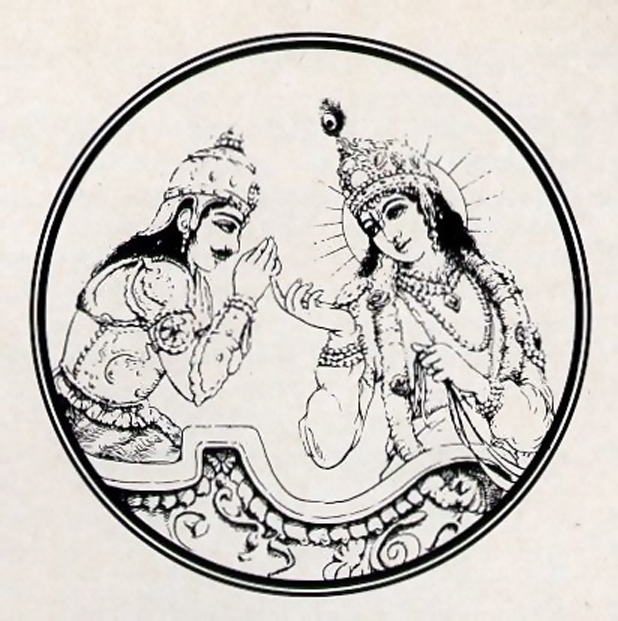
Engage your mind always in thinking of Me and become My devotee. Offer obeisances and worship Me. Being completely absorbed in Me, surely you will come to Me.

Devotees of Krsna were surprised, therefore, when they recently found a B’nai B’rith pamphlet rife with stereotypes of Krsna devotees as cultists and brainwashed robots. Such caricatures, the devotees thought, had been discredited long ago.
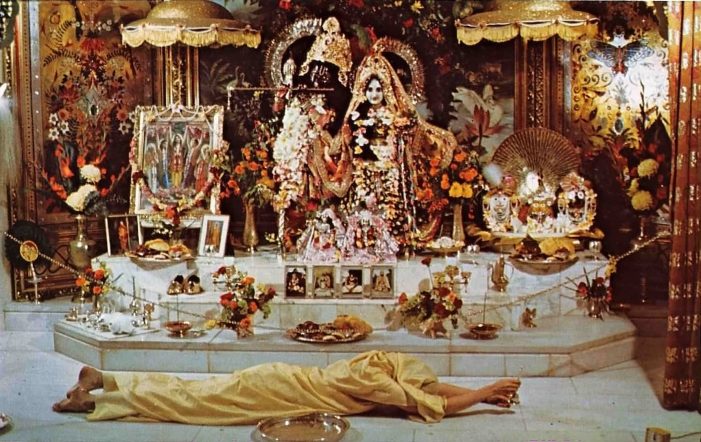
Delicious, traditional Vedic cuisine was part of the legacy Krsna consciousness brought to Western shores. Eating, like everything else for Krsna devotees, is a part of the complete spiritual experience of life.
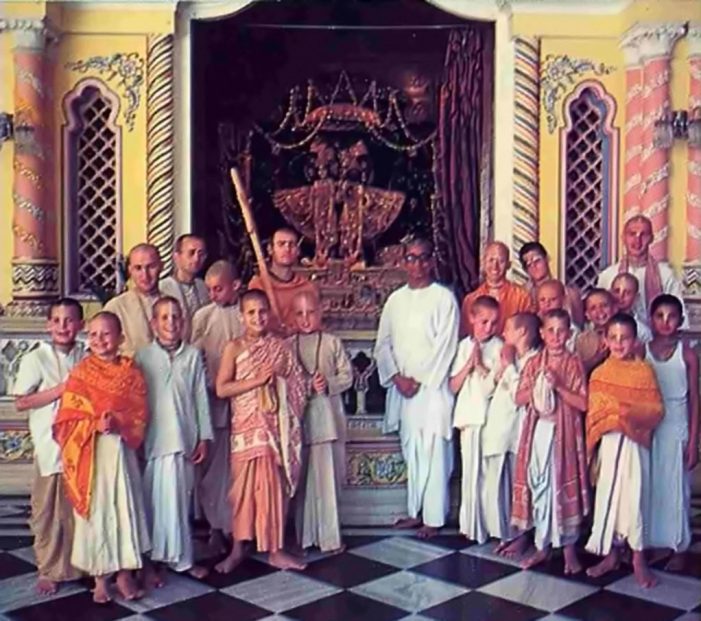
Gurukula, “the school of the guru,” has no equivalent in Western education. It is all at once a place of spiritual formation, character development, academics, and vocational training.
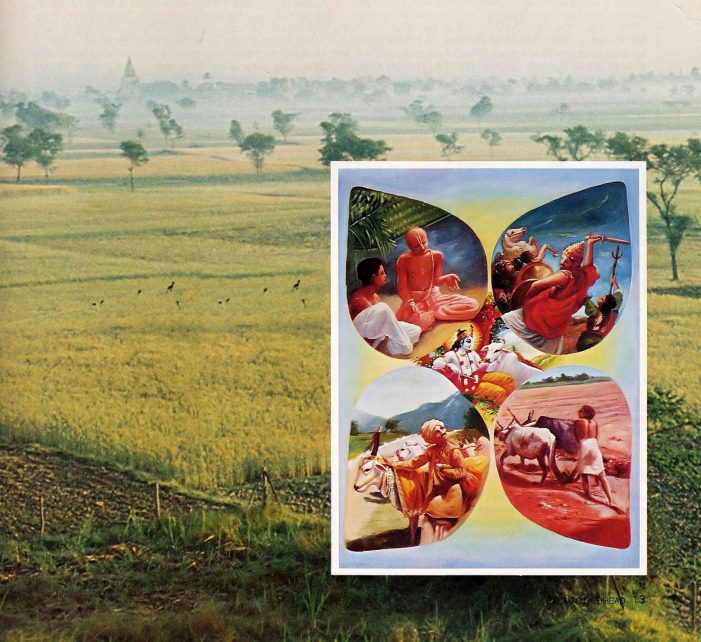
The Vedic scriptures, the oldest scriptures known to man, describe four principal classes. These are (1) an intelligent class (brahmanas), (2) a martial or administrative class (ksatriyas), (3) a mercantile class (vaisyas), and (4) a laborer class (sudras).
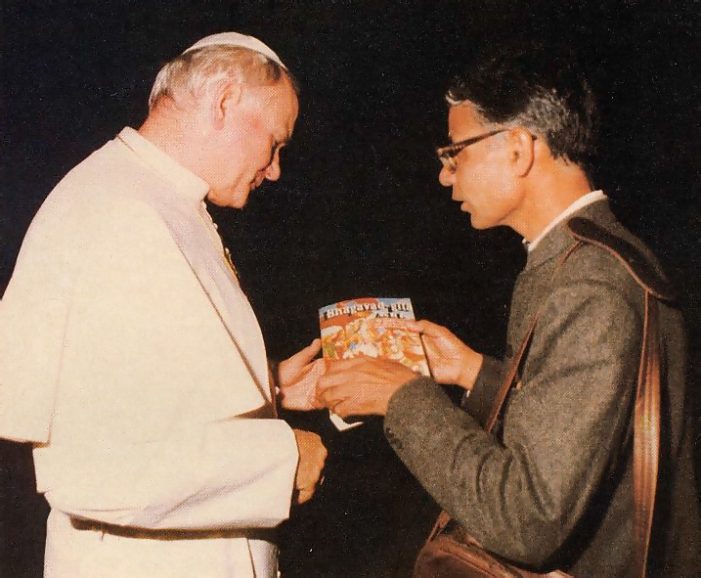
His Holiness Pope John Paul II received a copy of Bhagavad-gita AS IT IS, the scripture that sets forth the basic philosophy of the Krsna consciousness movement.
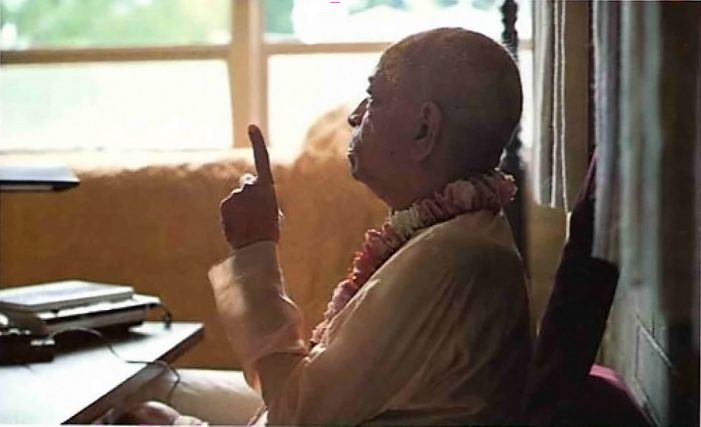
you can use the car for reaching people with the message of Krsna consciousness. You can use everything for Krsna. That is what we teach. If there is a nice car, why should I condemn it? Utilize it for Krsna: then it is all right.
The world’s energy supply is limited and the supply is being depleted by ravenous, irresponsible consumption. These are well-known facts. And everyone is aware that Americans, especially, seem unable to voluntarily reduce their consumption of energy, despite the inevitable future.
I had watched as one Catholic priest after another abandoned their vows to take up secular life. Some got married; others simply hit the streets.
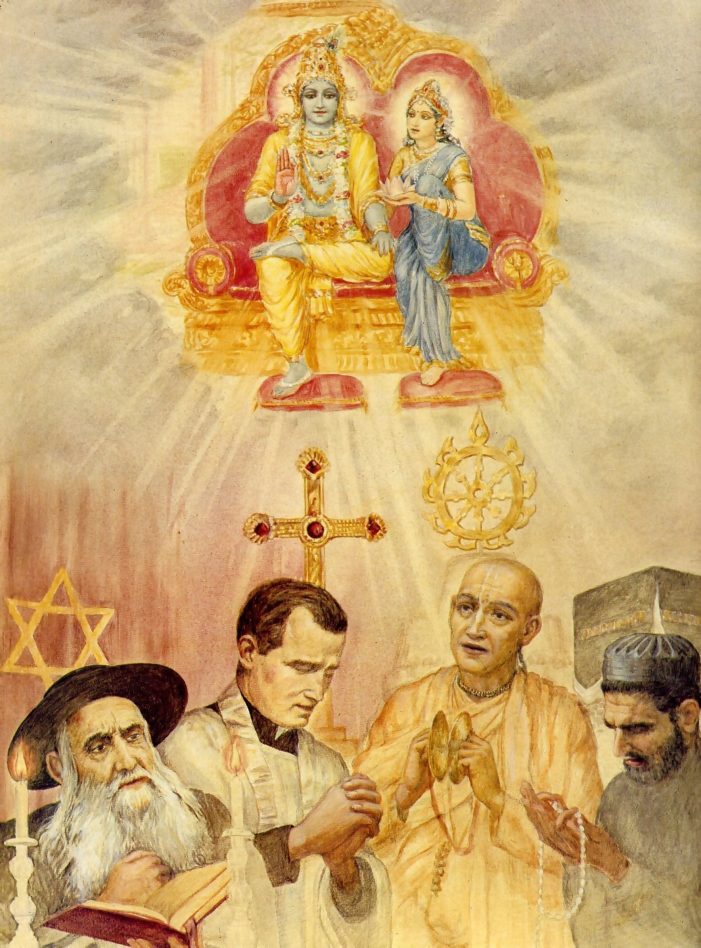
The aim of any scripture of any country—not only the Bhagavad-gita, but any scripture—is simply to get us back to Godhead. That is the purpose.
The Vedas deal with the nature and practice of spiritual life thus offering the promise of deliverance of the eternal spirit from material nescience.

He was the consummate student, disciplined, industrious. Eventually my friend Ralph, in his search for meaning, committed suicide at the age of sixteen. No one was less surprised than me.
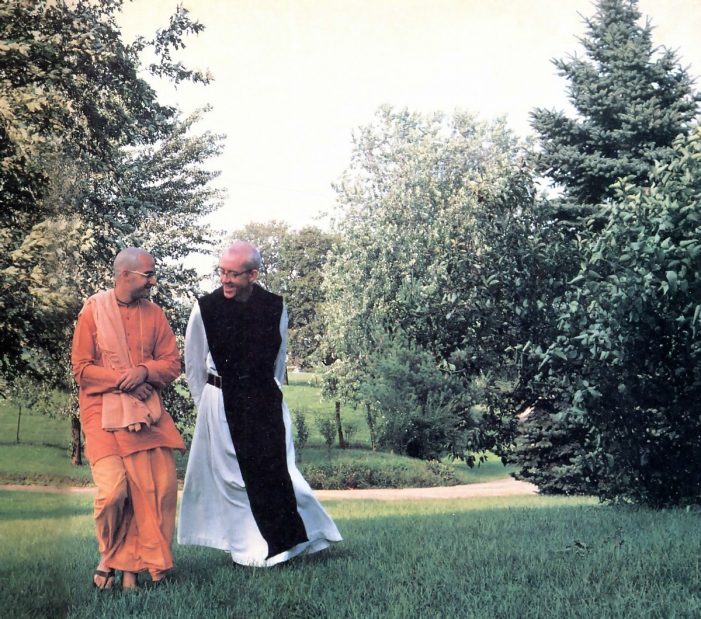
My friend came back for a second visit to our monastery more recently. I was very favorably impressed by the spiritual growth that I witnessed in him. It was quite evident that his serious commitment to the monastic life was bearing fruit.
When the Nobel Prize Committee awarded the 1979 Peace Prize to Mother Teresa, the sixty-nine-year-old nun who has devoted her life to helping the poor of Calcutta, it seemed as though the learned men in Stockholm must have received some sudden enlightenment;
Once we become spiritually fulfilled, we’ll be finished with sexual problems. In the latter part of our lives, if not much earlier, we’ll abstain to concentrate on self-realization and the unlimited pleasure within. Yet during married life, sex for producing children is also chaste.