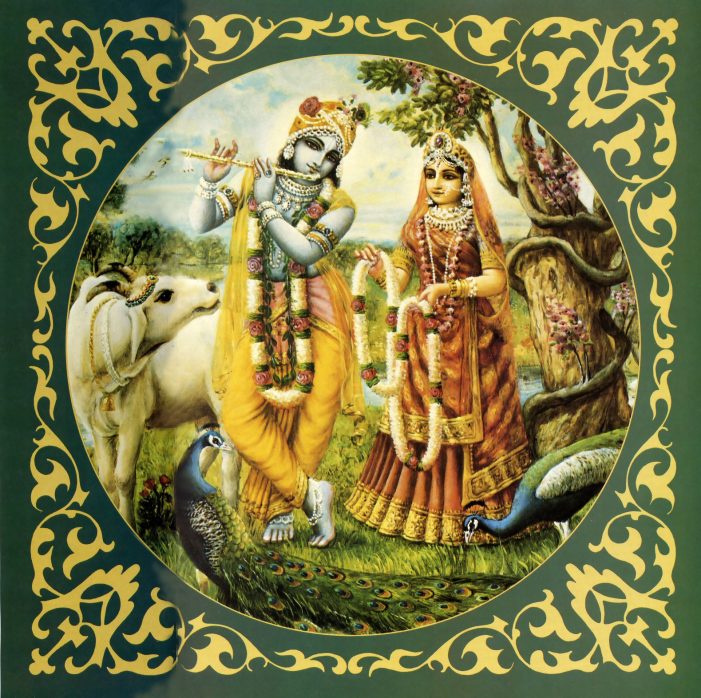
O Dear Gopis! O purest of the Pure So dear to Krishna, Who can help you look for Him, When suddenly He leaves The Sacred Rasa Dance, Black Cloud adorned with lightning, Disappearing in the dark Tangled wood.
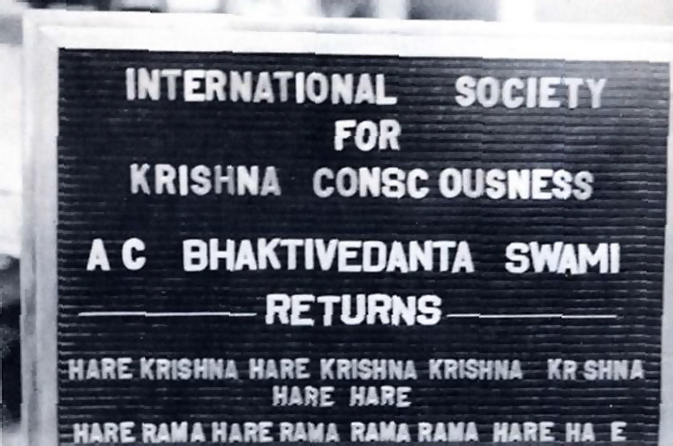
Just hearing that Swamiji was coming back to New York, the devotees, having felt separation from their Spiritual Master, were filled now with so much bliss. Their joyful shouts of “Haribol!” filled the temple at Kirtan.
This Lord Krishna Blackish, plump Standing on the shoulders of His pals, His two hands around the covered bowl of butter hanging on ropes from the ceiling, has stolen my understanding.
Have I ever smelled the air so pure as on this night? So clear, so soft, so fragrant… Ah, but I must wash some dishes for Krishna… In that small task all the wonders of this night are revealed to me. I am so fortunate to be washing Krishna’s dishes…
I offer my respects unto the Lotus Feet of my Spiritual Master, Who is Always thinking of what He can Do in service of His Dearmost Friend Krishna and never wanting Anything in return.
With Krsna consciousness flourishing on New York’s Lower East Side, Srila Prabhupada felt he could entrust the New York center to his followers and expand the movement west.
The Sanskrit language is rich in words to communicate ideas about spiritual life, yoga, and God realization. This dictionary, appearing by installments in BACK TO GODHEAD, focuses upon the most important of these words.
Fertilization also activates the egg, initiating its development. However, a variety of artificial stimuli, including the prick of a needle—none of which contributes new material or new information to the egg cell—have been shown to activate eggs.
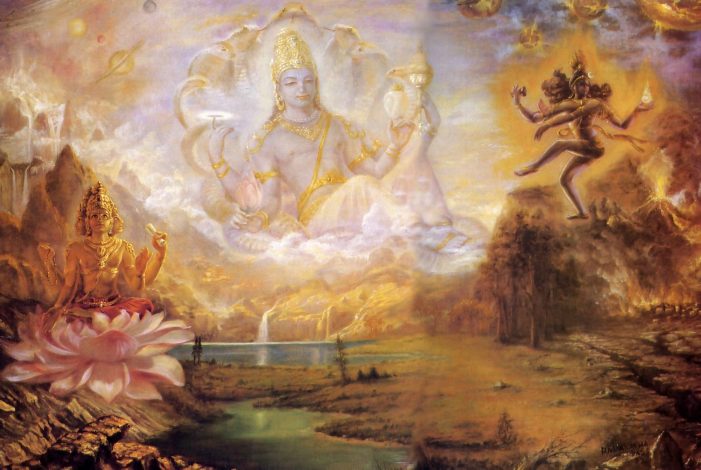
In the beginning there is myself [Brahma], and the Prajapatis, the great sages who generate; then there are Lord Visnu, the demigods with controlling powers, and the kings of different planets. But at the end there is irreligion, and then Lord Siva and the atheists full of anger.
Absolute is sentient, Thou hast proved, Impersonal calamity Thou hast removed. This gives us a life Anew and fresh. Worship Thy feet, Your Divine Grace.
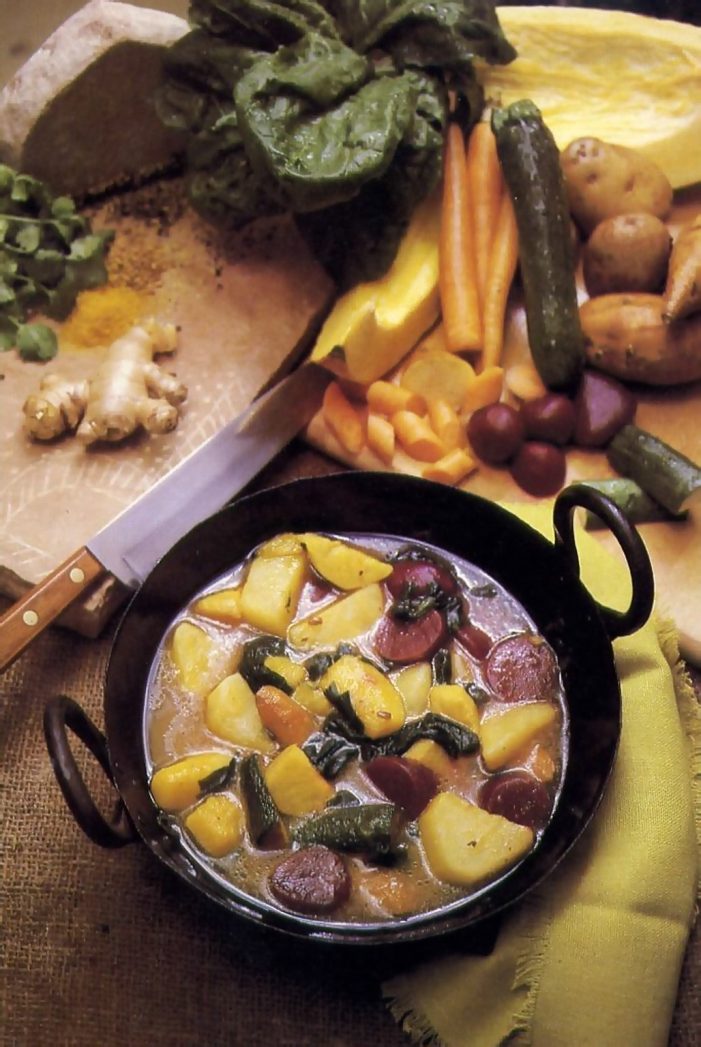
The Sanskrit word karma means “action” or, more specifically, any material action that gives us a material reaction and thus binds us to the material world. So a karma-free diet is one that produces no material reaction; it’s a sinless diet.
Of course, there are different types of yoga, but ultimately the basic principle is to purify the mind so we can understand our pure spiritual identity. Yogis want to go beyond the mind, beyond even the intellect, to the very root of life, the soul.
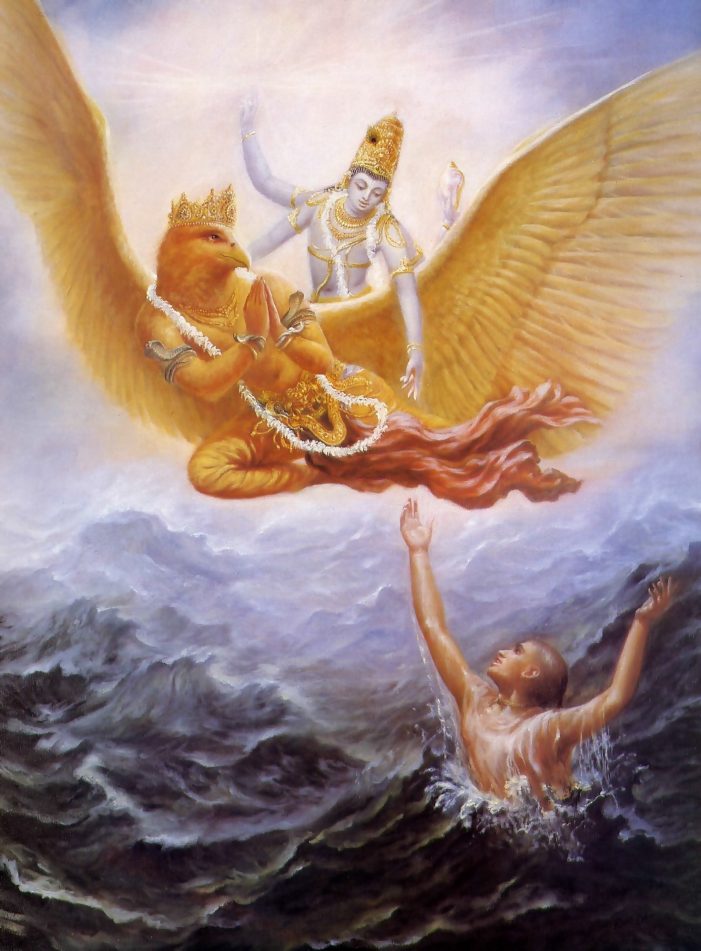
The Supreme Lord rescues His devotee from the ocean of birth and death. A soul suffering in material existence can never save himself from the ocean of repeated birth, old age, disease, and death.
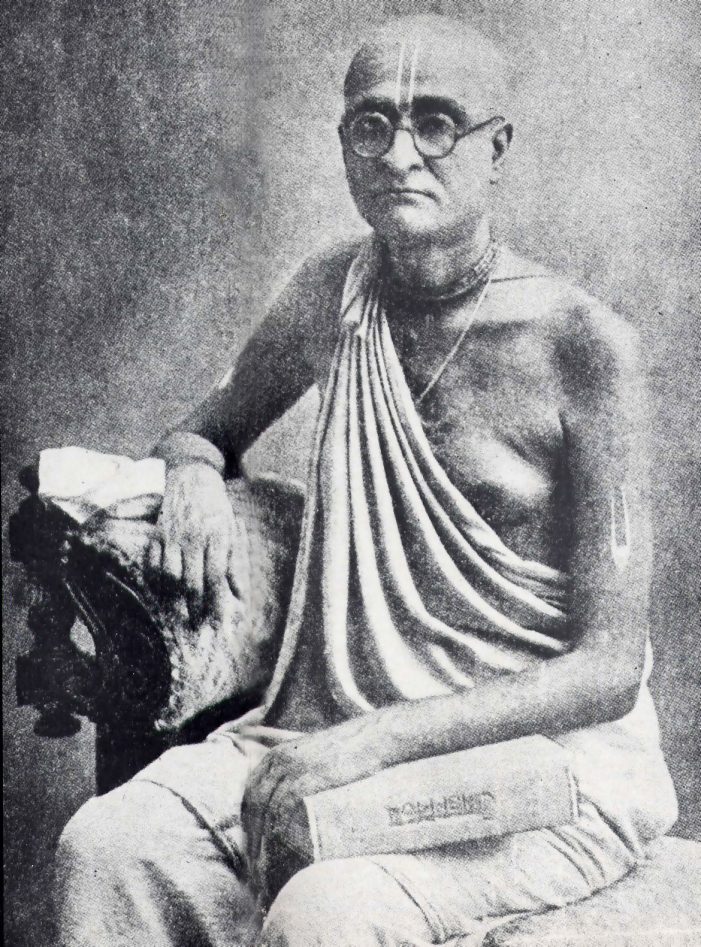
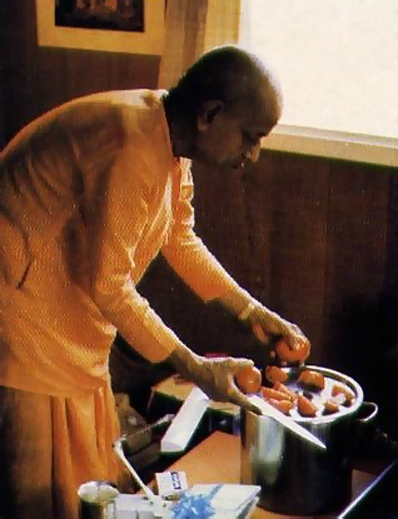
“I learned to cook by watching others—my mother, my aunt, and even the ‘walas’ [restaurant and street-stand cooks] in Calcutta,” Srila Prabhupada said. Later on, in his householder days, he occasionally joined his wife in the kitchen.
The Sanskrit language is rich in words to communicate ideas about spiritual life, yoga, and God realization. This dictionary, appearing by installments in BACK TO GODHEAD, focuses upon the most important of these words.
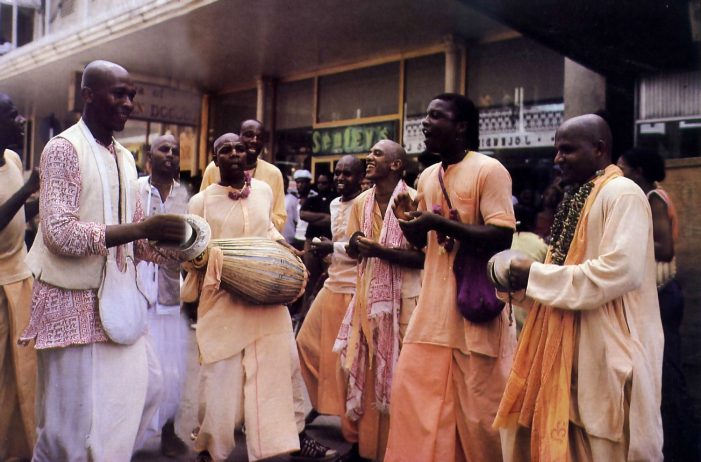
Although Srila Prabhupada never set foot in Trinidad, the chanting of Hare Krsna is nonetheless resounding today throughout this Caribbean island. No one need wonder any longer how Lord Caitanya’s miracle will come to pass: At least for Trinidad, the miracle has become a reality.
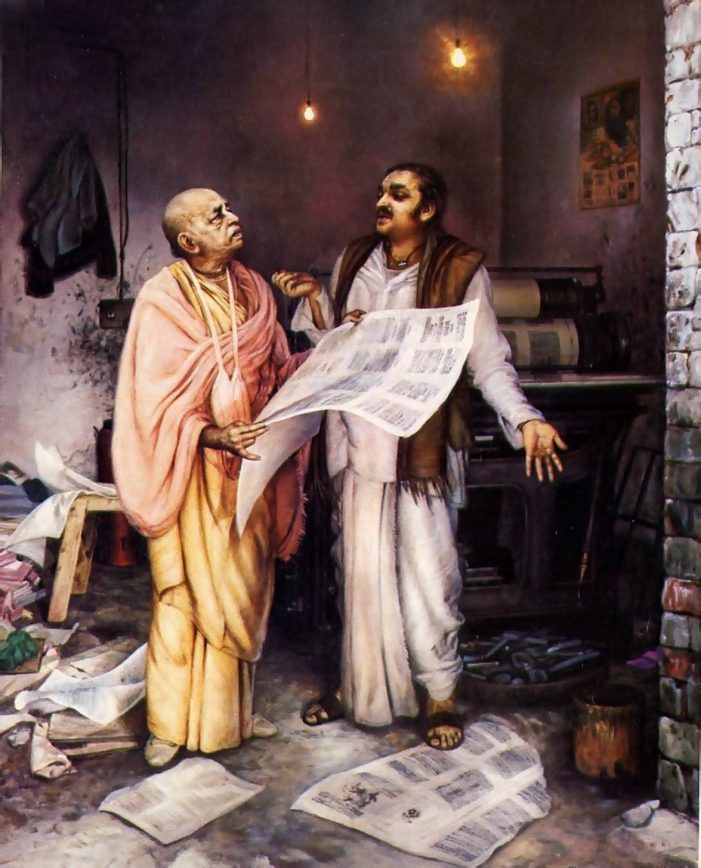
In 1952 Srila Prabhupada began preaching Krsna consciousness in Jhansi. With the support of local doctors and businessmen, he began an organization—the League of Devotees—dedicated to spreading Krsna consciousness in India and abroad.
Krsna is explaining Himself. But suppose you say, “How can I believe that Krsna said these words? Somebody may have written them in the name of Krsna.” No. Because the Bhagavad-gita is accepted by saintly persons, we should also accept it.
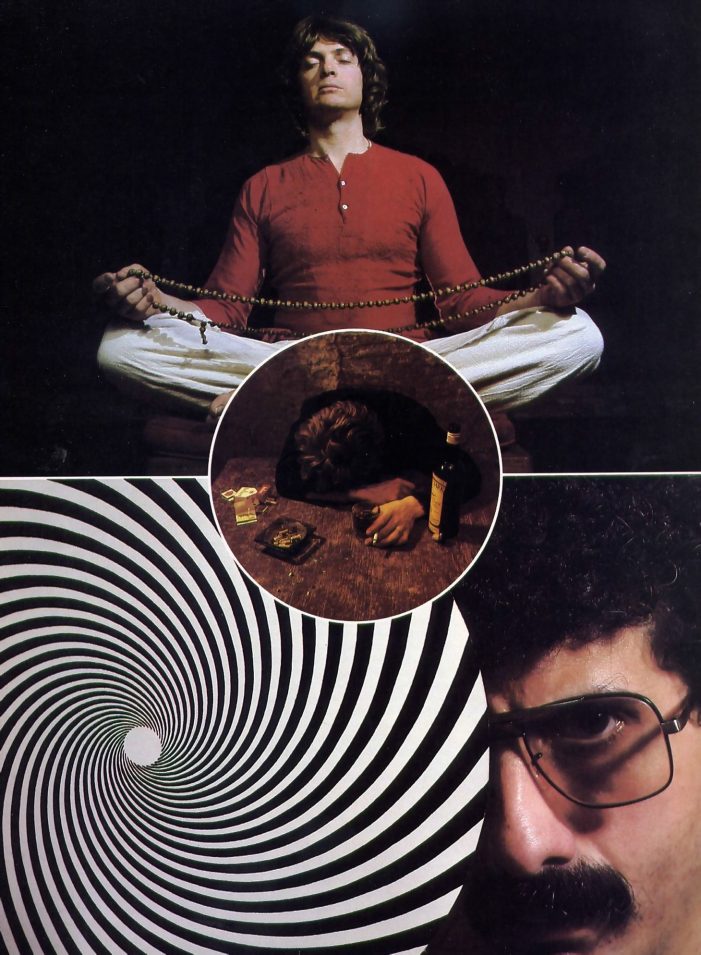
Critics sometimes charge that Krsna consciousness is “brainwashing.” Supposedly it forces an otherwise free-thinking person to conform to such a degree that he loses his identity and becomes a “mindless robot”.
The Sanskrit language is rich in words to communicate ideas about spiritual life, yoga, and God realization. This dictionary, appearing by installments in BACK TO GODHEAD, will focus upon the most important of these words.