A Study in Mysticism

What is ego? I am pure soul, but with my intelligence and mind I am in contact with matter, and I have identified myself with matter—and this is false ego. I am pure soul, but I am identifying falsely.
What is ego? I am pure soul, but with my intelligence and mind I am in contact with matter, and I have identified myself with matter—and this is false ego. I am pure soul, but I am identifying falsely.
Om is a manifestation of the Supreme Lord in the form of sound vibration. That is stated in the Bhagavad-gita. So, Hare Krsna and om have practically the same value, but chanting Hare Krsna is easier.
The Theosophist knows, by his knowledge of the pattern, that men have not come together to form communities because of greed or for the purpose of self-protection; but that they have together primarily because they are to be mutually helpful.
The Theosophist believes in a Personalised Consciousness or a Directing Will behind the operation of the universal activity. This conclusion is logical as we see in every field of our activities. Nothing in the world is possible to perform without a directing Will.
Many people are under the illusion that they were really happy in their youth. But once the fourfold miseries of material life—birth, disease, old-age and death—manifest themselves, the evanescence of that previous happiness becomes apparent to them.
People often ask us, “Can you prove the existence of God?” Proof indicates a conclusive demonstration that establishes the validity of an assertion, in this case the assertion that God exists.
One class of transcendentalists are the devotees, who have realized the Absolute Truth to be the Supreme Person. A second class are the yogis, who have realized the Supersoul. And the third class are philosophers, who can only realize the impersonal feature of the Absolute.
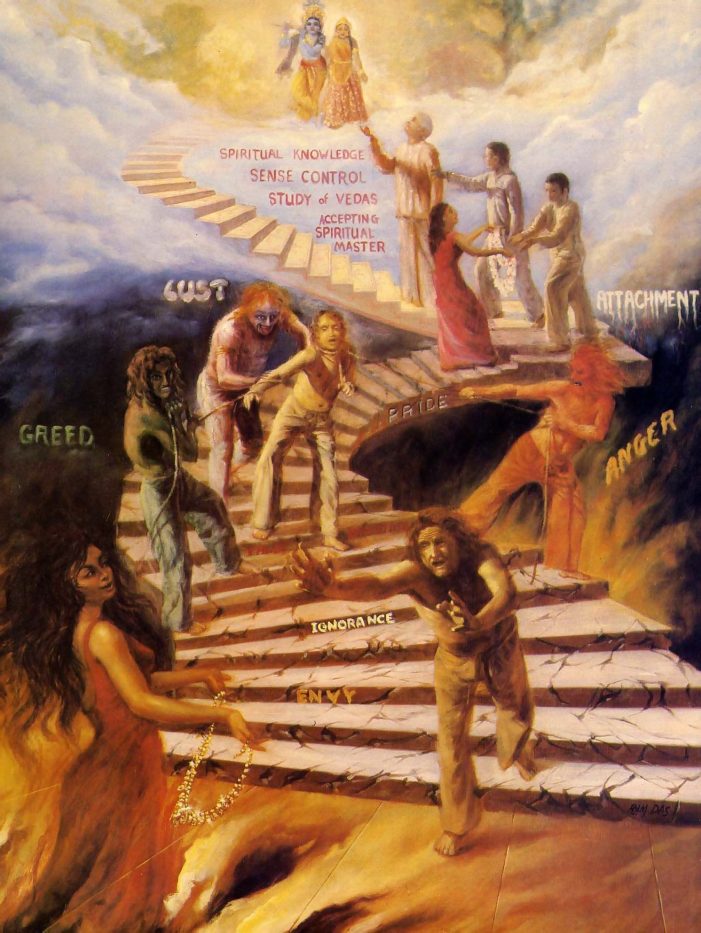
This material nature is constituted in such a way that we have to suffer; it is God’s law. And we are trying to relieve the suffering by patchwork remedies. Everyone is trying to get relief from suffering; that is a fact. The whole struggle for existence is aimed at getting out of suffering.
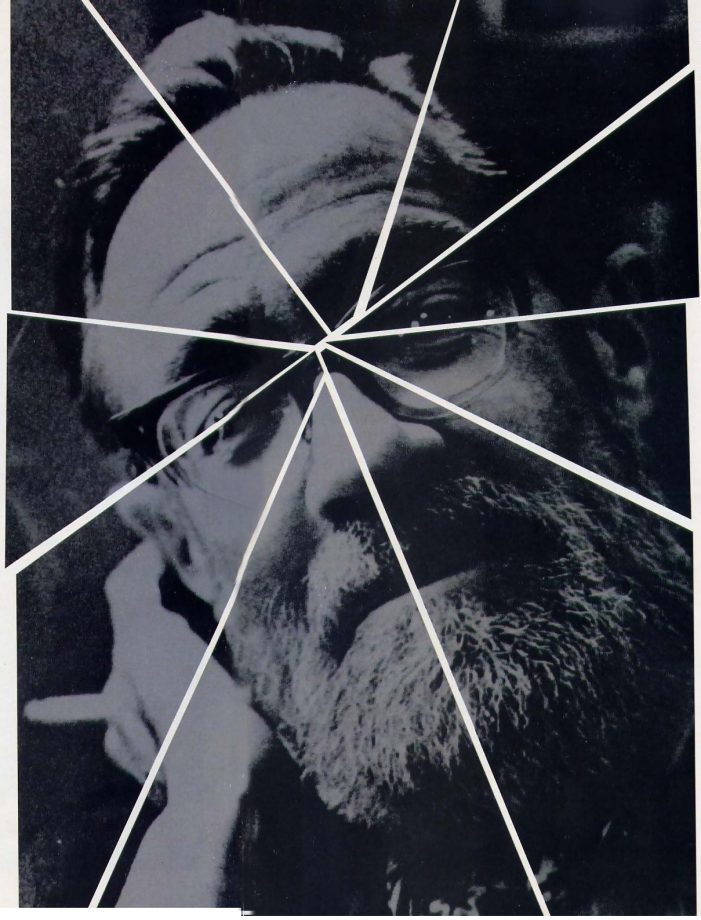
The poet John Berryman was my teacher at the University of Minnesota the year he jumped from a bridge over the Mississippi and killed himself at the age of fifty-seven. In some respects, his suicide puzzled me.
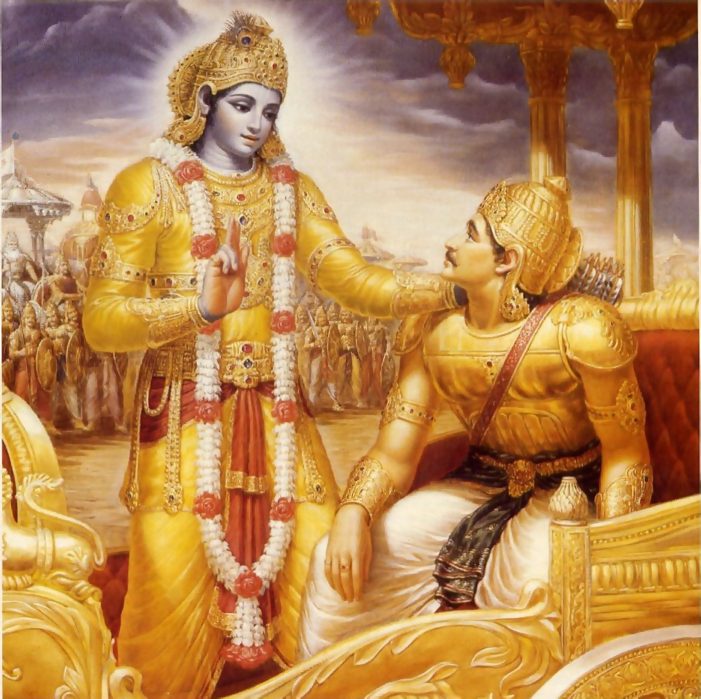
Personalistic Bhagavad-gita scholars reject the idea that God is a formless entity. On the contrary, the personalists, or Vaisnavas, maintain that God’s personal form is the source of all others.
Since everyone, no matter how he chooses to define the self, is interested in self-fulfillment, it is of paramount importance to know what the self is. Generally our concepts of the self are vague and speculative; so we often feel unfulfilled, even after attaining our goals.
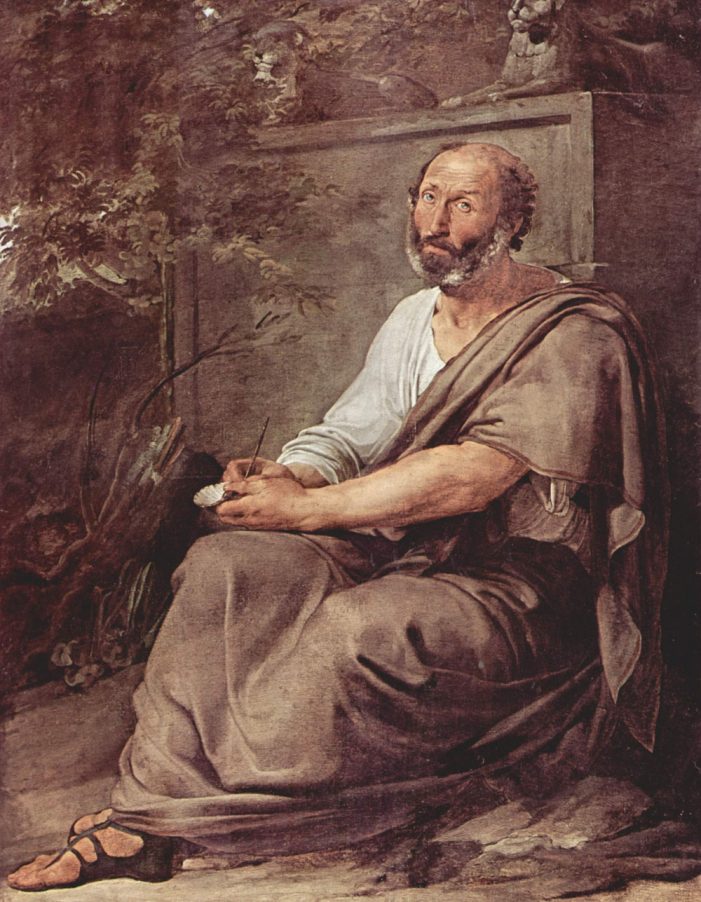
By speculation Aristotle may have known something about God, but our point is that we can know everything about God from God Himself. This is not a question of “religion.” It is simply a matter of the best process to know God.
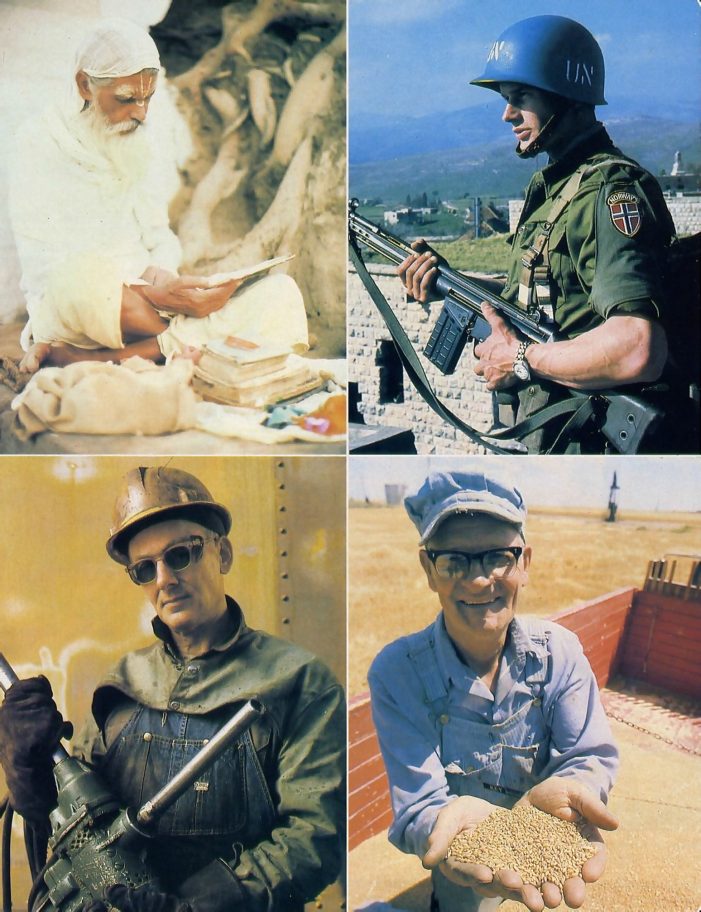
Srila Prabhupada often translates dharma simply as “religion.” But he indicates that he uses this particular translation for convenience and for want of a better single English term, and he expresses dissatisfaction with a translation that could be misleading.
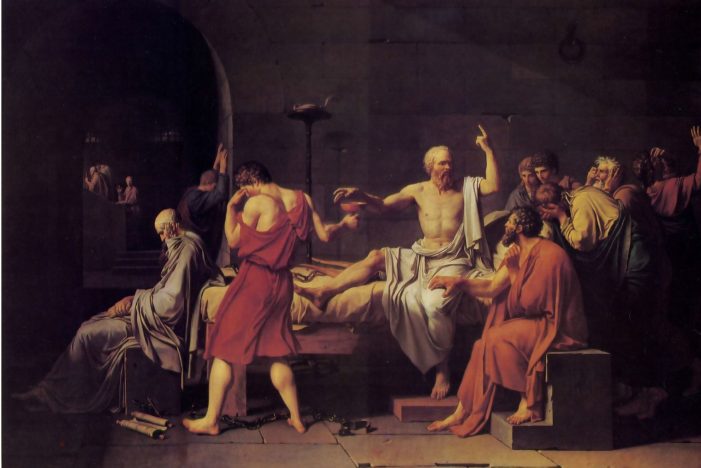
Socrates faces his death calmly and without fear, an attitude he said was but proper for a philosopher who is interested only in the care of his soul and is unaffected by bodily conditions.
Krishna meditated, He became God. Buddha meditated, he became god. Jesus meditated, he became god. Now god wants you to meditate so you can become god…
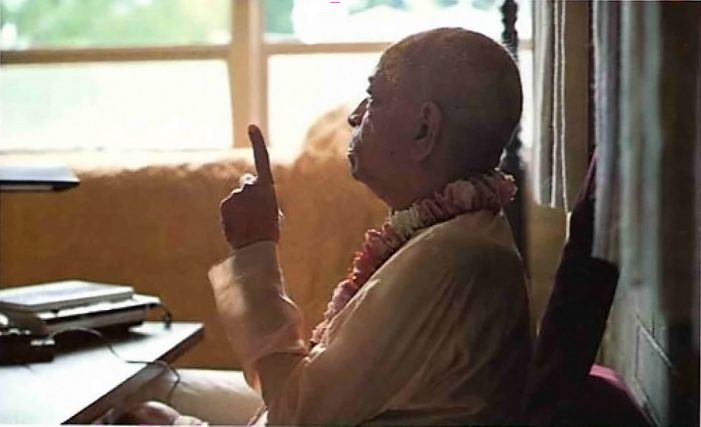
you can use the car for reaching people with the message of Krsna consciousness. You can use everything for Krsna. That is what we teach. If there is a nice car, why should I condemn it? Utilize it for Krsna: then it is all right.
By mental speculation one concludes that because material forms are temporary, spirit, to be eternal, must be formless. This reasoning, however, is illogical, like the conditioned thinking of a cow in a barn.
In a dream we see so many things that have nothing to do with us. This is our nighttime dream, and we recognize it when we wake up. Unfortunately generally we go back into our daytime dream. “I am this.” “I am that.” “I am white.” “I am black.” “I am American.” And so forth.
William James’s “Soul Theory” seemed imposing at first—as imposing as William James Hall must have looked to my grandmother. As it turned out, James was pretty close to home. by Mathuresa Dasa Gammy, my grandmother, had a passing acquaintance of sorts with William James, the great American psychologist and philosopher. She owned a two-century-old white […]
Satyaraja dasa addresses a gathering at the Whole Life Expo in New York City. Thank you for allowing me to speak at the 1985 Whole Life Expo. I would like to ask you all to reflect for a moment on the implications of the word whole. What does it mean to be truly whole? That […]