The Year-long Lunch

Krishna said, “Look at this wonderful place!”, the bank of the Yamuna River, “This is an ideal place to eat our lunch. Afterward, we can play on the soft, sandy river bank.

Krishna said, “Look at this wonderful place!”, the bank of the Yamuna River, “This is an ideal place to eat our lunch. Afterward, we can play on the soft, sandy river bank.
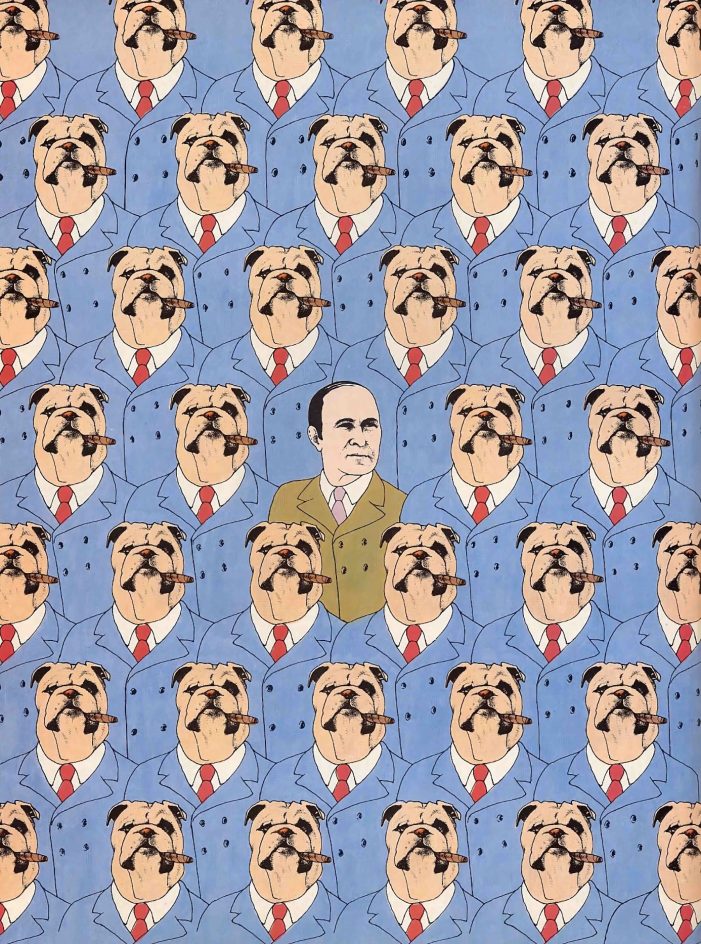
Many observers feel that with corruption so common and scandal nearly standard, society is in a bad way and getting worse. What’s really happening, and what to do? India’s Bhavans Journal interviews His Divine Grace A.C. Bhaktivedanta Swami Prabhupada.
By pleasing the Supreme Personality of Godhead, we please everyone, and there is no question of scarcity. Because people do not know this secret of success, they are making their own independent plans to be happy.
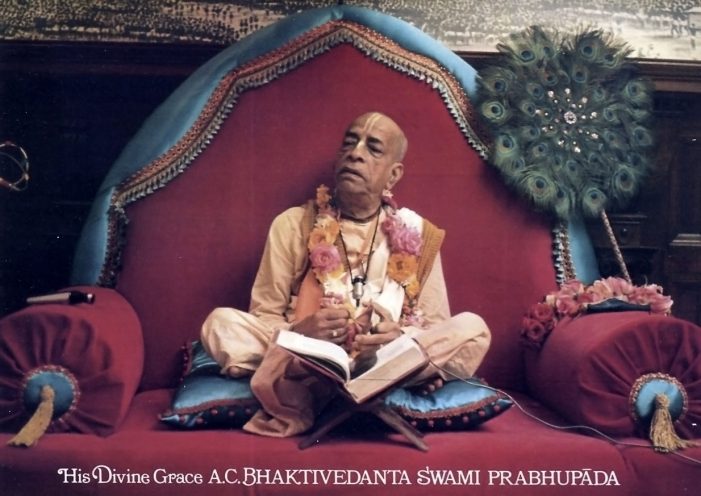
Everyone requires possessions such as food grains, clothing, money and other things necessary for maintenance of the body, but one should not collect more than his actual basic needs. If we follow this natural principle there will be no difficulty in maintaining body and soul together.
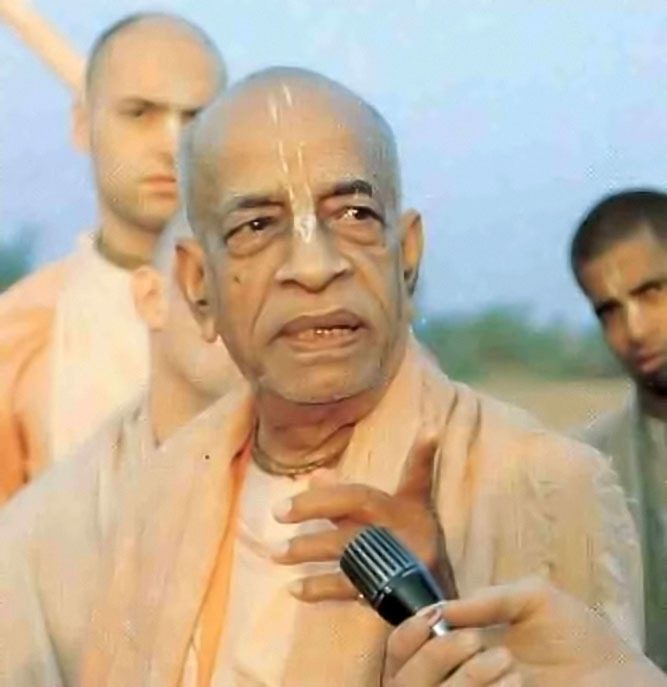
Absolute authority is bad when the authority is wrong. But if the authority is right, then it is good—because you can submit to one authority and receive all knowledge. It’s like going to a supermarket; we can get everything there in one place.
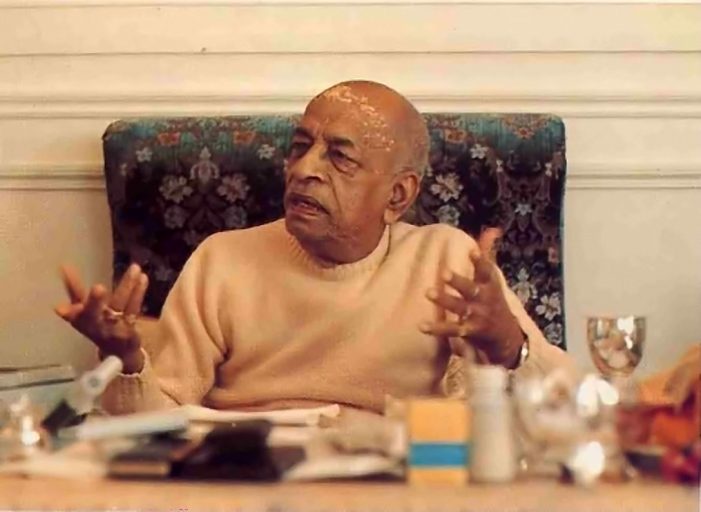
German pessimist philosopher Arthur Schopenhauer (1788-1860) thought that nirvana, (freedom from suffering) means becoming desireless—putting an end to our will. But His Divine Grace A.C. Bhaktivedanta Swami Prabhupada disagrees.
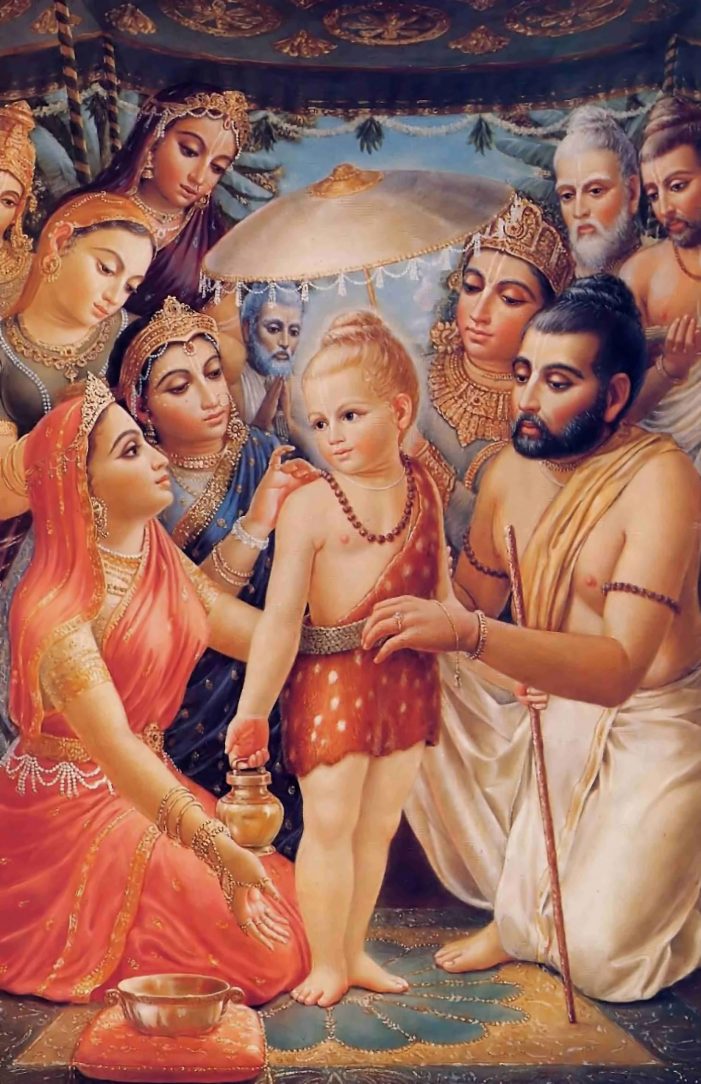
With the whole universe as his realm, King Bali gladly promised to give the little brahmana boy just three steps of land… . No one could have foreseen how colossal those steps would be—or how colossal the king’s truthfulness and generosity would be. From Srimad-Bhagavatam, by His Divine Grace A.C. Bhaktivedanta Swami Prabhupada. (Adapted by […]
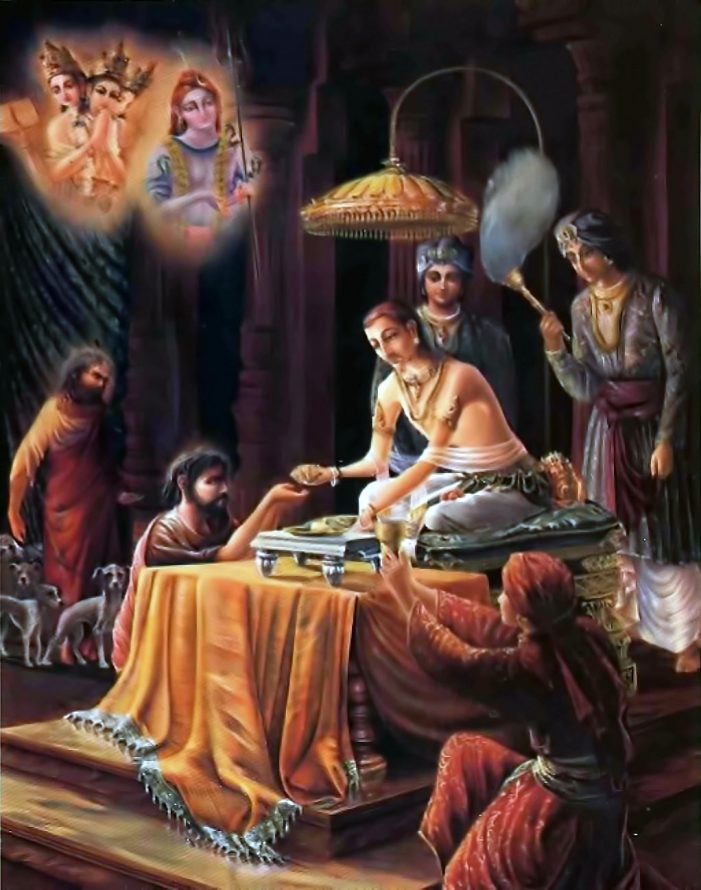
King Rantideva was always satisfied and depended completely on the Lord’s providence. At the same time, when guests came to his palace the generous king would personally look after their every comfort, as if it all depended not on providence but on him.
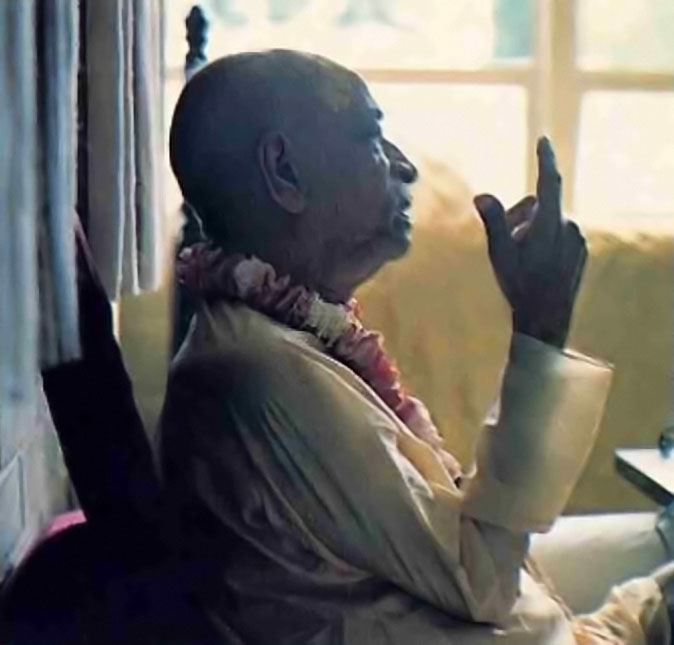
“Thou shall not kill” Christians like to misinterpret this instruction. They think the animals have no soul, and therefore they think they can freely kill billions of innocent animals in the slaughterhouses.
Atheist-existentialist Jean-Paul Sartre writes that because man wants to be God but cannot, he is a “useless passion” in a universe that has no purpose—and thus, he is always in anxiety.
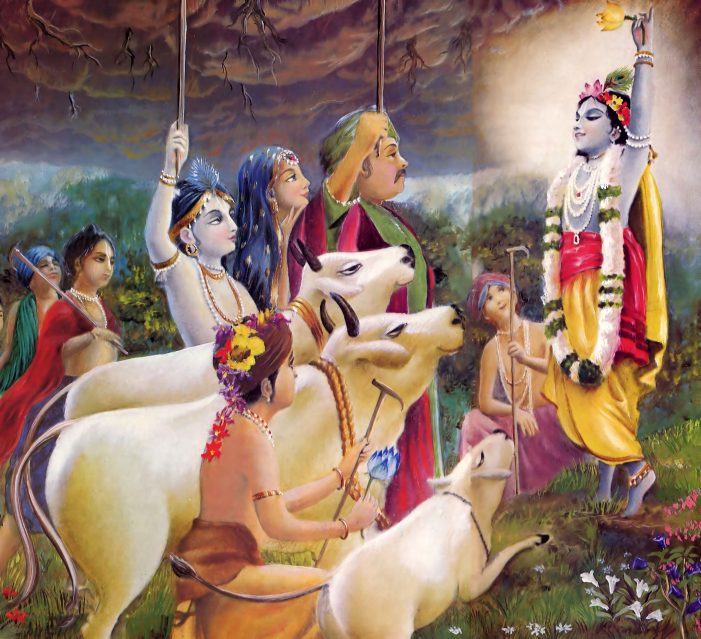
The inhabitants of Vrindavan were simply astonished to see Krishna holding up Govardhana Hill with the little finger of His left hand.
The prosperity of humanity does not depend on a demoniac civilization that has no culture and no knowledge but has only gigantic skyscrapers, and huge automobiles always rushing down the highways. The products of nature are sufficient.
Jesus Christ said, “Thou shall not kill.” So why is it that the Christian people are engaged in animal killing? The Bible does not simply say, “Do not kill the human being.” It says broadly, “Thou shall not kill.”
Soren Kierkegaard, the father of existentialism, said we have to make the leap of faith and he saw the goal as God. He wrote, “There is a God—His will is made known to me in holy scripture and in my conscience.”

King Ambarisa was famous as a pure devotee of Lord Krishna. “But why,” Durvasa Muni wondered, “should people respect him more than a great mystic yogi like me? I will teach him a lesson.”
The species already exist, and the living entity simply transfers himself from one womb to the next, just as a man transfers himself from one apartment to another.
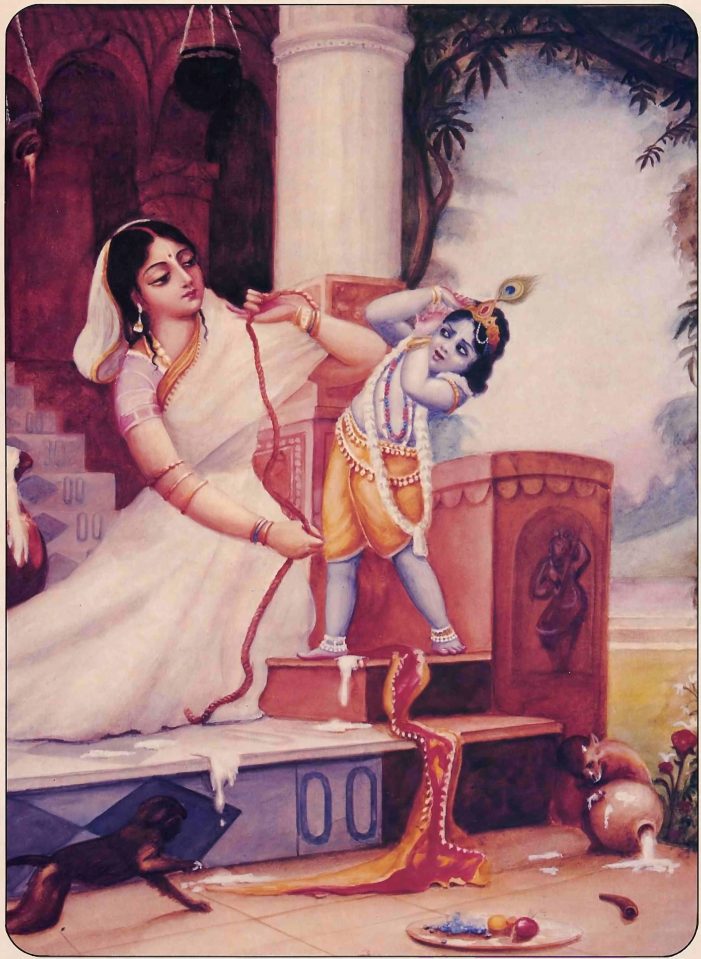
Mother Yasoda reached her naughty child and captured Him. She then thought she would bind Krishna (Damodar) with a rope, to prevent Him from creating any more mischief.
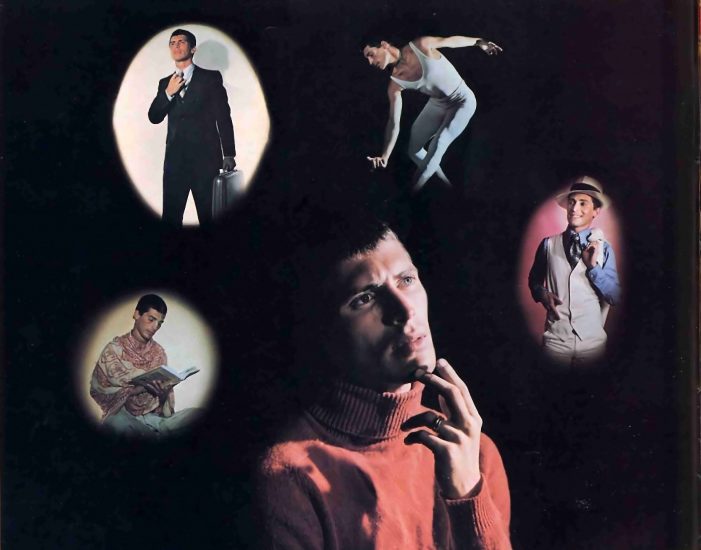
Soren Kierkegaard was a mid-nineteenth-century Danish philosopher who is generally regarded as the father of existentialism. A devout Christian, he believed that religious truth is not innate within man, and that man must therefore receive this truth from God.
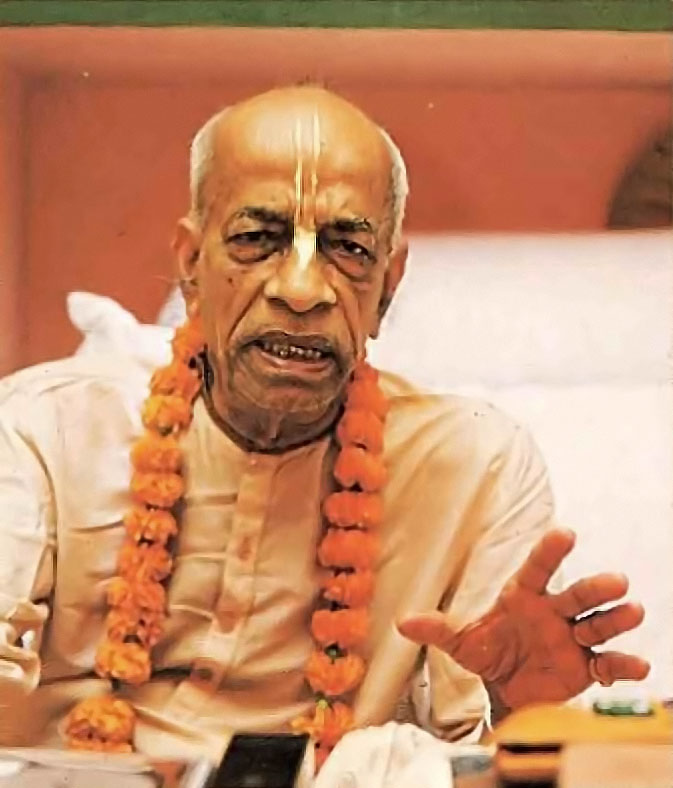
An intelligent person is not supposed to work like an ass. If we are parasites, then a high-court judge is also a parasite. A rascal sees a judge sitting—talking a little and getting a high salary—so he calls the judge a parasite.
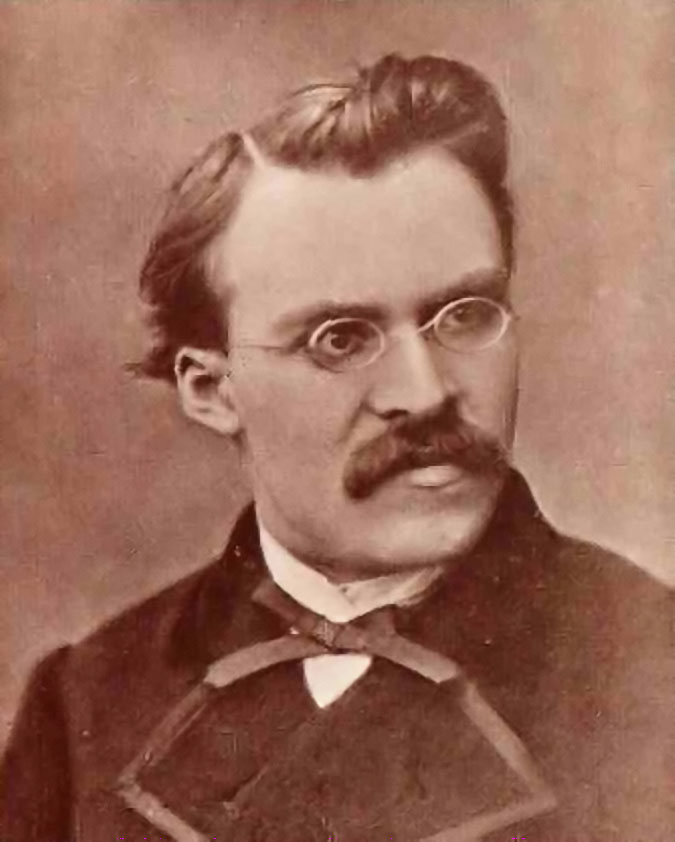
Friedrich Nietzsche thought of the “superman” as someone totally self-controlled, unafraid, simple, aware, self-reliant… and nonexistent. But here His Divine Grace A.C. Bhaktivedanta Swami Prabhupada tells us about real supermen—who they are and how they get that way.