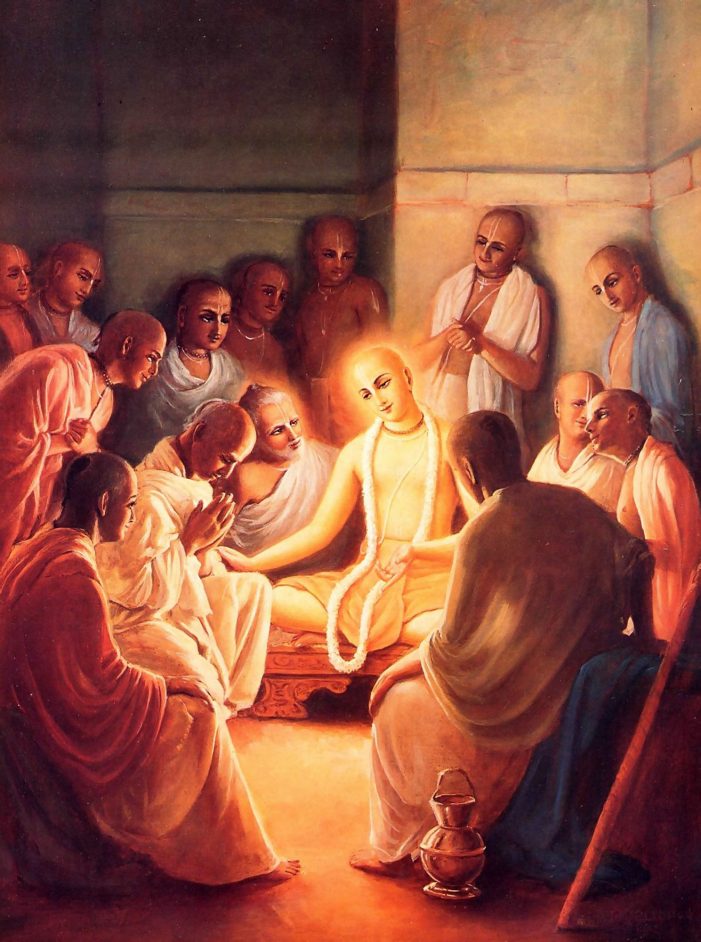
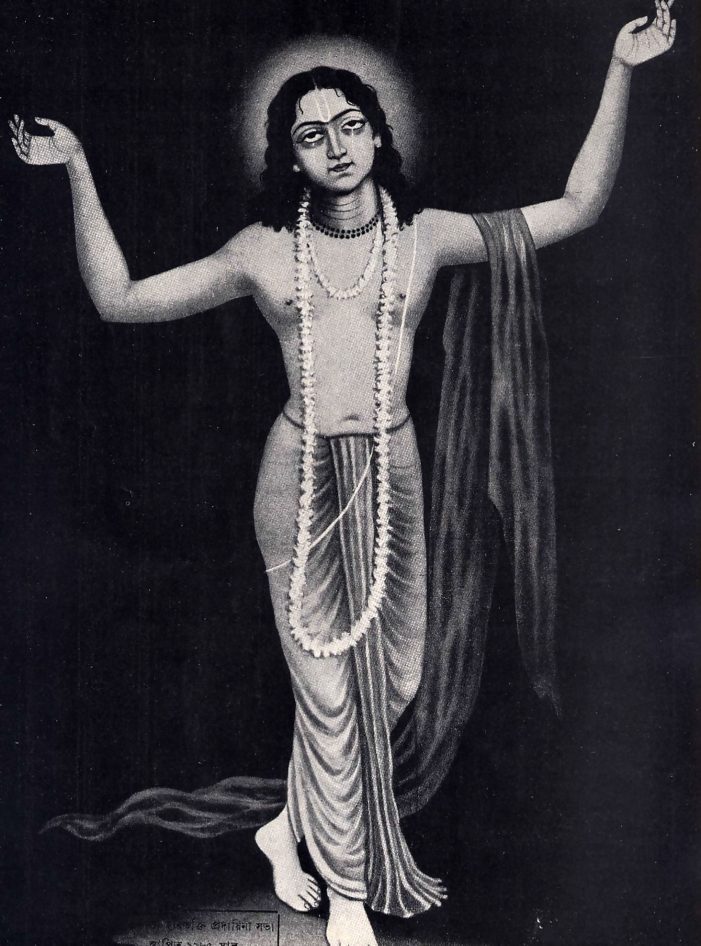
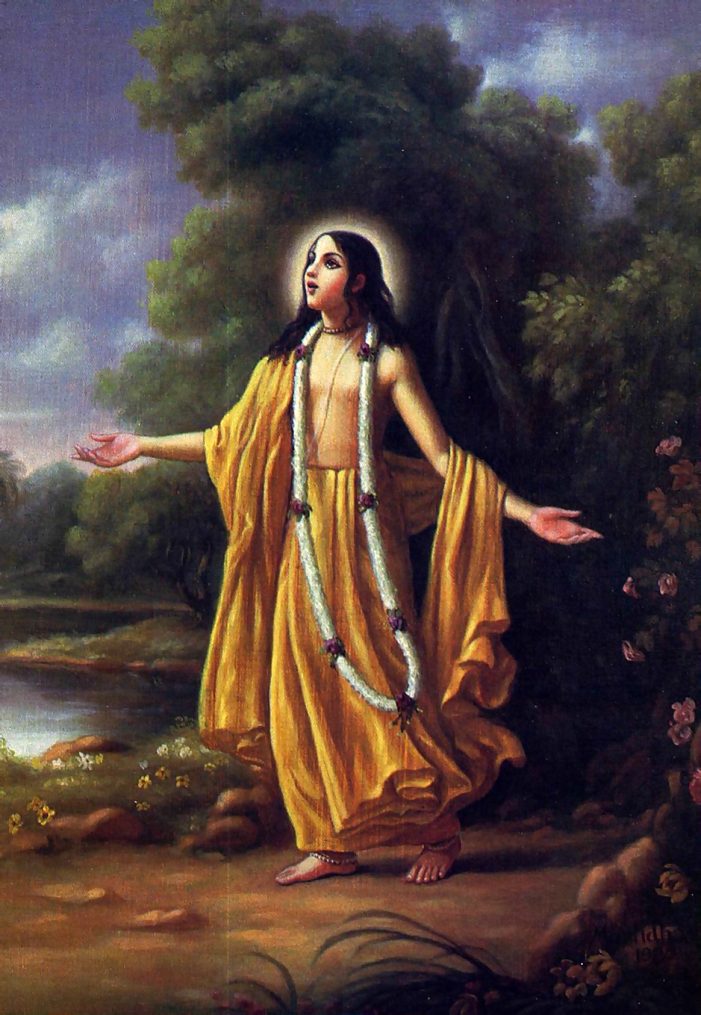
Lord Caitanya enjoys a reunion with some of His dear friends. He was at this time living in the coastal city of Puri on the Bay of Bengal in the state of Orissa, and His quarters were near the compound of the famous temple of Jagannatha.
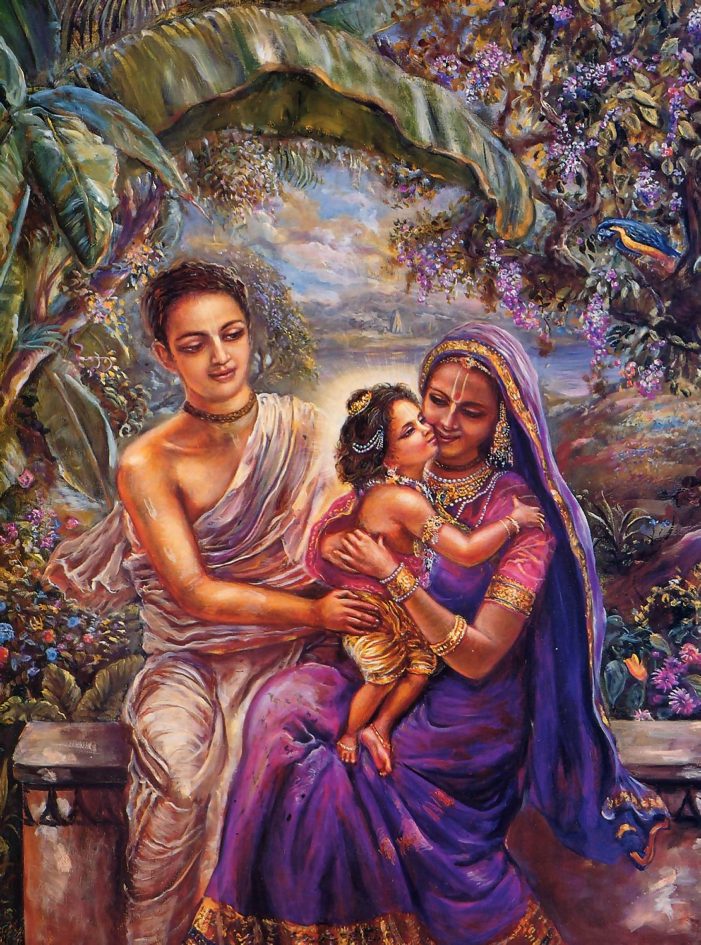
Lord Caitanya did not need to take birth as an infant; He could have simply manifested Himself, without any so-called mother or father. After all, He is the father of all living beings and of all existence.
Caitanya Mahaprabhu is an incarnation of Krsna, and this is confirmed by scholars and devotees. In the Srimad-Bhagavatam it is confirmed that the incarnation of Krsna or God in this present age, Kali-yuga, will always engage in describing Krsna.
A look at the worldwide activities of the International Society for Krishna Consciousness (ISKCON) Congressman Welcomes ISKCON Students Washington, D.C.—U.S. Congressman John Bryant of Dallas recently took a break from his very busy schedule for what he called his most interesting and informative meeting in a long time. The meeting was a visit by seven […]
From the historical records about Lord Caitanya, we certainly see a picture of a God-conscious saint who appeared in India during the sixteenth century. But we have to seek further—into the devotional Vedic literature—to understand the full, spiritual significance of Lord Caitanya.
While Europe, as if weary of its medieval concepts of God, turned with new interest toward man and the mundane, a spiritual revolution in India—destined to spread worldwide—was revealing the dynamic nature of the Absolute Truth.
And as soon as one is able to cleanse the accumulated material dust covering one’s pure consciousness from time immemorial one is able to extinguish the blazing forest fire burning ever increasingly in the perpetual circle of birth and death.
Lord Chaitanya teaches that rational attributes of men are not capable of approaching the divine spirit. The religious sentiment in man, even in very small quantity, has the power to comprehend it. It is inspiration which can alone give light to spiritual matters.
While in Vrndavana, the Lord rediscovered many important places of Krsna’s pastimes. Among such places are Radha-kunda and Syama-kunda, two ponds that featured prominently in Krsna’s Vrndavana pastimes five thousand years ago.